
Temperature management: compare the whole water-blanket system
Blanketrol III and Medi-Therm III illustrate why the console price is only the start. Compare control functions, patient interfaces, water maintenance and support for the exact unit.
Editorially reviewed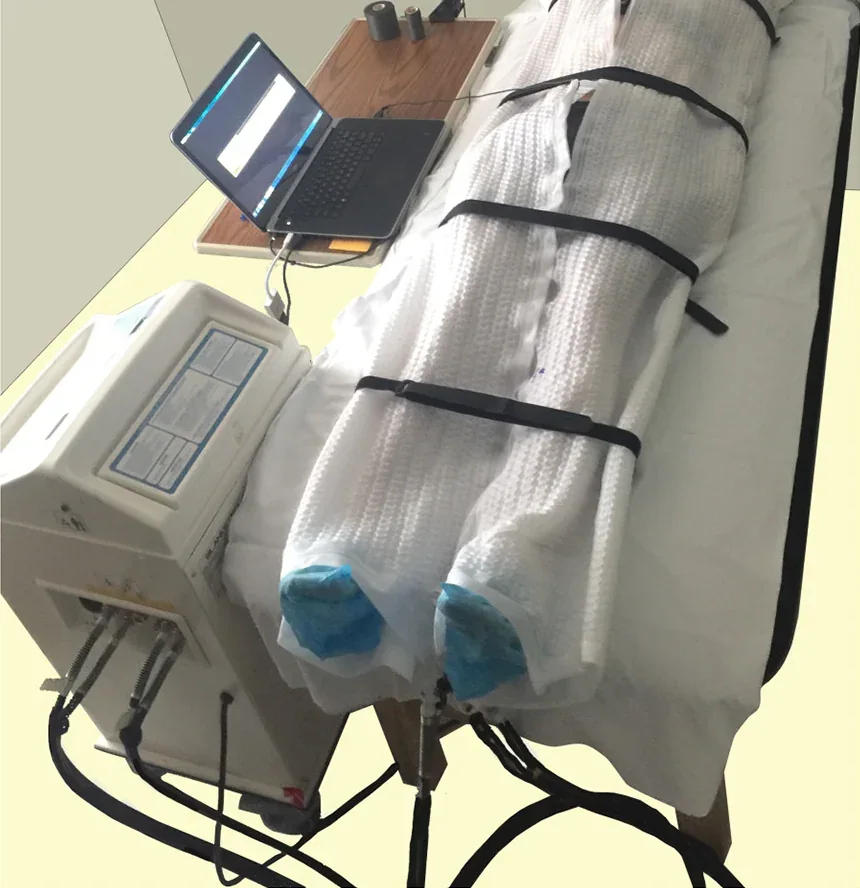
The decision at a glance.
- Start here
- Define the approved patient population, control functions and interface package before comparing console prices.
- Spend more when
- A required control function, support arrangement or patient-interface supply cannot be delivered by the existing system.
- Watch the budget
- Compare the full usable configuration and recurring supplies over one common period.
- Check the support
- A seller cannot identify the unit revision, approved accessories or a credible service and maintenance route.
Ask the supplier
- Which exact accessories and electrical version are included?
- Who can maintain and test this serial-numbered unit?
- What is the three-year cost at both expected and lower activity?
Buy the required control function
A water-circulating temperature-management unit belongs to a clinical service with defined indications, monitoring and staff responsibilities. Start with those requirements. A machine capable of heating and cooling water does not establish that every control mode or blanket is suitable for every patient or treatment.
This comparison concerns external water-blanket systems. It does not select treatment temperatures or protocols, and it does not establish suitability for cardiopulmonary bypass. Have the clinical lead identify the required modes and patient interfaces; let biomedical engineering assess the exact configuration and acceptance requirements. That creates a useful specification before prices arrive.
The model name needs a configuration beside it
Gentherm’s 2026 Blanketrol III Model 233 manual distinguishes manual water control, automatic patient control, two gradient modes and monitoring alone. The system requires approved Gentherm accessories; automatic modes need a compatible 400 Series thermistor probe. Its side-panel diagram shows three water-circuit connections but one patient-probe input. Multiple connectors do not mean three independently controlled patients.
The Stryker-hosted Medi-Therm III MTA6900 manual describes manual, automatic and monitor modes, with selectable cooling rates in automatic operation. Its accessory list specifies DBK9 connecting hoses and distinguishes reusable from single-patient blankets. These are documented configuration differences, not evidence that either machine produces better clinical outcomes or fails less often.
Compare a bedside package with a bedside package
An acceptable offer identifies the console, electrical version, blanket or wrap sizes, hose quantities, temperature probes and any reusable probe adapter. Include the first usable stock of patient interfaces. A seller photograph showing a console and coiled hose does not establish that the supplied combination is complete or compatible.
Reusable and single-patient interfaces move spending to different places. For reusable stock, budget cleaning, inspection, storage and replacement after damage. For single-patient stock, budget replenishment and a realistic reserve. Evaluate the clinical team’s approved sizes and access needs before standardising: a cheaper interface that does not fit the planned work is not a substitute.
Water maintenance can change the site decision
Do not copy one machine’s water and cleaning routine to another. The cited Blanketrol revision specifies sterile or suitably filtered water and excludes distilled water; the cited MTA6900 manual specifies distilled water. Obtain the applicable instructions for the offered unit and build the required supply and maintenance process around them. These documents are not interchangeable maintenance recipes.
Allocate responsibility, space and downtime for circuit maintenance as well as exterior cleaning. Assess the actual room, ventilation clearances, power supply, hose routing and storage arrangement. An inexpensive unit can be a poor fit if the hospital cannot sustain its required consumables or technical work. A new purchase does not remove those obligations.
Test the economics against your own workload
Consider a hypothetical package that costs 8,000 more upfront but reduces accepted patient-interface spending by 40 per completed episode. At 200 episodes a year over three years, that difference totals 24,000. After the extra capital, the remaining advantage is 16,000 before differences in cleaning, service, stock losses and downtime. These are planning inputs, not quoted prices or an assumed saving for either named model.
Repeat the calculation at the likely lower workload. At 50 episodes a year, the same three-year interface difference is only 6,000, leaving the higher-capital option 2,000 behind before other costs. A recurring-cost advantage matters only across activity that the service is realistically equipped and staffed to deliver.
A legacy manual is not a service commitment
The MTA6900 document is revision C dated January 2011. Its availability on an OEM technical site helps identify the system; it does not confirm current parts, warranty or support for a proposed used unit. Require a named service route, the applicable maintenance record and a documented acceptance test before relying on that unit.
Retaining an accepted system can be sensible when supplies and service are sustainable. Replace it when a required clinical function, support gap or operating constraint justifies the change. Neither heater wattage nor a seller’s claim of durability establishes patient-level performance or comparative reliability.
Compare the options.
Blanketrol III Model 233
- Capability
- Manual, automatic, gradient and monitor functions documented
- Best fit
- The approved service needs its specific control and interface configuration
- Cost to watch
- Approved blankets, probes, hoses and water-circuit maintenance
Medi-Therm III MTA6900 series
- Capability
- Manual, automatic and monitor functions documented in legacy OEM manual
- Best fit
- An accepted existing or used package has a demonstrated support route
- Cost to watch
- Exact-unit support, DBK9 hoses, probes and compatible blankets
Keep and complete the existing package
- Capability
- Preserves clinically suitable capability
- Best fit
- The deficit is supply or maintenance rather than a missing required function
- Cost to watch
- Missing accessories, preventive maintenance and contingency cover
Budget for the complete service.
Compare capital plus service, interfaces, cleaning, water supplies, staff time and contingency costs over the same period and completed episode count.
- Approved patient interface
- Control requirements
- Water-circuit maintenance
- Exact-unit service access
Further checks & evidence limits
Questions to resolve
- Which exact accessories and electrical version are included?
- Who can maintain and test this serial-numbered unit?
- What is the three-year cost at both expected and lower activity?
What the evidence does not establish
- No comparative failure-rate or clinical-outcome ranking.
- Current service eligibility, applicable unit instructions and regional accessory availability need confirmation for the actual offer.
- No treatment targets, cleaning recipe or cardiopulmonary-bypass recommendation.
Sources & supporting evidence.
Manufacturer claims and seller offers are identified below. Prices apply to the stated offer and review date; confirm availability, configuration and delivered cost.
- Blanketrol III Model 233 operation manual, 57201 Rev. AH (2026)Gentherm · manufacturer · checked October 18, 2026
Mode and accessory scope, one patient-probe input, specific water requirements and maintenance obligations.
- Medi-Therm III MTA6900 operator manual, Rev. C (January 2011)Gaymar / Stryker · manufacturer · checked October 18, 2026
Legacy model, mode, hose and blanket identification; current support is unconfirmed.
- Blanketrol system and patient interfacesGentherm · manufacturer · checked October 18, 2026
Current product-family overview distinguishes compatible reusable and single-patient interfaces; no performance or reliability ranking adopted.
Put the guide to work.
Send MMS your equipment list, destination and budget. We can help you compare a complete package.
Discuss your equipment