
Surgical sponge systems: counting and detection are different purchases
Compare what each system counts or detects, which supplies it covers, and the recurring commitment. A reader purchase is useful only within a supported surgical counting process.
Editorially reviewed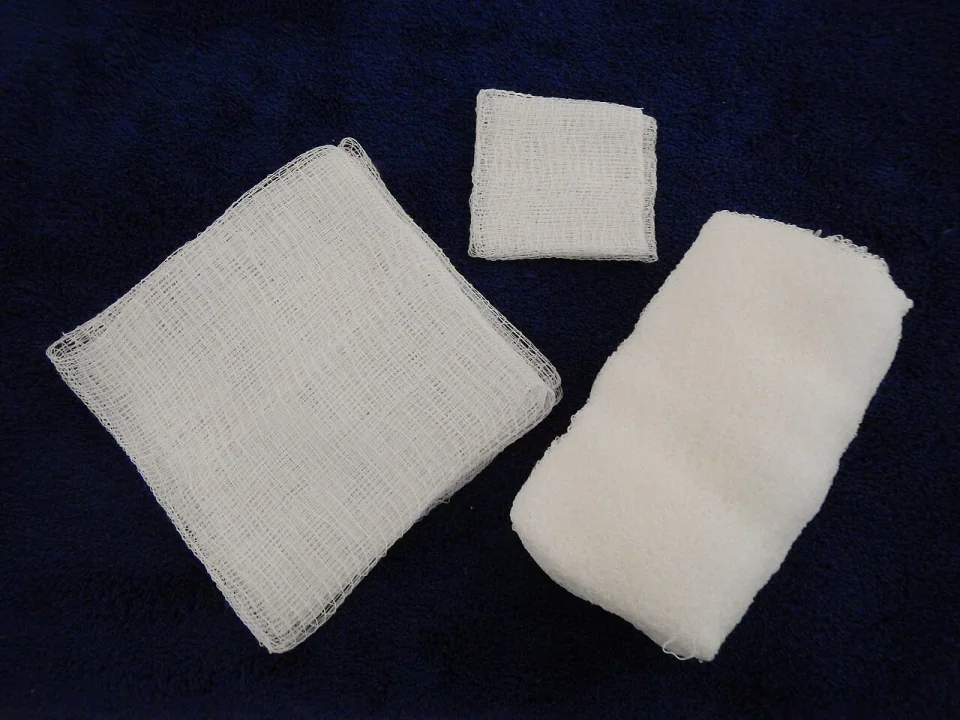
The decision at a glance.
- Start here
- Define the item types and counting or detection tasks the system must support, then compare the exact labelled configurations.
- Spend more when
- Added detection, documentation or integration addresses a defined workflow need and the hospital can sustain its supplies and operating requirements.
- Watch the budget
- Compare the full usable configuration and recurring supplies over one common period.
- Check the support
- The proposal promises universal item detection, replaces required counting procedures or depends on unreliable access to compatible supplies.
Ask the supplier
- Which counted items and detection locations remain outside the offered configuration?
- Can every required supply remain available in clinically suitable sizes and packs?
- How does a completed case reach the patient record, including during an outage?
Start with the function the hospital needs
Counting support records items entering and leaving a case. Detection searches for compatible tagged items in a defined area. A combined system may do both, but its supported items and detection locations still need checking. Do not compare these as interchangeable features simply because both proposals use the phrase “retained-item prevention.”
For a service whose main difficulty is reconciling and documenting sponge counts, counting support may address the identified task. If the proposal must also help locate a missing sponge, require that additional labelled function. Keep the hospital’s complete counting and discrepancy-response policy in place, including the items the technology does not cover.
Compare named packages without extending their claims
Medtronic lists Situate Detection System X package 01-0047 with console, body scanner and room scanner; 01-0043 is the console alone. It uses RF detection with Situate tagged cotton and supplements manual counting. A low price for a console is therefore not a price for the complete detection package or its ongoing supplies.
Stryker describes SurgiCount+ as counting, tracking and locating surgical sponges within the operating room and sterile field. Its 2026 supply catalogue identifies RFID-tagged gauze, lap sponges, OR towels and vaginal sponges. Compare the exact offered generation and its instructions; a brand name alone does not establish identical capabilities across older and newer systems.
Make the coverage boundary visible
Map the hospital’s actual sponge and other counted-item list against the proposed catalogue. Record uncovered items explicitly. An instrument, needle or untagged sponge does not gain electronic coverage merely because the room has a scanner. Procurement substitutions need clinical review of the item and its compatibility, rather than a visual match to an existing product.
The Situate in-service guide describes limits related to positioning, nearby metal and electrical interference, along with specific precautions for implanted or external electronic devices. These belong in clinical engineering and theatre acceptance. An incomplete or faulted scan is not a completed negative result. Staff training and the exact current instructions remain necessary; a purchasing guide cannot supply the scanning procedure.
Buy a usable record, not just a dashboard
Situate stores completed scan records by case with date and time. Stryker advertises a reporting dashboard and EMR integration for SurgiCount+. These are different documentation propositions. Test the offered system’s route from a completed case to the hospital record, including patient association, access, retention and a practical response to network or device outages.
Budget interface implementation, software access and support where applicable. Have IT establish which functions remain usable during an outage before approval. SurgiCount+ is also presented with Triton blood-loss functions; evaluate those separately if needed. Their presence is not evidence that the sponge-counting task is performed better.
The supply premium follows every covered case
Use the difference between compatible supplies and the accepted alternative, not the total price of cotton alone. Include pack sizes, opened-but-unused items, wastage, minimum commitments and the clinical suitability of the available range. A nominally free reader can still create a substantial recurring obligation.
For a hypothetical annual comparison, 1,500 cases using 20 items each means 30,000 items. An assumed US$0.65 premium adds US$19,500; US$5,000 in annual software and service brings the recurring increment to US$24,500, or US$16.33 per case. At 3,000 otherwise equivalent cases it becomes US$44,000, or US$14.67 each. Initial equipment, implementation and training would be additional. These are planning assumptions, not quotes or proof of cost effectiveness.
Approve a supported workflow, then monitor it
Select the package that addresses the defined task with a reliable supply route, appropriate training and an approved response when the system is unavailable. During implementation, review coverage gaps, completed documentation, exceptions and staff work. Do not promise a particular reduction in retained items or avoided claims costs from a manufacturer’s promotional statistic.
Stryker’s brochure expressly treats its zero-retained-sponge message as an aspiration, not a guarantee. Comparative clinical outcomes require separate evidence and qualified review. A sound buying decision can still distinguish functions, missing components and recurring cost without inventing a clinical winner.
Compare the options.
Counting support
- Capability
- Records the items registered into and out of the case
- Best fit
- The defined need is count reconciliation; do not assume detection
- Cost to watch
- Registered supplies, reader and documentation workflow
Situate Detection System X
- Capability
- Detects compatible tagged cotton as an adjunct to manual counts
- Best fit
- The service requires the labelled detection function
- Cost to watch
- Complete scanner package, tagged cotton, training and support
SurgiCount+ offered generation
- Capability
- Manufacturer describes count, track and locate functions with reporting
- Best fit
- The combined workflow and documentation are required and accepted
- Cost to watch
- Compatible RFID supplies, software and any integration
Keep an accepted system
- Capability
- Preserves a supported and familiar workflow
- Best fit
- Replacement adds no required capability or sustainable benefit
- Cost to watch
- Continuing supplies, service and any identified gaps
Budget for the complete service.
Annual recurring increment = compatible-supply premium × items used or wasted + annual software, service and other incremental costs; divide by covered cases in the same year. Add acquisition, implementation and training separately.
- Supported item types and case coverage
- Supply premium and wastage
- Exact reader and scanner package
- IT integration, access, support and training
Further checks & evidence limits
Questions to resolve
- Which counted items and detection locations remain outside the offered configuration?
- Can every required supply remain available in clinically suitable sizes and packs?
- How does a completed case reach the patient record, including during an outage?
What the evidence does not establish
- No comparative prevention, reliability, sensitivity, specificity or guaranteed savings claim.
- Exact current regional IFUs and qualified clinical safety review are required for adoption; in-service material is not a substitute.
- No scanning technique, implant-device programming advice or discrepancy-resolution procedure supplied.
Sources & supporting evidence.
Manufacturer claims and seller offers are identified below. Prices apply to the stated offer and review date; confirm availability, configuration and delivered cost.
- Situate Detection System X: functions and ordering informationMedtronic · manufacturer · checked October 18, 2026
Tagged-cotton detection, adjunct role and complete-system versus console ordering distinction.
- Situate Detection System X in-service guide, February 2025Medtronic · manufacturer · checked October 18, 2026
Compatible cotton, completed scan records and operating limitations; not the full IFU.
- SurgiCount+ and Triton product informationStryker · manufacturer · checked October 18, 2026
Advertised sponge functions, dashboard, EMR integration and separate blood-loss functionality.
- SurgiCount+ brochure, ST-SC3-BROC-1559600 Rev.0 (2025)Stryker · manufacturer · checked October 18, 2026
Count/track/locate scope, component layout and explicit non-guarantee for zero-event language.
- SurgiCount+ sponge catalogue, ST-SC3-BROC-3746104 Rev.0 (2026)Stryker · manufacturer · checked October 18, 2026
RFID-tagged product categories and pack configurations; regional availability remains qualified.
Put the guide to work.
Send MMS your equipment list, destination and budget. We can help you compare a complete package.
Discuss your equipment