
Find the bottleneck before buying the next sterilizer
Map the route from used instruments to ready sets, then spend on the stage that actually limits the service.
Sources reviewed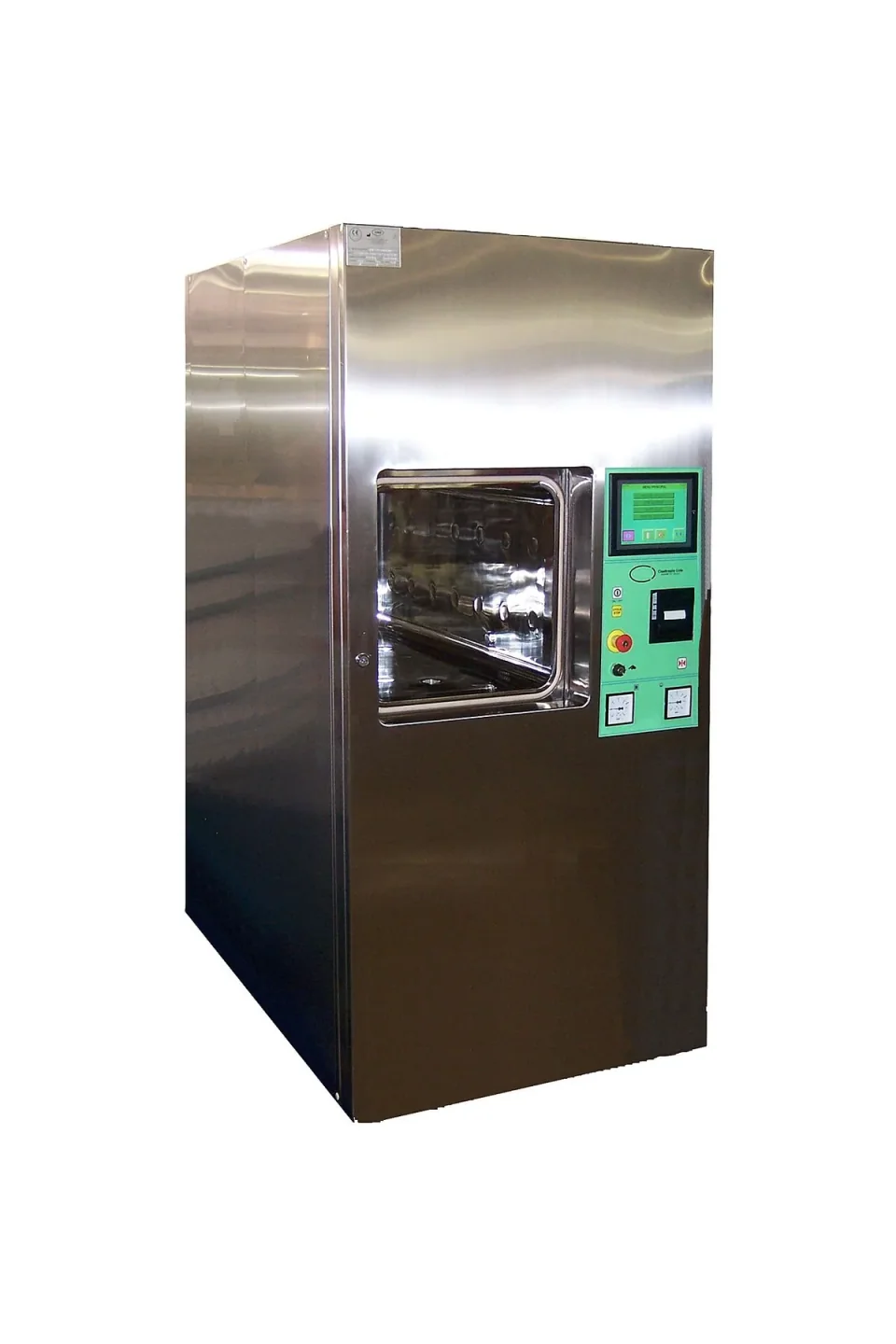
About this photograph
This photograph illustrates the equipment context. It is not evidence of a product, supplier, software configuration or service package recommended in this guide.
The decision at a glance.
- Start here
- Map set families, arrival times, return deadlines and capacity at collection, cleaning, preparation, sterilization and storage. Have the responsible teams review the complete pathway.
- Spend more when
- A verified bottleneck requires added capacity and the supporting room, utilities, staff and quality-assurance resources are funded.
- Watch the budget
- Include water treatment, steam generation, drainage, loading accessories, instruments, approved consumables, training and commissioning. Chamber volume alone cannot define useful output.
- Check the support
- Obtain exact-model technical data, compatible-load evidence, maintenance provision and an accountable process-verification plan before routine use.
Ask the supplier
- Which demonstrated bottleneck will your proposal resolve?
- What utilities and site work does this configuration need?
- Who provides the commissioning and verification reports?
Count the sets that must be ready
Start with the operating schedule and instrument-set requirements agreed by the clinical and sterile-processing teams. Record which set families arrive, when they arrive and when they must be available again. Include the busiest expected periods and the stock of complete usable sets. A daily average can hide the afternoon queue that disrupts the next list.
Ask the team to record where sets wait: collection, cleaning, inspection, assembly, packaging, sterilization or return to storage. WHO's reprocessing overview describes this as a sequence requiring infrastructure, equipment and quality control. Use that whole sequence as the purchasing boundary rather than starting with a preferred chamber size.
Draw a capacity map with the people doing the work
For each stage, list the required workspace, equipment, staffing, hours available and observed capacity under the hospital's approved process. Note any dependence on a shared washer, water supply or technician. Compare the observed workload with the service requirement. Keep uncertain figures identified for measurement instead of turning a brochure's maximum throughput into a hospital promise.
Have infection prevention and the facilities team review the physical pathway. CDC's sterilizing-practices guidance describes separating decontamination from clean processing areas and treating facility design as part of the system. Ask qualified designers to determine the applicable layout and environmental requirements; this worksheet does not prescribe room pressures or building dimensions.
Match the equipment to the intended loads
Create a list of the instrument and packaging families the new service must process. Have the responsible specialists reconcile their current instructions with the proposed equipment and process. Request a written compatibility and capacity explanation for the actual configuration. A chamber-volume figure alone does not show how the hospital's sets will fit or move through the workday.
STERIS offers different chamber and loading arrangements within its Evolution family. Its published high-capacity claims therefore cannot be applied to every model or every load. Ask the supplier to identify the exact chamber, doors, loading equipment and included accessories. Keep any model-specific demonstration and acceptance evidence with the quotation.
Make utilities a priced part of the purchase
Build a utility table with four columns: manufacturer's requirement, measured site provision, work needed and responsible party. Include applicable electricity, water, steam, drainage, ventilation, clearances and access requirements. Get the technical data for the exact model before contractors price the work. Assign who verifies readiness before the equipment is shipped or an installer travels.
STERIS states that Evolution utility requirements vary by configuration and identifies facility-steam and integrated-generator options. Its steam-generation guidance also explains that dedicated generators still need suitable feed water; standalone arrangements add space and power considerations. A built-in generator does not remove the need to assess the receiving utilities and ongoing maintenance.
Buy the recurring resources and the verification work
List the approved cleaning products, packaging, monitoring supplies, protective equipment and maintenance parts that the service will need. Obtain current supply references and prices for the planned workload. Add staff preparation, competency arrangements and recordkeeping resources. Ask who manages purchasing when an initially supplied kit runs out.
Include installation, commissioning and the required process-verification work in the contract, with qualified responsible people and deliverable reports. CDC describes verification before routine use, including after relevant changes. The hospital's specialists must select the applicable procedures and authorize release; a sales demonstration or completed delivery cannot replace that work.
Compare improvements using the same service target
Price three practical paths against the required availability of sets: improve the current pathway, replace the existing sterilizer, or expand the complete service. Where a qualified external service is feasible, assess its transport, traceability, turnaround and continuity obligations as well. Include extra instruments if the approved turnaround plan requires them.
Fund the option that resolves the demonstrated constraint and can be maintained. Before award, ask what happens during planned service, water interruption or a machine outage. Record the approved continuity arrangement and its cost. A successful purchase gives the hospital a sustainable route to ready sets, with each supporting responsibility assigned.
Compare the options.
Upstream improvement
- Capability
- Addresses delays before sterilization.
- Best fit
- The sterilizer is not the limiting stage.
- Cost to watch
- Cleaning, preparation, instruments and staff.
Replacement
- Capability
- Restores required existing service.
- Best fit
- Current layout and capacity remain appropriate.
- Cost to watch
- Changeover, utilities and commissioning.
Coordinated expansion
- Capability
- Adds supported processing capacity.
- Best fit
- A verified demand increase justifies the project.
- Cost to watch
- Building, utilities, machines and staffing.
External service
- Capability
- Provides agreed processing and turnaround.
- Best fit
- A qualified route meets local requirements.
- Cost to watch
- Contract, transport and additional sets.
Option notes, costs & support 4 options
Improve the upstream pathway
Resolve the actual constraint
- Best for
- A service limited by collection, cleaning, preparation or staffing rather than the sterilizer.
- Why consider it
- A capacity map can reveal which stage prevents timely set availability.
- The trade-off
- The remedy may involve several budgets and departments.
- Price & package
- Quote the missing workstations, utilities, instruments or staffing resources.
- Support
- Have the processing and infection-prevention leads approve the revised pathway.
Replace within the existing service footprint
Restore suitable capacity
- Best for
- A worn or unsupported sterilizer where the broader workflow remains appropriate.
- Why consider it
- A documented like-for-like requirement can focus the replacement scope.
- The trade-off
- A similar chamber size does not establish identical utility or loading requirements.
- Price & package
- Include removal, connections, commissioning and planned interruption.
- Support
- Confirm technical data, service access and model-specific training.
Expand sterilizer and supporting infrastructure
Increase verified capacity
- Best for
- Demand exceeding the complete pathway's sustainable output.
- Why consider it
- A coordinated project can add processing capacity together with required utilities and space.
- The trade-off
- Buying the machine ahead of the site project can delay useful service.
- Price & package
- Price room works, steam generation, water treatment and all supporting resources.
- Support
- Assign installation and process-verification responsibilities.
Arrange qualified external capacity
Planned continuity option
- Best for
- A hospital with a feasible contracted processing route during works or outages.
- Why consider it
- A defined service arrangement can be evaluated alongside capital expansion.
- The trade-off
- Transport, traceability, turnaround and quality responsibilities need detailed agreement.
- Price & package
- Compare the complete contracted service, transport and extra instrument-set requirement.
- Support
- Obtain the hospital's approval of the provider and documented service conditions.
Budget for the complete service.
Reprocessing project cost = suitable equipment + room and utility work + supporting workflow resources + commissioning and training + recurring supplies + maintenance and continuity.
- Cleaning and preparation capacity
- Water treatment and steam provision
- Instrument and packaging compatibility
- Staffing and quality-assurance resources
- Service interruption and extra instrument sets
Before you commit.
- Map set demand, arrival times and return deadlines.
- Measure queues and capacity across the complete pathway.
- Reconcile intended loads and packaging with current instructions.
- Price the exact model's utility and site requirements.
- Include routine supplies, training and required verification reports.
- Agree a qualified continuity route for maintenance and interruptions.
Further checks & evidence limits
Questions to resolve
- Which measured constraint will this purchase remove?
- What site work does this exact configuration require?
- Who performs and documents the required verification before routine use?
What the evidence does not establish
- The guide supplies no sterilization cycle, device-reprocessing protocol or architectural specification.
- Load compatibility, current local standards, staffing and service-provider suitability require qualified hospital review.
Sources & supporting evidence.
Manufacturer claims and seller offers are identified below. Prices apply to the stated offer and review date; confirm availability, configuration and delivered cost.
- Decontamination and reprocessing of medical devices for health care facilities: aide-memoireWHO · institutional guidance · checked October 17, 2026
Official overview describes sequential stages from collection and receipt through processing, storage and distribution, requiring infrastructure, equipment and quality control/validation.
- Sterilizing PracticesUS CDC · institutional guidance · checked October 17, 2026
Web chapter of the 2008 guideline explains that processing depends on facility design and the complete workflow; describes separation of decontamination from clean areas and verification before routine use. No cycle settings or engineering air-change specifications are reproduced.
- AMSCO Evolution Medium Steam SterilizerSTERIS · manufacturer · checked October 17, 2026
Provides different chamber and loading configurations, a facility-steam or integrated-generator choice, and explicitly states utility requirements depend on unit specifications. Links model-specific technical data, maintenance manuals and training.
- Guide to Optimal Steam GenerationSTERIS · manufacturer education · checked October 17, 2026
Describes central, integrated and standalone steam generation; dedicated generators still require water meeting manufacturer specifications, and standalone installations need space and appropriate power.
Put the guide to work.
Send MMS your equipment list, destination and budget. We can help you compare a complete package.
Discuss your equipment