
The equipment arrived. Who can release it for use?
Build the handover record before shipment so delivery, installation, training and acceptance each have an owner.
Sources reviewed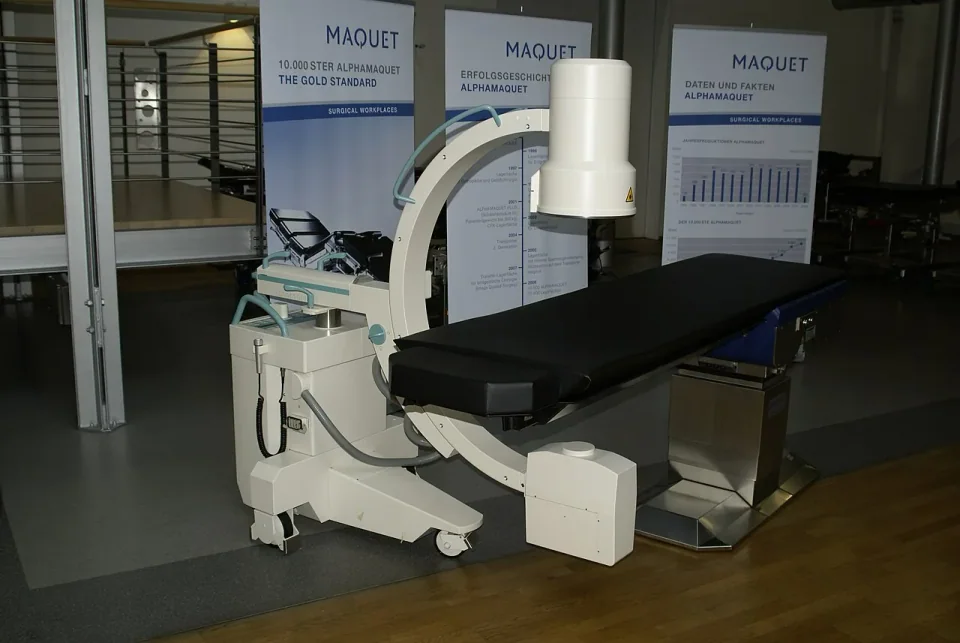
About this photograph
This photograph illustrates the equipment context. It is not evidence of a product, supplier, software configuration or service package recommended in this guide.
The decision at a glance.
- Start here
- Attach a staged handover schedule to the order: receipt, installation, technical acceptance, user preparation and authorization for use. Give every stage an owner and required evidence.
- Spend more when
- Pay for specialist installation, acceptance support or additional training when the receiving hospital lacks the necessary qualified capacity.
- Watch the budget
- Include site work, travel, repeat visits, missing accessories, storage and interim service while any delivery issues are corrected.
- Check the support
- Record warranty start conditions, claim contacts, manuals, training attendance and the first maintenance action. Keep unresolved items open until their evidence is reviewed.
Ask the supplier
- Who will deliver each installation and acceptance report?
- Which event starts the warranty?
- Who pays for corrective work and repeat visits?
Agree what completion means before shipment
Create one handover record while the order is still being negotiated. Give it the purchase or donation reference, intended department, exact equipment configuration and a named hospital coordinator. Add five dated stages: receipt, installation, technical acceptance, user preparation and authorization for use. Each stage needs a responsible person and the evidence that person will provide.
WHO's donation guidance covers responsibilities before, during and after a donation. UNICEF's contract guidance likewise follows the supplier relationship through confirmation that the contract has been fulfilled. Apply that discipline to the delivery schedule: specify what constitutes completion, which deficiencies prevent acceptance and how disagreements will be escalated.
Give stores a receipt task they can actually perform
Prepare a receiving list showing the expected model, serial where known, accessories, quantities and packing references. At arrival, record what was received, visible damage and missing items, with photographs linked to the record. Preserve delivery and packaging information needed for a claim. Give stores an immediate contact for a damaged or incomplete shipment.
Keep the receipt entry distinct from the hospital's technical acceptance decision. A signed delivery note may have contractual consequences, so agree its wording and the discrepancy process in advance with the purchasing team. Do not leave a receiving clerk to decide whether software, a probe package or a sterilizer installation is clinically acceptable.
Turn the site survey into an installation commitment
List each prerequisite with an owner and completion date: room access, utilities, network work where needed, mounting, handling equipment and storage conditions. Require the supplier to identify the installation requirements for the actual configuration. Record who has checked that the destination meets them and who pays if another visit becomes necessary.
UNICEF's cold-room guidance gives a useful concrete example. It treats site readiness, installer responsibility, monitoring, alarms, spares and training as planning items. The lesson for a wider equipment purchase is to obtain the equivalent model-specific requirements, rather than assume that a fitted plug or an available room settles installation.
Buy the acceptance evidence
Ask the qualified engineering and clinical leads to define the required acceptance work before ordering. Name who performs it, who reviews the results and who authorizes use under hospital policy. Include required reports and any applicable local approvals in the delivery scope. This guide supplies purchasing records; the responsible specialists select and carry out the tests.
For each delivered serial, link the installation report, configuration record, required test results and corrective actions. If a result is unacceptable or a document is missing, assign a hold status and a due date. Closing an action should require the promised evidence, not simply a supplier email saying the issue has been addressed.
Handover includes the people and the next service visit
Record the staff trained, the training scope, the manuals supplied and the department responsible for keeping instructions available. Confirm arrangements for other shifts and future staff. For equipment with recurring consumables, identify the approved ordering references and initial stock. For software, hand over authorized accounts and entitlement records through the hospital's approved process.
Enter the warranty start event, claim contact, service provider and next required maintenance action. Check these against the agreement rather than assuming the warranty begins on first use. The handover coordinator should know which outstanding commitments belong to the supplier and which now belong to the hospital.
Close the purchase with a usable record
Use an exception log with four columns: unresolved item, responsible party, due date and closure evidence. Keep financial closeout and authorization for use as separate entries with their own signatories. Any proposed conditional commercial acceptance should describe its limits and receive the hospital's approval; it must not silently clear an unresolved safety requirement.
Finish by handing the complete record to the asset owner and maintenance team. The next buyer should be able to find what was ordered, what arrived, what was accepted and which obligations remain. That makes the handover useful after the installation engineer and purchasing project team have moved on.
Compare the options.
Supplier coordinates installation
- Capability
- One installation and training schedule with hospital sign-off.
- Best fit
- Specialist work exceeds local capacity.
- Cost to watch
- Travel, site readiness and the agreed technical scope.
Hospital coordinates handover
- Capability
- Local lead collects separate contractor and user records.
- Best fit
- A capable receiving team already exists.
- Cost to watch
- Qualified staff time and coordination.
Hold delivery from use
- Capability
- Tracks unresolved evidence and corrective action.
- Best fit
- Acceptance requirements remain unmet.
- Cost to watch
- Storage, delay and interim service.
Option notes, costs & support 3 options
Supplier-led installation with hospital acceptance
Complete commissioning package
- Best for
- Equipment needing specialist installation or a receiving team with limited technical capacity.
- Why consider it
- A defined scope can put installation evidence, training and corrective work into one supplier schedule.
- The trade-off
- The hospital still needs a competent person to assess the evidence and authorize use.
- Price & package
- Request separate installation, travel, training and acceptance-support line items.
- Support
- Identify the responsible local service provider and the person receiving warranty claims.
Hospital-led acceptance with contracted specialist tasks
Use existing capability
- Best for
- A hospital with qualified engineering and clinical leads able to coordinate the handover.
- Why consider it
- The receiving team can assign defined tasks while retaining one complete asset record.
- The trade-off
- Separately contracted work needs clear boundaries and scheduling.
- Price & package
- Include test-provider fees, staff time, site work and repeat visits.
- Support
- Require each contractor's report to identify the device and work performed.
Hold pending completion
Resolve an incomplete delivery
- Best for
- A received unit with unresolved configuration, damage, documents or readiness issues.
- Why consider it
- A documented hold keeps the next action and responsible party explicit.
- The trade-off
- Storage and service continuity must be planned while issues are resolved.
- Price & package
- Agree who bears storage, return freight and corrective-work costs under the contract.
- Support
- Set escalation contacts, due dates and an evidence requirement for closing each issue.
Budget for the complete service.
Completed handover cost = delivery + site preparation + installation + agreed acceptance work + training + unresolved-item correction + interim service.
- Specialist visits and repeat travel
- Unfinished room or utility work
- Missing accessories and documents
- Training across shifts
- Storage and continuity during a hold
Before you commit.
- Attach the exact configuration and expected accessory list to the order.
- Name the coordinator and signatory for each handover stage.
- Record receipt discrepancies and preserve claim evidence.
- Assign each site prerequisite and acceptance report to a provider.
- Log training, manuals, warranty start and first maintenance action.
- Close exceptions with evidence and record authorization for use separately.
Further checks & evidence limits
Questions to resolve
- Which named person supplies each acceptance report?
- What event starts the warranty and completes the commercial handover?
- Who pays to correct a missing item or failed acceptance requirement?
What the evidence does not establish
- Required tests, regulatory approvals and permission to use equipment are device- and destination-specific.
- The worksheet is an editorial purchasing framework; it is not a universal legal acceptance certificate.
Sources & supporting evidence.
Manufacturer claims and seller offers are identified below. Prices apply to the stated offer and review date; confirm availability, configuration and delivered cost.
- Medical device donations: considerations for solicitation and provision, second editionWHO · institutional guidance · checked October 17, 2026
Official overview addresses donor and recipient responsibilities before, during and after donation, including acceptability criteria. Public overview consulted; detailed technical requirements must be confirmed from applicable documentation.
- Contract implementationUNICEF Supply Division · institutional guidance · checked October 17, 2026
Vaccine procurement resource describes a named contract manager coordinating supplier, freight and customs communication through final confirmation of contractual conditions.
- Cold chain frequently asked questionsUNICEF Supply Division · institutional guidance · checked October 17, 2026
Cold-room planning includes site readiness, installation responsibility, temperature monitoring, alarms, power backup, spares and user/technician training. These are cold-chain examples, not universal equipment specifications.
Put the guide to work.
Send MMS your equipment list, destination and budget. We can help you compare a complete package.
Discuss your equipment