
Price a year of infusion sets before choosing the pump
A pump quotation becomes useful when it includes the approved sets and syringes the hospital will have to keep ordering.
Sources reviewed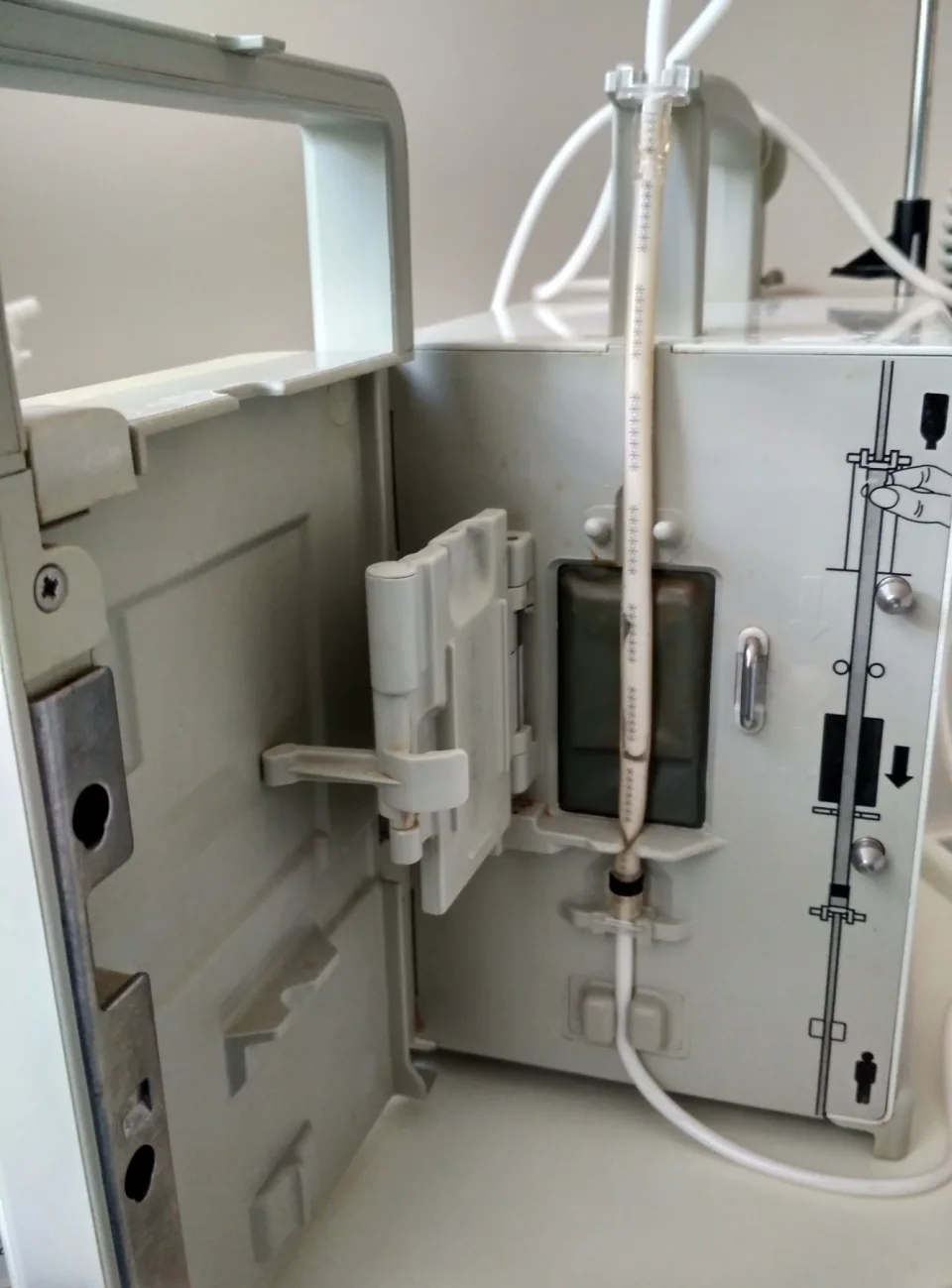
About this photograph
This photograph illustrates the equipment context. It is not evidence of a product, supplier, software configuration or service package recommended in this guide.
The decision at a glance.
- Start here
- Build one basket listing exact pump configuration, approved product references, annual quantities, pack sizes and delivered prices. Have the hospital's responsible team approve it.
- Spend more when
- A change resolves a demonstrated capability, supply or support problem after training, accessories and transition stock are included.
- Watch the budget
- Check minimum orders, expiry on delivery, freight, price validity and unused old stock. Separate opening inventory from annual consumption.
- Check the support
- Require current compatibility evidence and a written replenishment and substitution process. A backup pump also needs its compatible supplies and prepared users.
Ask the supplier
- Which approved references fit this exact pump and software?
- What does the complete annual basket cost delivered?
- What is the supported response to a set shortage?
Start with the consumables the service actually needs
Ask nursing, pharmacy, engineering and purchasing to define the intended work before comparing pumps. Build a list of required administration sets, extension sets and syringe types for that work. The responsible clinical team approves the requirements; purchasing records the ordering references and quantities. A count of pumps alone cannot describe the annual supply commitment.
FDA recommends multidisciplinary evaluation before pump purchase or rental and a plan for introduction and training. Use that team to sign off one comparison basket. Otherwise, one supplier may quote a basic set while another includes the filters, connectors or other features your approved workflow requires.
Match each reference to the exact configuration
Record the pump family, module, software version and destination alongside every proposed consumable. B. Braun distinguishes dedicated Infusomat Space and Spaceplus lines from those for Infusomat compactplus. That is a concrete reason to avoid an order described only as compatible B. Braun tubing. Obtain the current manufacturer's compatibility information for the supplied configuration.
The BD Alaris version 12.1 manual provides another example: it directs users to compatible set lists and explains that permitted syringe models depend on software version, with country differences in availability. The manual illustrates the purchasing question; it does not establish current suitability of any offered used unit. Ask for the applicable current documentation.
Give every bidder the same one-year basket
Use one row per approved stock-keeping unit, or SKU. Include description, manufacturer reference, pack quantity, forecast annual units, opening stock, desired closing stock, quoted price per pack, freight and delivery schedule. Base quantities on the hospital's workload and approved replacement practices, not on a sales estimate or a newly invented clinical schedule.
Calculate packs to order from the planned units, allowing for the pack size. Show initial stock separately from recurring annual consumption so it is not counted twice. Ask bidders to identify minimum orders, price-validity periods and any volume commitment. Compare delivered annual totals in the same currency and period, with taxes and exclusions visible.
Price the stock the hospital can use in time
Add shelf life remaining on delivery, storage requirements and realistic replenishment lead times to the basket. A discounted carton that cannot be used before expiry is not equivalent to smaller scheduled deliveries. Agree how damaged, short-dated or incorrect supplies will be handled and identify who receives product notices and recall information.
Ask what happens if a required reference becomes unavailable. Request the proposed replacement reference and written compatibility evidence for the actual pump configuration. Any change needs the hospital's established review and training process. Do not let a seller's statement that a set physically fits replace the manufacturer's applicable compatibility information.
Count the work involved in changing platforms
Add mounting accessories, batteries where needed, approved startup stock, user training, engineering support and any software configuration work to the hardware price. Record how the hospital will separate old and new consumables during introduction. Identify what stock can still be used, what can be returned and what would become stranded.
A second family is not automatically a usable backup. Staff need access to its compatible supplies and the appropriate training. FDA's manager guidance explicitly includes a plan to obtain both a working pump and tubing when a pump fails. Make the proposed continuity arrangement concrete before crediting it as a benefit in the comparison.
Award a replenishable package
Put three views beside one another: the initial purchase, the recurring one-year basket and a stated supply-interruption scenario. For the last view, ask how service continues if the main set reference is delayed. Use supplier commitments and hospital-approved alternatives; leave unsupported assumptions visibly unresolved.
Choose the package that meets the service requirement and can be replenished on acceptable terms. Carry the approved SKU list, order contact, shortage escalation route and review date into the handover record. Revisit the basket when workload or approved products change. The comparison should remain useful long after the capital purchase has disappeared from the purchasing queue.
Compare the options.
Keep current platform
- Capability
- Maintain accepted function with improved supply planning.
- Best fit
- Supply management is the main unresolved issue.
- Cost to watch
- Approved sets, service and replenishment terms.
Standardize a service
- Capability
- One evaluated configuration and purchasing basket.
- Best fit
- The package meets the department's agreed requirements.
- Cost to watch
- Hardware, transition, minimum orders and stock.
Two defined families
- Capability
- Support distinct needs or an orderly transition.
- Best fit
- The extra complexity has a documented purpose.
- Cost to watch
- Duplicated stock and training.
Option notes, costs & support 3 options
Retain the supported fleet and strengthen supply
Existing-platform baseline
- Best for
- A fleet meeting requirements with a solvable purchasing or replenishment problem.
- Why consider it
- Separating stock shortages from hardware limitations may avoid an unnecessary platform change.
- The trade-off
- Existing support and approved consumable availability must still be verified.
- Price & package
- Quote the full annual basket plus maintenance and stockholding.
- Support
- Confirm current set references, discontinuation notice and a shortage escalation contact.
Standardize a defined service on one supported family
Planned transition
- Best for
- A department whose requirements can be met by an evaluated system and supply package.
- Why consider it
- A common approved basket can make quantities and replenishment terms easier to compare.
- The trade-off
- Conversion requires training, accessories and careful management of old and new stock.
- Price & package
- Include startup stock, contract commitments and transition costs.
- Support
- Obtain configuration-specific compatibility and an agreed introduction plan.
Maintain two deliberately separated supported families
Distinct requirements or staged changeover
- Best for
- Services with different approved needs or a justified phased replacement.
- Why consider it
- The hospital can retain necessary capability while evaluating a change.
- The trade-off
- Separate storage, identification, training and stock levels add work.
- Price & package
- Calculate both baskets and the cost of holding less interchangeable stock.
- Support
- Make the backup equipment and its compatible supplies explicit.
Budget for the complete service.
First-year infusion package = configured pumps and accessories + implementation and training + delivered approved-SKU basket + stockholding and support.
- Approved set and syringe mix
- Annual workload and pack quantities
- Minimum orders and expiry exposure
- Freight and replenishment timing
- Training and stranded transition stock
Before you commit.
- Approve one application-specific basket before inviting quotes.
- Record pump, module, software and manufacturer consumable references.
- Compare pack quantities, delivered cost and annual forecast consistently.
- State minimum orders, price validity and shelf life on delivery.
- Document the shortage and substitution approval route.
- Budget transition stock, accessories and staff preparation.
Further checks & evidence limits
Questions to resolve
- Which current document confirms every quoted set and syringe for this configuration?
- What is the delivered price and minimum shelf life for the complete annual basket?
- What happens when a required reference is unavailable or discontinued?
What the evidence does not establish
- No universal set interchangeability, clinical replacement interval or country-specific approval is established.
- Suppliers must confirm current product notices, configuration support, local availability and quotations.
Sources & supporting evidence.
Manufacturer claims and seller offers are identified below. Prices apply to the stated offer and review date; confirm availability, configuration and delivered cost.
- Dedicated pump disposablesB. Braun · manufacturer · checked October 17, 2026
Identifies separate Infusomat Space/Spaceplus and Infusomat compactplus dedicated line families and Perfusor pump syringes. Product availability and indications can differ by country.
- BD Alaris System with Guardrails Suite MX, version 12.1 user manualBD · manufacturer manual · checked October 17, 2026
Printed pages 170–175 require compatible pump sets and approved syringes; permitted syringe models depend on software version and availability/model numbers vary by country. This manual is a configuration-specific example, not a current clearance or recall-status determination.
- Infusion Pump Risk Reduction Strategies for Facility Administrators and ManagersUS FDA · institutional guidance · checked October 17, 2026
Recommends multidisciplinary evaluation before purchase or rental, staged introduction/training, prompt response to recalls and access to a working pump and tubing when a pump fails.
Put the guide to work.
Send MMS your equipment list, destination and budget. We can help you compare a complete package.
Discuss your equipment