
Patient warming: choose the blanket before the box
Forced-air and resistive warming put different demands on supplies, cleaning and surgical access. Compare a usable patient interface and its full workflow before choosing the controller.
Editorially reviewed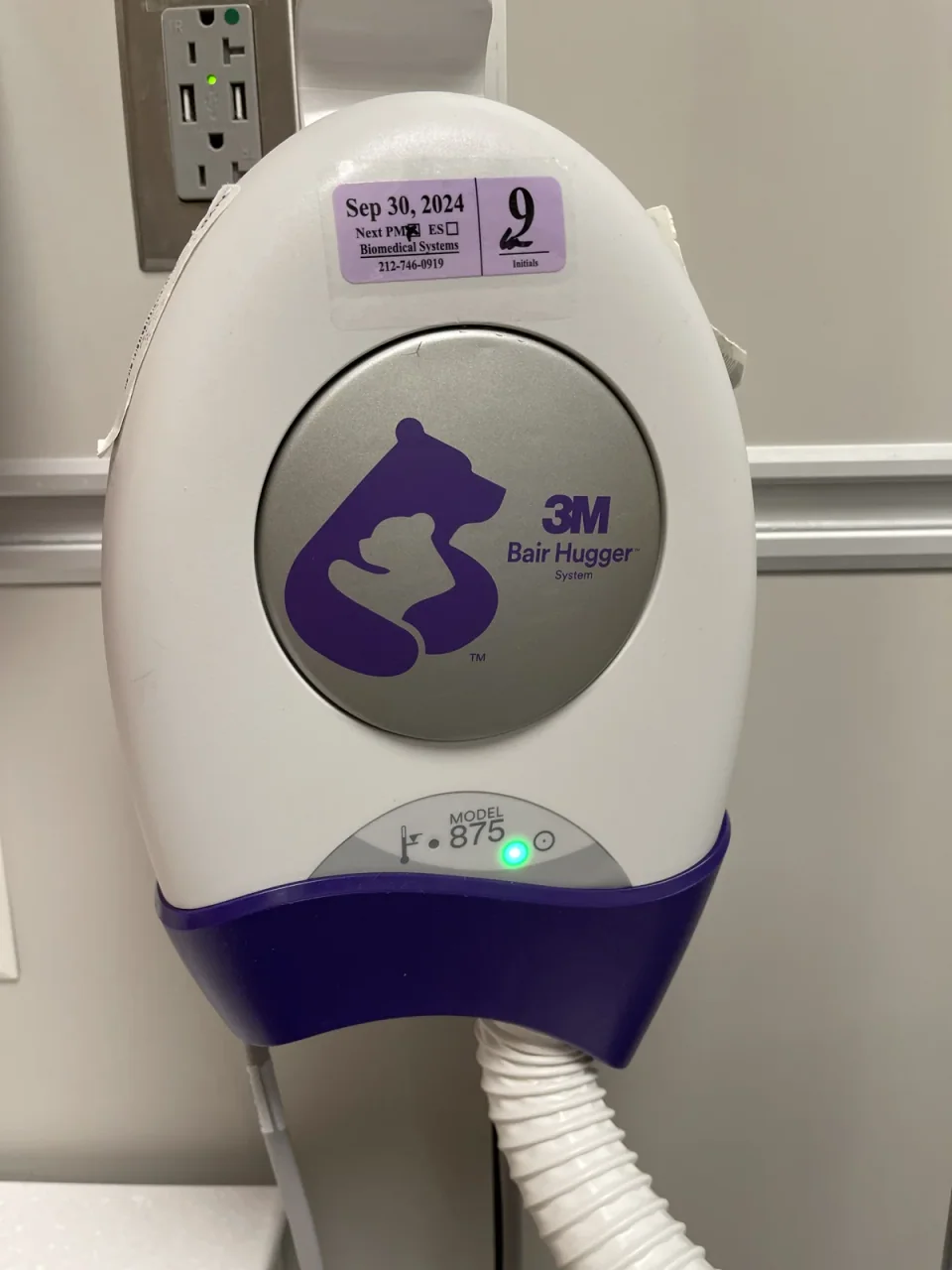
The decision at a glance.
- Start here
- Match each case group and care location to an approved blanket or pad, then select its compatible controller.
- Spend more when
- Additional interfaces, controllers or transport capability solve a demonstrated access or availability constraint.
- Watch the budget
- Compare the full usable configuration and recurring supplies over one common period.
- Check the support
- The proposal substitutes an unapproved interface, omits essential supplies or cannot support the cleaning and replenishment process.
Ask the supplier
- Which approved interface serves each procedure and care area?
- How many ready interfaces remain during cleaning or replenishment?
- What changes if reusable pad life or activity is lower than forecast?
Start at the patient, not the equipment cupboard
The purchase decision begins with the body area available for warming, patient size, surgical position and access the team must preserve. A controller with several settings can still be the wrong purchase if its supplied blanket obstructs the planned procedure. Have the clinical team define acceptable interfaces for the actual case mix before standardising a room.
Map where warming is required through the patient journey. A device dedicated to the operating room may not solve shortages in preparation or recovery. Count simultaneous demand and transfer arrangements separately from the number of cases per day. Clinical indications, monitoring and temperature settings belong to the approved protocol and applicable device instructions.
Forced air: distinguish the controller from the disposable
Solventum’s catalogue describes the Bair Hugger 775 as compatible with its warming blankets and gowns, while the patient-adjustable 875 is for preoperative and postoperative settings and warming gowns. The two units therefore should not be treated as interchangeable just because they share a brand.
The 62200 upper-body blanket is a single-use interface with two hose ports for positioning. Other shapes serve other access needs. Specify the approved blanket stock, compatible unit, hose and mounting arrangement together. A low console price can leave a recurring supply obligation larger than the equipment saving.
Resistive pads: reusable does not mean always available
Gentherm’s Astopad DUO310 uses reusable resistive blankets or pads and provides two independently controlled connections. Its COV range includes the COV105 for lithotomy and COV155 for upper-body coverage; SOF and ROE options integrate warming into table-pad arrangements, with availability varying by country. A battery configuration also needs to be identified in the offer.
Treat the patient-contact pad as an asset with its own inventory and replacement budget. Demonstrate how the proposed size works with the actual table, positioning accessories and surgical access. A second socket is useful only when the approved configuration and clinical workflow can use it. It is not a reason to assume one controller can meet every simultaneous warming demand.
Price the cleaning cycle as carefully as the supply carton
For disposable interfaces, calculate cost per completed case using the actual mix of shapes and sizes, including unopened stock that expires and stock lost through damaged packaging. Establish who replenishes each care area. Avoid relying on a cheap alternative solely because its connector appears to fit; compatibility must be documented for the exact system.
For reusable pads, include the initial inventory, compatible cleaning products, staff time, inspection, storage and replacement after damage. Stock must cover pads in use and those unavailable during cleaning or repair. If two rooms operate simultaneously, buying only two pads leaves no spare during turnaround. The correct reserve depends on the observed workflow and accepted reprocessing instructions.
A cost example that does not assume a pad lasts forever
Suppose a disposable interface costs 18 per case. A hypothetical reusable pad costs 600, achieves 120 accepted uses before replacement and needs 8 of cleaning and handling per use. Its allocated interface cost is 600 ÷ 120 + 8 = 13 per case. At 800 comparable cases, that is 10,400 versus 14,400 for disposables, before controller, inventory, service and other differences.
If the pad achieves only 50 accepted uses, its cost becomes 600 ÷ 50 + 8 = 20 per case, exceeding the disposable assumption. These figures are illustrative, not product prices or predicted service lives. Use an evidence-based replacement allowance and test a shorter-life scenario before presenting savings to a budget committee.
Choose on demonstrated fit
Observe setup, patient access, cable or hose routing, cleaning and return to service with the proposed package. Include the people responsible for anesthesia, nursing, infection prevention and equipment maintenance. Record whether additional stock or a different interface fixes the problem before replacing a suitable controller.
Avoid declaring either technology safer from a seller’s infection claim, or more economical from the absence of a disposable blanket alone. The defensible choice is the accepted system that delivers the required warming workflow with sustainable staffing, supplies and support. Retain functioning equipment where it still meets that standard.
Compare the options.
Bair Hugger 775 with approved blankets or gowns
- Capability
- Forced-air platform with multiple interface choices
- Best fit
- The accepted case mix has a dependable disposable supply
- Cost to watch
- Single-use stock, hose, mounting and service
Bair Hugger 875 with approved gowns
- Capability
- Patient-adjustable pre/postoperative warming
- Best fit
- The requirement is within its documented pre/postoperative role
- Cost to watch
- Dedicated care-area availability and gown supply
Astopad DUO310 with selected COV pads
- Capability
- Resistive warming with reusable interfaces
- Best fit
- Compatible reusable pads fit the procedures and turnaround capacity
- Cost to watch
- Pad inventory, cleaning, replacement and configured battery
Retain controllers; change the interface inventory
- Capability
- Addresses stock or fit problems directly
- Best fit
- Existing equipment remains suitable and supported
- Cost to watch
- Correct sizes, spare pads or replenishment
Budget for the complete service.
Per-case cost includes allocated controller/service costs plus the actual interface, cleaning, stock-loss and replacement costs over a common activity period.
- Clinical access and size mix
- Concurrent demand across care areas
- Reusable pad accepted life
- Disposable replenishment and losses
Further checks & evidence limits
Questions to resolve
- Which approved interface serves each procedure and care area?
- How many ready interfaces remain during cleaning or replenishment?
- What changes if reusable pad life or activity is lower than forecast?
What the evidence does not establish
- No comparative infection or clinical-outcome ranking; product marketing is not independent evidence.
- Exact regional configuration, device instructions, cleaning process and unit support require acceptance.
- No clinical temperature settings, blood/fluid-warmer advice or predicted pad life.
Sources & supporting evidence.
Manufacturer claims and seller offers are identified below. Prices apply to the stated offer and review date; confirm availability, configuration and delivered cost.
- Astopad resistive warming system and configuration specificationsGentherm · manufacturer · checked October 18, 2026
DUO310, independently controlled connections, reusable COV and table-pad options; regional availability qualified.
- Bair Hugger product catalogue: controller pagesSolventum · manufacturer · checked October 18, 2026
775 versus 875 scope and interface compatibility; targeted catalogue reading, not all products.
- Bair Hugger 62200 upper-body blanketSolventum · manufacturer · checked October 18, 2026
Single-use interface, upper-body role and hose-port positioning; comparative outcome claims not adopted.
Put the guide to work.
Send MMS your equipment list, destination and budget. We can help you compare a complete package.
Discuss your equipment