
Choose an oxygen service the hospital can keep supplied
Compare concentrators, delivered cylinders and a PSA plant using the same demand assessment, backup obligations and operating budget.
Sources reviewed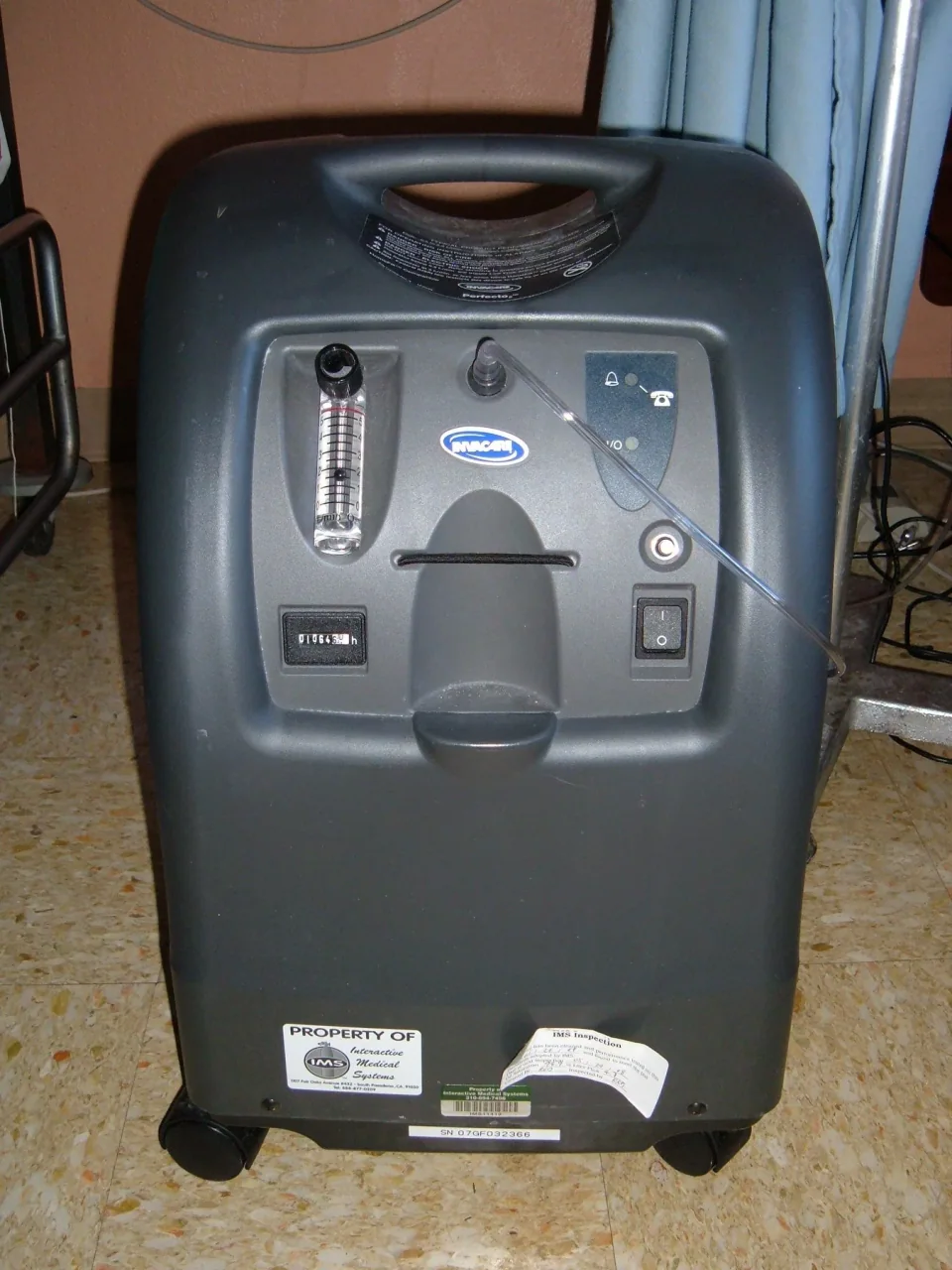
About this photograph
This photograph illustrates the equipment context. It is not evidence of a product, supplier, software configuration or service package recommended in this guide.
The decision at a glance.
- Start here
- Obtain a qualified demand assessment, connected-device inlet requirements and site review. Use those same inputs for every supplier comparison.
- Spend more when
- Additional generation or distribution resolves a verified need and the power, personnel, quality assurance, maintenance and backup are funded.
- Watch the budget
- Include delivery logistics, cylinder terms, electricity, site work, distribution, training, spares and ongoing service. Compare a qualified service contract where available.
- Check the support
- Name the operating and technical owners, required commissioning evidence and approved response to power, source or delivery interruption.
Ask the supplier
- Which assessed demand and device requirements does this package meet?
- What supply, quality and maintenance responsibilities do you retain?
- How does service continue when the primary source is unavailable?
Write the service requirement before choosing a source
Ask the clinical and engineering teams to define the areas served, expected demand, concurrent use and intended respiratory equipment. Record the inlet requirements of every connected device rather than assuming that all oxygen sources are interchangeable. Add expansion plans separately from today's requirement so the proposal can show what is needed now and what would trigger an upgrade.
WHO's 2024 facility oxygen specifications cover sources, storage and distribution. Use that complete boundary for the purchasing exercise. A source quotation should identify how the specified oxygen reaches each required point, who verifies the system and which parts of the route remain the hospital's responsibility.
Use local inputs for a meaningful comparison
Build a comparison sheet using the same assessed demand, operating period and service requirements for each option. Ask suppliers to show their capacity assumptions and exclusions. Keep the engineering calculation attached to the proposal, with its author and date. Purchasing should be able to trace a quoted capacity to the hospital's requirement without independently designing the system.
UNICEF's 2020 planning-tool guide distinguishes daily volume for cylinder-refill planning from instantaneous flow for plant sizing, and considers electricity and proximity to cylinder suppliers. Its age and scope matter: that version excludes liquid oxygen and does not quantify critical-care or operating-room equipment. It can frame questions, but current local inputs and qualified design remain necessary.
Make the cylinder offer a delivery commitment
For a cylinder proposal, request the delivered supply price and the conditions behind it: ownership or rental, deposits, transport, collection of empties, refill turnaround and minimum order. Ask who supplies the compatible regulators, connections and storage arrangements. Specify the documents required to confirm medical-gas quality and cylinder condition under applicable local requirements.
Review an interruption scenario with the supplier and hospital team. If a scheduled delivery fails, identify the contact, available alternative route and the hospital's approved reserve arrangement. A quoted refill price without transport and turnaround information leaves a large part of the service unpriced. Confirm the same obligations for any proposed backup-cylinder supply.
Give on-site generation an operating owner
For concentrators or a PSA plant, require the proposed equipment's power, environmental and maintenance requirements. Have facilities staff verify the site against them. Identify who handles routine operating tasks, technical faults, spare parts and replacement provision. Price the support that will exist after initial training and warranty, including travel when an engineer is not locally available.
UNICEF's Plant-in-a-Box describes a package including accessories, installation, planned maintenance and staff training. Use it as a scope example, not a promise about any seller's package. Require a commissioning plan, quality-verification responsibilities and documented handover for the specific project, with the required evidence reviewed before authorization for use.
Compare operating costs and a supported service alternative
Use a common planning period and show acquisition, site works, distribution, electricity, delivery logistics, staffing, maintenance and backup as separate lines. Ask for current destination quotes and identify uncertain inputs. A donated plant still needs an operating budget. An inexpensive source can become difficult to sustain when its essential supporting costs sit outside the project.
Also ask whether a qualified provider can deliver oxygen as a continuing service. UNICEF describes such arrangements in Liberia and Uganda. They illustrate a different allocation of operating and maintenance work, not a universal guarantee of availability or savings. Compare the provider's measurable commitments with the obligations and costs the hospital would retain.
Award the plan that survives an interruption
Before award, review a power outage, source failure and interrupted delivery with the responsible teams. Record the approved continuity response, who initiates it and what support the supplier must provide. Have qualified staff verify that the arrangement meets the required applications. A backup entry on a quotation is incomplete until its role and supporting resources are specified.
Close the worksheet with named owners for operations, purchasing, quality assurance, maintenance and escalation. Attach the training and handover requirements and a date to review demand. Choose the source combination and commercial arrangement the hospital can keep operating, with both ordinary costs and unresolved dependencies visible to the decision makers.
Compare the options.
Concentrators
- Capability
- Output matched to assessed applications and conditions.
- Best fit
- A supported distributed-source plan.
- Cost to watch
- Power, maintenance and backup provision.
Cylinders
- Capability
- Supply replenished through an agreed delivery route.
- Best fit
- A credible refill and continuity arrangement.
- Cost to watch
- Delivered oxygen, transport and cylinder terms.
PSA plant
- Capability
- Facility generation with suitable distribution.
- Best fit
- Assessed demand supports the complete project.
- Cost to watch
- Infrastructure, power, operators and maintenance.
Oxygen service contract
- Capability
- Defined supply with contracted operating responsibilities.
- Best fit
- An accountable local provider is available.
- Cost to watch
- Service charges and hospital-retained obligations.
Option notes, costs & support 4 options
Concentrators with an engineered continuity plan
Distributed source option
- Best for
- Assessed requirements within the proposed units' documented output and supported operating conditions.
- Why consider it
- Concentrators are one of UNICEF's facility planning options, including combinations with backup sources.
- The trade-off
- Power, environment, device compatibility and local maintenance must be established.
- Price & package
- Include power provision, backup, accessories, verification and maintenance.
- Support
- Name the person responsible for faults, spares and replacement units.
Delivered cylinders
Supply-chain option
- Best for
- A facility with a credible supplier, refill route and suitable storage/distribution arrangement.
- Why consider it
- The service can be assessed against actual replenishment needs and delivery conditions.
- The trade-off
- Cylinder ownership, turnaround and interrupted deliveries need explicit terms.
- Price & package
- Quote delivered supply, transport, deposits or rental and required accessories.
- Support
- Confirm quality documentation, cylinder-service obligations and emergency delivery arrangements.
Facility PSA plant with complete support
On-site generation project
- Best for
- Verified demand and infrastructure that justify a fully supported plant project.
- Why consider it
- UNICEF's plant package illustrates including accessories, installation, planned maintenance and training.
- The trade-off
- The hospital still needs operating resources and an effective backup arrangement.
- Price & package
- Quote site work, power, distribution, commissioning and recurring service separately.
- Support
- Identify operators, technical support, parts and quality-assurance responsibilities.
Contracted oxygen service
Alternative ownership arrangement
- Best for
- A destination with a qualified provider able to meet defined service obligations.
- Why consider it
- UNICEF describes models that procure ongoing oxygen supply with provider operation and maintenance.
- The trade-off
- Performance, measurement, payment, escalation and contract exit need close review.
- Price & package
- Compare the full service charge and retained hospital obligations over the same period.
- Support
- Require measurable delivery and continuity commitments backed by local capacity.
Budget for the complete service.
Facility oxygen cost = source or service charges + site and distribution works + power and delivery logistics + operation and quality assurance + maintenance + approved continuity provision.
- Demand and required delivery conditions
- Power and site readiness
- Cylinder refill and transport arrangements
- Operators, spares and technical support
- Backup and distribution scope
Before you commit.
- Obtain a qualified demand assessment and connected-device requirements.
- Compare complete source, storage and distribution scope.
- Price cylinder ownership, transport, turnaround and supply terms.
- Verify on-site power, environmental and maintenance provision.
- Assign quality verification, commissioning and operating owners.
- Review source, power and delivery interruptions before award.
Further checks & evidence limits
Questions to resolve
- Which assessed requirements and device inlets does the proposed system support?
- What delivery, maintenance and quality-verification work is included?
- Who provides the approved response when the primary source is unavailable?
What the evidence does not establish
- No flow prescription, plant size, reserve duration or medical-gas engineering design is supplied.
- Liquid oxygen requires a separate locally assessed comparison; the cited 2020 planning-tool version excludes it.
- Current destination prices, supplier capacity and applicable approvals need confirmation.
Sources & supporting evidence.
Manufacturer claims and seller offers are identified below. Prices apply to the stated offer and review date; confirm availability, configuration and delivered cost.
- WHO Technical specifications for health facility based medical oxygen systemsWHO · institutional guidance · checked October 17, 2026
Official overview sets the scope as minimum quality/safety and performance features for oxygen sources, storage and distribution inside health facilities. The public overview establishes scope; exact system requirements need the applicable technical documentation.
- UNICEF Oxygen System Planning Tool: Quick Reference Guide and FAQ, ex-V1.4UNICEF · institutional planning tool · checked October 17, 2026
Pages 2–6 distinguish facility demand, electricity and cylinder-source proximity; daily volume informs refill needs and instantaneous flow informs plant sizing. Version excludes liquid oxygen and critical-care/OR equipment quantities, and permits locally updated cost inputs.
- Oxygen Plant-in-a-BoxUNICEF Office of Innovation · institutional programme · checked October 17, 2026
Describes a PSA procurement package including accessories, installation, planned maintenance and staff training. Package is an example of scope, not a universal price, delivery deadline or suitability claim.
- Public-Private Partnerships for reliable oxygen supplyUNICEF Office of Innovation · institutional programme · checked October 17, 2026
Describes operating-service arrangements in Liberia and Uganda that assign equipment operation, maintenance and support to contracted providers. Used to illustrate procurement models only; reported outcome statistics are not generalized or repeated.
Put the guide to work.
Send MMS your equipment list, destination and budget. We can help you compare a complete package.
Discuss your equipment