
Which cath lab can your team actually run?
Compare a fixed angiography room, an approved upgrade and referral against the procedures, people and support you can sustain.
Editorially reviewed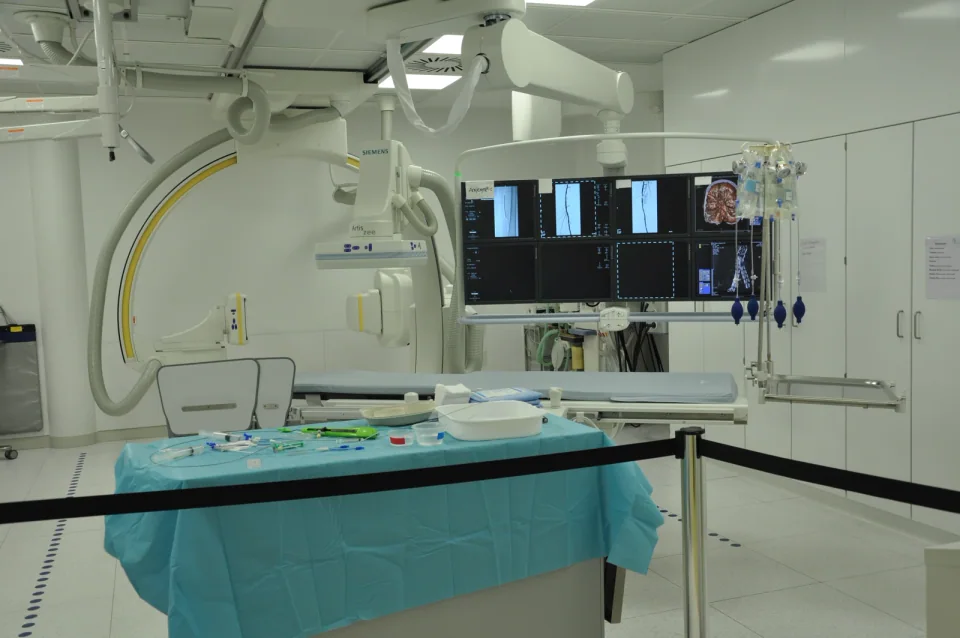
About this photograph
Not evidence of MMS stock, current support, performance or endorsement.
The decision at a glance.
- Start here
- Approve the staffed service before choosing a room.
- Spend more when
- An accepted capability or support limit needs a defined change.
- Watch the budget
- Compare the same installed scope and completed cases.
- Check the support
- Confirm the complete chain and retained-component exclusions.
Ask the supplier
- Which procedures and staff cover are funded from opening day?
- Which components and interfaces are retained, supplied or excluded?
- What exact failure response covers the complete imaging chain?
Write the service brief before the equipment brief
A cath lab purchase starts with the procedures the hospital intends to provide and the team available to provide them. Separate planned diagnostic work, interventions and any emergency coverage. The clinical leads should approve the scope and the required imaging, monitoring, recovery and escalation arrangements before an equipment shortlist becomes a commitment.
SCAI's 2021 best-practices overview treats staffing, governance and coordinated workflows as part of laboratory practice. For a buyer, that changes the budget: training, reliable cover and the surrounding service belong in the opening plan, alongside the angiography system.
Three offers can describe very different projects
A replacement imaging system in a functioning room, a conversion of an existing lab and a new installation have different boundaries. GE's Allia family includes IGS 5 and IGS 7 configurations; its Lift to Allia offering illustrates that an upgrade route may also exist for eligible installed systems. None of those labels establishes what a particular offer includes.
Require one schedule identifying the table, detector, generator, displays, control equipment, software and interfaces retained or replaced. Then identify the associated monitoring or hemodynamic equipment, injector, accessories and information-system work. An upgrade price that reuses the room cannot be compared directly with a complete new-room price.
A mobile cardiac option is not a complete cath lab
A mobile C-arm may have vascular or cardiac software. GE's OEC Elite CFD page, for example, lists optional clinical profiles. That is evidence of named functions, not evidence that a particular mobile package can perform the hospital's full intended cath service.
Only compare a mobile route after the clinical and technical teams have accepted its precise proposed use. Review acquisition capability, table access, procedural duty, required measurements and workflow as a complete configuration. Keep unaccepted procedures outside its business case. For an uncertain or small workload, referral may be the more credible comparator than expanding a mobile system beyond its demonstrated role.
Count completed procedures and the room they occupy
Use recent referrals and a realistic opening schedule to estimate completed cases. Include preparation, cleaning, turnover and recovery constraints rather than dividing a working day by an advertised acquisition time. A second operating room does not increase throughput if both depend on the same unavailable staff or recovery space.
Price the approved consumable basket for the actual procedure mix, including items that expire before a low-volume service uses them. Keep capital, recurring operating expense and emergency provision visible separately. A donated system can still leave a substantial annual funding obligation.
Test the room and the recovery plan
Have the installation team assess the exact layout, structural and electrical requirements, environmental needs, radiation protection and access route. Test table and equipment movement with the intended personnel and supporting equipment. A scaled drawing that fits the gantry can still omit an essential working space.
Acceptance should follow an agreed clinical and technical plan with named responsibilities. Include image and report transfer, the required interfaces, staff training and the response when the imaging chain fails. Confirm who can diagnose and restore this configuration locally and which major components are included in the service offer.
Spend where it changes usable capability
Retain a supported existing lab when its accepted scope meets demand and the limiting problem has a credible targeted remedy. Replace it when that remedy cannot address the documented need or support exposure. Build a new service only when staffing and the surrounding pathway can open with the equipment.
The useful comparison is the cost of sustaining the approved work over the same period. A newer detector or broader software package earns extra spending through a specific accepted capability; a brochure feature count does not establish a better hospital investment.
Compare the options.
Upgrade
- Capability
- Resolve a known installed limitation.
- Best fit
- Existing room remains suitable.
- Cost to watch
- Retained hardware and integration.
New fixed lab
- Capability
- Specified local procedural service.
- Best fit
- Complete operating plan is funded.
- Cost to watch
- Room, staff and recurring supplies.
Referral
- Capability
- External procedural access.
- Best fit
- Local feasibility is not yet established.
- Cost to watch
- Access and transport.
Option notes, costs & support 3 options
Existing fixed lab with approved upgrade
Retain infrastructure
- Best for
- A working service with a defined equipment limitation.
- Why consider it
- May reuse suitable room and components.
- The trade-off
- Eligibility and retained-component exposure need explicit review.
- Price & package
- Upgrade, integration, acceptance and interruption.
- Support
- Confirm the exact installed system and future service scope.
Specified fixed angiography room
Build or replace capability
- Best for
- A staffed procedural service with an accepted case mix.
- Why consider it
- Allows the complete room and workflow to be specified together.
- The trade-off
- Capital equipment does not fund staffing or consumables.
- Price & package
- Installed room plus annual service operation.
- Support
- Name local response and major-component coverage.
Referral or contracted access
Limit fixed commitment
- Best for
- Uncertain volume or an incomplete local team.
- Why consider it
- Provides an alternative while local feasibility develops.
- The trade-off
- Travel, access delay and continuity need management.
- Price & package
- Complete referral pathway, not scanner price.
- Support
- Agree access and transfer responsibilities.
Budget for the complete service.
Cost per completed procedure = annualized installed project, staffing, supplies, support and interruption cost / completed accepted procedures.
- Procedure mix
- Staffed operating hours
- Room scope
- Consumables
- Service coverage
Before you commit.
- Approve procedural scope.
- Separate replacement from new-room costs.
- Review layout with the full team.
- Fund approved consumable baskets.
- Agree acceptance and interruption arrangements.
Further checks & evidence limits
Questions to resolve
- Which procedures and staff cover are funded from opening day?
- Which components and interfaces are retained, supplied or excluded?
- What exact failure response covers the complete imaging chain?
What the evidence does not establish
- No clinical approval of a mobile or fixed configuration.
- No current installed prices, measured reliability or serial-specific upgrade eligibility.
- SCAI overview supports service planning; full clinical guidance remains the clinical team’s responsibility.
Sources & supporting evidence.
Manufacturer claims and seller offers are identified below. Prices apply to the stated offer and review date; confirm availability, configuration and delivered cost.
- SCAI cath laboratory best-practices updateSociety for Cardiovascular Angiography & Interventions · professional-society · checked October 18, 2026
2021 publication overview identifies staffing, governance, team coordination and procedural workflows as parts of lab practice. Overview read; full statement and webinar not audited.
- Allia image-guided solutionsGE HealthCare · manufacturer · checked October 18, 2026
Written Allia IGS 5/7 family and Lift to Allia upgrade descriptions; exact offer, eligibility and performance not established.
- OEC Elite CFDGE HealthCare · manufacturer · checked October 18, 2026
UK product page identifies selectable clinical profiles including optional vascular, bolus-chase and cardiac profiles; this does not establish equivalence to a fixed cath lab.
Put the guide to work.
Send MMS your equipment list, destination and budget. We can help you compare a complete package.
Discuss your equipment