
Buying simulation equipment: give every learner time to practise
Choose task trainers and integrated simulators by the skills, scenarios and teaching capacity they enable. A realistic room can still leave learners waiting for their turn.
Editorially reviewed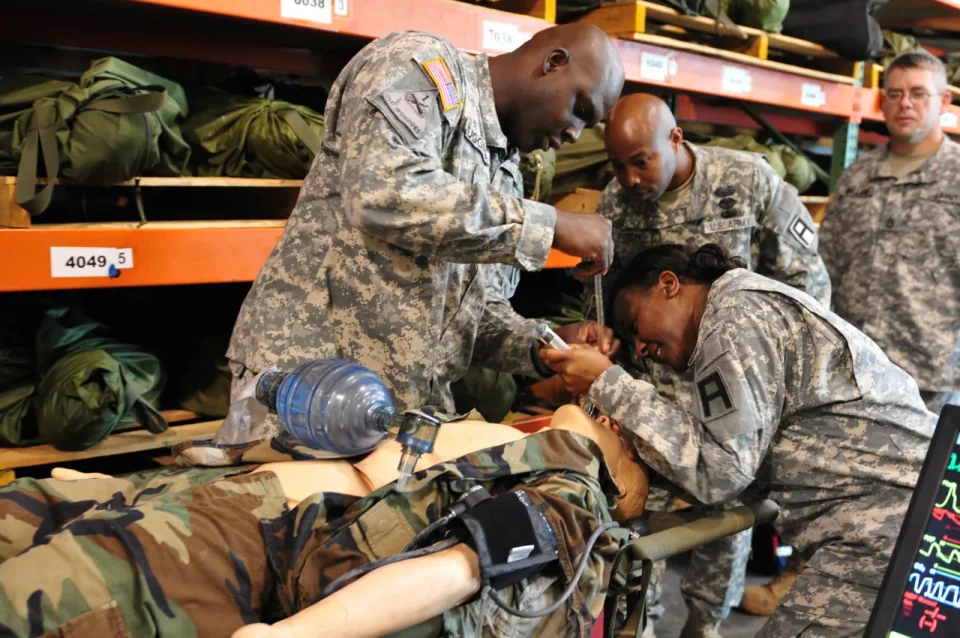
About this photograph
Not evidence of MMS stock, recommended options, current support, performance or endorsement.
The decision at a glance.
- Start here
- Map each learning objective to the physical skill, patient cue, feedback and learner practice time required.
- Spend more when
- The curriculum needs integrated scenarios or assessment functions that simpler equipment cannot deliver.
- Watch the budget
- Compare the full usable configuration and recurring supplies over one common period.
- Check the support
- The proposal lacks operating software, educator capacity, essential replacement parts or a safe training-only arrangement.
Ask the supplier
- Which exact activities can each supplied component support?
- What software, accounts, renewals and record export are included?
- Can the educators complete the planned lesson and reset with the offered package?
Start with what the learner must do
Write the purchase requirement as an observable activity: practise a dressing change, recognise changing patient cues, communicate a deterioration or complete a team handover. Then identify what the equipment must reproduce and how the instructor will assess it. “High fidelity” describes neither the full lesson nor the number of learners who can practise.
For repeated individual skills, several appropriate task trainers may be a better allocation than one elaborate manikin. For a scenario in which observations change in response to team decisions, an integrated simulator can add useful capability. The choice depends on the curriculum and facilitator—not on a general claim that more realistic equipment produces better learning.
A small trainer may still come with a larger software package
Laerdal’s Modular Skills Trainer 2 illustrates the compact approach: interchangeable components support activities such as wound, ostomy and catheter-related skills practice. The UK product listing states that it is available only as part of the SimCapture for Skills with Modular Skills Trainer solution. Treat any displayed component price as a component price until the complete package and access terms are clear.
That distinction matters when comparing a physical trainer with a managed assessment service. Identify the number of learner and instructor accounts, supported devices, content, storage and renewal obligations. If a program only needs supervised bench practice, a bundled digital workflow may be unnecessary; if it needs remote evidence and assessment, those functions may be central to the purchase.
An integrated simulator earns its place through the scenario
Nursing Anne Simulator adds controllable patient cues and a modular full-body platform. Laerdal describes manual and programmed scenario operation, auscultation, vital-sign assessment and optional modules. Its specification separates pre-ported IV arms from an optional multi-venous arm for cannulation practice. “IV capable” therefore does not tell a buyer which task the offered arm supports.
The control and debrief package also needs a line in the offer. Laerdal lists SimPad and LLEAP compatibility; SimPad PLUS itself is a separate operating device with data-capture functions. Confirm the exact simulator revision, controller, computer, patient display and licensed software. Compatibility with a product family is not proof that every required item is supplied or activated.
Count practice places and complete teaching cycles
Suppose, purely for planning, 24 learners each need 15 minutes of hands-on practice at the same station. That is 360 station-minutes before preparation, cleaning, feedback or reassessment. One station requires six hours; four equivalent stations could provide the same practice in 90 minutes only if staffing, supervision and space allow parallel work.
For team scenarios, count briefing, the exercise, debrief and reset as one cycle. A 20-minute scenario is not three sessions per hour if each group also needs 30 minutes of discussion and 10 minutes of reset. On those hypothetical assumptions, one complete group cycle occupies an hour. Add the equipment that removes the measured constraint rather than buying another simulator when instructor availability is the bottleneck.
Consumables and reset work decide how often the room gets used
Price the parts that wear or are consumed by the selected activities: replaceable skins and pads, simulated fluids, tubing and appropriate training supplies. Verify their approved use and replacement process for the exact trainer. A realistic puncture site that cannot be replenished locally may stop the skill sessions the equipment was bought to support.
Allocate storage and preparation space as well as the visible teaching room. Include charging, filling and emptying where applicable, cleaning, software preparation and the time to restore each scenario. Keep a simpler fallback lesson available when the integrated system is awaiting repair. That preserves scheduled teaching without pretending the fallback reproduces every objective.
Make training stock unmistakable
Training-only equipment and supplies need clear identification, controlled storage and an accountable owner so they cannot drift into patient care. Familiar clinical hardware can support a lesson, but decommissioned equipment is not automatically suitable or safe for every simulation connection. Have the appropriate educator and technical team define permitted use and the compatible training interfaces.
Accept the purchase by running the intended lesson with the actual instructors, software and reset process. Judge value by the learning activities delivered and the cost of sustaining them. Keep useful existing trainers, add integrated capability where it serves a defined objective, and leave unsupported claims of better educational outcomes out of the equipment ranking.
Compare the options.
Task-trainer stations
- Capability
- Repeated individual skills and parallel practice
- Best fit
- A defined skill needs many practice opportunities
- Cost to watch
- Station count, replaceable parts and any bundled software
Integrated simulator
- Capability
- Changing patient cues and linked team scenarios
- Best fit
- The lesson needs responses and team decisions beyond one isolated skill
- Cost to watch
- Controller, software, instructor operation and reset
Training-configured clinical equipment
- Capability
- Familiar workflow and equipment interaction
- Best fit
- Real hardware materially supports the objective
- Cost to watch
- Safe interfaces, technical assessment and segregation
Retain and improve the existing room
- Capability
- Continues suitable activities with targeted additions
- Best fit
- The constraint is teaching capacity or supplies rather than missing simulation features
- Cost to watch
- Educator time, replenishment, repair and scheduling
Budget for the complete service.
Cost per completed teaching cycle = capital, software, service, consumables, instructor/preparation/reset costs over a common period divided by completed cycles of the defined lesson in that period. Compare learner practice time separately; unlike lessons are not interchangeable outputs.
- Learning objective and required cues
- Parallel stations and supervision
- Software/account/record rights
- Wear parts, setup and reset
Further checks & evidence limits
Questions to resolve
- Which exact activities can each supplied component support?
- What software, accounts, renewals and record export are included?
- Can the educators complete the planned lesson and reset with the offered package?
What the evidence does not establish
- No claim that a named trainer improves educational outcomes over another; no comparative learning trial assessed.
- Local curriculum, software commercial terms and delivered packages require educator and buyer acceptance.
- No authorization to connect clinical-energy devices or use decommissioned equipment beyond its assessed training role.
Sources & supporting evidence.
Manufacturer claims and seller offers are identified below. Prices apply to the stated offer and review date; confirm availability, configuration and delivered cost.
- Modular Skills Trainer 2 component and package listingLaerdal · manufacturer · checked October 18, 2026
Named components, skills scope and SimCapture package-only qualification; stale expected-shipment date means no current stock or total-price claim.
- Nursing Anne Simulator features and specificationsLaerdal · manufacturer · checked October 18, 2026
Modular simulator, scenario control, pre-ported versus optional cannulation arm and software/controller compatibility; educational superiority claims not adopted.
- SimPad PLUS LLEAP product configurationLaerdal · manufacturer · checked October 18, 2026
Operating-device contents, control and capture scope; not proof a simulator offer includes it.
Put the guide to work.
Send MMS your equipment list, destination and budget. We can help you compare a complete package.
Discuss your equipment