
A service contract is only as useful as its coverage
Compare full coverage, maintenance-only, parts support and time-and-materials against the hospital's repair capacity and ability to withstand interruption.
Sources reviewed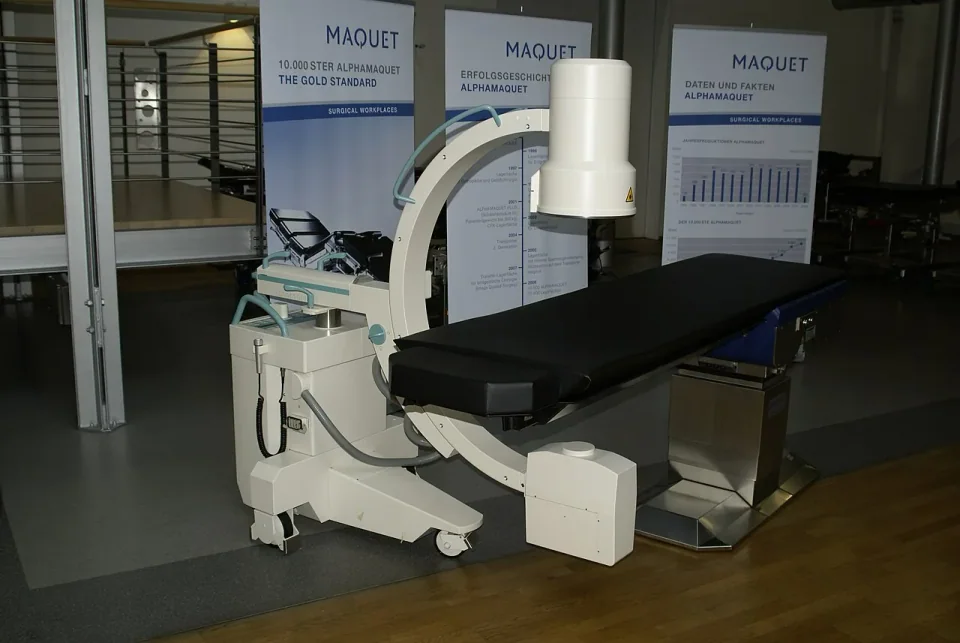
About this photograph
This photograph illustrates the equipment context. It is not evidence of a product, supplier, software configuration or service package recommended in this guide.
The decision at a glance.
- Start here
- Request equal-scope full-service, maintenance-only and separately funded repair alternatives. Start with the failures the hospital cannot afford to carry.
- Spend more when
- Broader coverage resolves a material expertise, access or financial gap and supplies a credible response at this destination.
- Watch the budget
- Price major components, overtime, travel, freight, deductibles, limits and exclusions, along with internal staff time, training and diagnostic tools.
- Check the support
- Define acknowledgement, diagnosis, arrival and restoration separately. Confirm parts access, interim arrangements and ownership of the maintenance history.
Ask the supplier
- Which major components and causes of failure remain excluded?
- What starts and stops each response clock?
- Who pays for diagnosis, travel, installation and post-repair verification?
Start with the failure you cannot afford
Before comparing annual fees, identify what would stop the service and what the hospital could do about it. For a CT scanner it may be an expensive component and a visiting engineer; for a monitor fleet it may be a repair backlog that could be managed with spares. The right agreement depends on those consequences and the resources already available.
Build a schedule of the exact equipment, serials, accessories and major components. For each, record who diagnoses, pays for parts, performs the repair and confirms readiness for return to service. Missing responsibilities become visible quickly when a contract is compared this way.
Separate maintenance from the cost of a breakdown
WHO's maintenance guidance distinguishes inspection, preventive work and corrective maintenance. These are connected activities, but purchasing one does not automatically purchase the others. A preventive-maintenance plan may establish regular visits while leaving a failed tube or circuit board outside its price.
Ask the supplier to identify the tasks and records delivered at each planned visit and the process for defects discovered. Then obtain a separate description of corrective coverage. Avoid accepting a general statement that maintenance is included when the quote leaves frequency, labor, parts and follow-up unresolved.
Compare actual coverage, one component at a time
Use an inclusion table for labor, travel, overtime, freight, detectors, tubes, probes, software support and relevant external equipment. Mark limits and conditions as carefully as exclusions. Block Imaging's CT guidance highlights that tube replacement may be outside an agreement even when tube-related maintenance is covered. That is a seller's example, not a universal contract rule.
Ask how pre-existing faults, accidental damage and site-related failures are handled. Determine whether the remedy is repair, exchange or another arrangement and whether prior approval is required. A lower fee with an excluded major component can still be sensible, provided the hospital explicitly funds that remaining exposure.
A response promise needs a finish line
Distinguish acknowledgement, remote diagnosis, engineer dispatch, arrival and restoration of the required service. These events are not interchangeable. Record when each clock starts, which working hours count and whether parts availability or customer approvals pause the obligation. Ask where engineers and compatible parts will come from.
A replacement or loaner promise also needs detail: exact capability, compatibility, transport and the conditions for availability. Where temporary equipment is impractical, identify the hospital's continuity arrangement. A credit for a missed service target may matter financially, but the operating team still needs a workable plan for the interruption.
Test the promise with a concrete example: a fault reported late in the working day, a part held elsewhere and a technician available only after travel. Have the provider explain the sequence and charges so the hospital can see which delays it still owns.
Recognize the work an in-house team can genuinely carry
An internal biomedical team can change the economics of service, but its contribution must be specific. List the equipment it is trained and equipped to maintain, its access to documentation and diagnostics, and the work reserved for specialists. Include parts procurement, test equipment, training and protected staff time in the comparison.
Philips' patient-monitoring RightFit portfolio provides a concrete example of different arrangements: full-service protection, support for internal teams, bench/remote assistance and preventive maintenance. These are product-specific offerings, not proof that every imaging platform has the same options. Ask for the equivalent actual scope for each device.
Stress-test the fee and preserve the maintenance record
Compare each proposal over the same term in several explicit situations: scheduled upkeep only, a repair requiring travel and a major covered or excluded component failure. Use quoted costs without invented probabilities. Show what the hospital pays in each situation and whether it has funds and authority to proceed quickly.
Review renewal pricing, cancellation, equipment removal and the consequences of parts or software support ending. Require usable service reports and maintain the hospital's own asset history; WHO's 2025 inventory guidance places maintenance within the device lifecycle. Choose the arrangement that transfers the risks the hospital needs transferred while leaving clearly funded responsibilities.
Compare the options.
Maintenance only
- Capability
- Planned checks and specified preventive work.
- Best fit
- The hospital has a funded corrective-maintenance route.
- Cost to watch
- Uncovered repairs remain additional.
Time and materials
- Capability
- Purchase diagnosis and repairs when needed.
- Best fit
- Reserves and credible service access are available.
- Cost to watch
- Parts, labor, travel, authorization and interruption.
Parts/support partnership
- Capability
- Combine internal repair capacity with specialist help.
- Best fit
- A capable in-house team can complete defined tasks.
- Cost to watch
- Training, tools, parts and clearly divided responsibilities.
Full service
- Capability
- Cover specified maintenance and corrective obligations.
- Best fit
- The actual transferred exposure justifies the fee.
- Cost to watch
- Premium, exclusions, caps and major-component endorsements.
Option notes, costs & support 4 options
Preventive-maintenance-only arrangement
Baseline maintenance provision
- Best for
- A facility funding corrective repairs separately.
- Why consider it
- WHO distinguishes inspection and preventive maintenance from corrective maintenance.
- The trade-off
- An inspection schedule does not finance the next failed component.
- Price & package
- Quote specified visits, tasks and reporting; budget repairs separately.
- Support
- Name who acts on defects found during maintenance.
Time-and-materials corrective service
Pay for defined repair events
- Best for
- A facility with reserves, an established provider and acceptable interruption arrangements.
- Why consider it
- Block's service-selection guidance explicitly identifies this as an alternative to full coverage.
- The trade-off
- Engineer availability, authorization delays and expensive parts remain buyer exposures unless otherwise agreed.
- Price & package
- Obtain labor, minimum call, travel, after-hours and parts terms.
- Support
- Establish the escalation and approval route before a breakdown.
Parts and specialist support for an in-house team
Shared service responsibility
- Best for
- A competent biomedical team with the required training, documentation and tools.
- Why consider it
- Philips RightFit Support and Assist show how OEM assistance can complement internal resources.
- The trade-off
- Confirm who diagnoses, supplies parts, installs them and verifies the repair; these are distinct duties.
- Price & package
- Quote training, access, technical support and parts coverage separately.
- Support
- The cited Philips offering is for patient monitoring, not proof of CT or MRI entitlement.
Full-service agreement with named major components
Broader cost protection
- Best for
- A facility that needs an external repair response and predictable coverage for major failures.
- Why consider it
- A defined schedule can combine maintenance, corrective work, labor and included parts.
- The trade-off
- Tubes, detectors, probes, environmental failures and overtime must each be resolved in the actual scope.
- Price & package
- Compare the fee plus deductibles, caps and exclusions.
- Support
- Specify destination coverage, response clock, repair completion and any interim service.
Budget for the complete service.
Service-plan cost = fixed fees + uncovered repairs and consumables + internal staff/tools + travel and freight not included + interruption provision.
- Major-component scope
- Local engineer and parts access
- Overtime and travel
- Internal training and diagnostic tools
- Limits, deductibles and renewal changes
Before you commit.
- Schedule exact equipment and major components.
- Separate inspection, preventive work and corrective repair.
- Mark exclusions, deductibles, limits and endorsements.
- Define response events and restoration obligations.
- Verify parts, engineers and temporary arrangements at the destination.
- Price staff time and tools for internal responsibilities.
- Review renewal, cancellation and support-ending provisions.
- Keep complete service records under hospital control.
Further checks & evidence limits
Questions to resolve
- Which realistic failure remains our financial responsibility?
- What does the response promise actually measure?
- Can we access records and maintain a repair route after the term ends?
What the evidence does not establish
- No plan is universally cheapest without equipment condition, workload and local support evidence.
- Provider-specific prices, eligibility and restoration commitments require written quotations.
Sources & supporting evidence.
Manufacturer claims and seller offers are identified below. Prices apply to the stated offer and review date; confirm availability, configuration and delivered cost.
- Medical equipment maintenance programme overviewWHO · institutional guidance · checked October 17, 2026
Distinguishes inspection, preventive maintenance and corrective maintenance; publication date is independent of this research check.
- Inventory and maintenance management information system for medical deviceWHO · institutional guidance · checked October 17, 2026
Updated guidance connects needs assessment, procurement, incoming inspection, inventory, training, maintenance and decommissioning.
- Hospital patient monitoring maintenance: RightFit optionsPhilips · manufacturer · checked October 17, 2026
Patient-monitoring portfolio identifies Protection, Support, Assist and Value approaches; applicability must not be generalized to other equipment.
- 5 Questions to Ask Before Signing a Service ContractBlock Imaging · seller perspective · checked October 17, 2026
Raises service scope, engineer location, parts, cancellation/payment terms, and maintenance-only or time-and-materials alternatives.
- CT Service Contracts: What is NOT Included?Block Imaging · seller perspective · checked October 17, 2026
Explains that tube upkeep and tube replacement can have different coverage; treated as supplier perspective rather than universal contract terms.
Put the guide to work.
Send MMS your equipment list, destination and budget. We can help you compare a complete package.
Discuss your equipment