
Before buying a surgical robot, count the instruments ready for the next case
Robotic capacity depends on instrument availability, permitted uses and complete reprocessing. Test the planned list against those limits before committing to the robot or a higher case target.
Editorially reviewed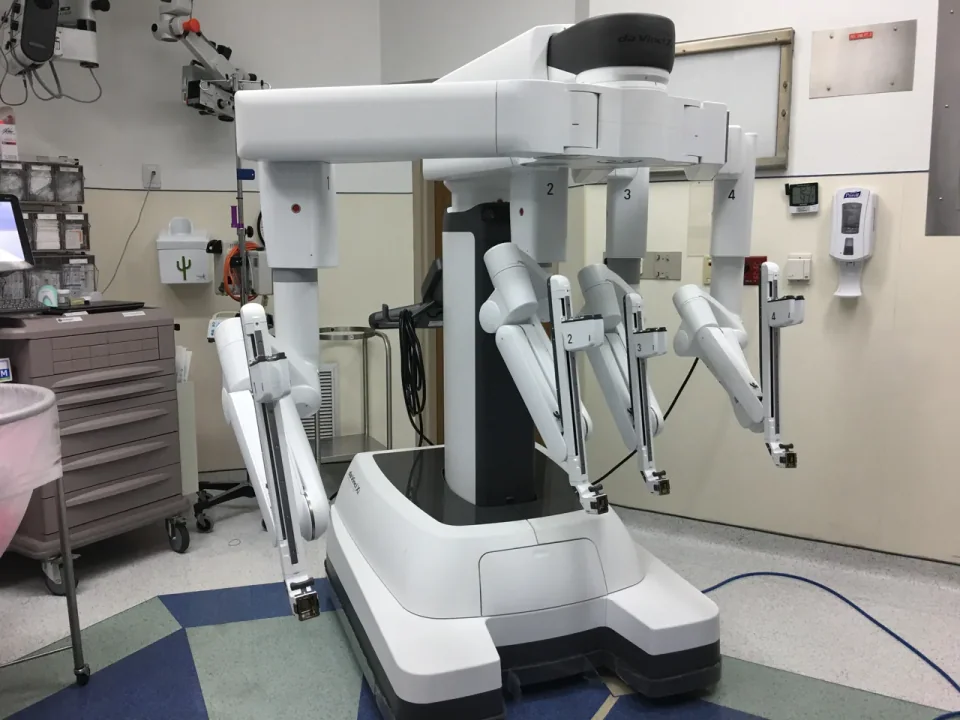
About this photograph
Not evidence of MMS stock, recommended options, current support, performance or endorsement.
The decision at a glance.
- Start here
- Translate the defined case mix into exact instruments, permitted uses, processing routes and peak ready-set demand.
- Spend more when
- Additional sets, compatible processing equipment or staff remove a measured constraint in an approved service.
- Watch the budget
- Compare the full usable configuration and recurring supplies over one common period.
- Check the support
- A program forecast depends on unverified compatibility, reuse beyond instructions or turnaround that the hospital cannot deliver.
Ask the supplier
- Which exact items cannot use the proposed automated route?
- How many complete sets are ready at every planned start time?
- What replacement budget follows from permitted life and observed damage?
A capital proposal needs an instrument plan
The clinical case for robotic surgery comes first: a defined procedure mix, appropriately trained teams and a reason to deliver those cases locally. Once that is established, test whether the instrument and processing service can support the promised activity. Owning the robot is only one part of that capacity.
Build the purchase around exact instrument and accessory identifiers. Include the endoscope, required energy or stapling components, approved packaging and the replacement stock. A generic “robotic set” hides differences that affect both case availability and recurring spending. The operating-room and sterile-processing teams should agree the list before the budget is approved.
Compatibility is a chain of specific components
STERIS lists RAS 12 Rack FD256 for AMSCO 7052HP and the long FD257 rack for AMSCO 7053HP. The 7052HP needs the RAS cycle option; buying a rack alone does not establish that the washer is ready. The documented application covers selected da Vinci X/Xi and S/Si instruments, so it should not be extrapolated to another platform merely because the instruments look similar.
The June 2026 RAS manual excludes the da Vinci Stapler and Single-Site instruments from that rack process. It specifies the required chemistry and retains operating-room preparation and subsequent terminal processing. These limits can leave several processing routes within one robotic program. Map each item to its own approved route instead of describing the entire service as automated.
Count the whole return journey
Follow an actual instrument set from the end of a case through transport, required preparation, cleaning, inspection, packaging, sterilization, release and return. Record queues and staff availability as well as machine time. A faster stage adds capacity only if another stage does not absorb the gain.
For a hypothetical list, cases start at 08:00, 10:00 and 12:00, each lasting two hours. If an equivalent set becomes ready four hours after its case ends, the first returns at 14:00. Two sets cannot support the third start at noon: the plan needs a third ready set or a changed schedule. Three sets cover this example’s starts, but provide no allowance for a failed inspection, missing item or unexpected case.
Instrument life is a separate inventory constraint
An instrument can be physically present yet unavailable because it has reached an applicable use or reprocessing limit. Track those limits by the exact instrument instructions and record the remaining permitted life before allocating a set. Intuitive’s Extended Use Program applied to selected X/Xi instruments; its historical announcement is not permission to apply one allowance across every instrument or generation.
For illustration, an instrument costing 3,600 with an assumed authorized allowance of 18 uses allocates 200 per use if all are achieved. If damage retires it after nine accepted uses, the acquisition allocation becomes 400. Neither the price nor the allowance is a product quote here. Use the actual permitted limit and observed retirement history, and never plan to recover value by exceeding it.
Automation still needs people and replacement parts
Intuitive places responsibility for appropriate reprocessing training, supervision and verification on the system owner. Funding should therefore cover competency development, inspection, traceability and staffing through the required shifts. A washer does not fund the people who prepare the instruments or release the finished load.
Budget rack hoses, connectors and other required components as well as the washer. Include an accepted response to equipment outages and instruments that fail inspection. Test whether extra sets, a different schedule or added processing capacity best solves the measured problem. A vendor’s percentage labour saving is not a local staffing plan.
Approve a service the hospital can sustain
Compare the complete program over one common period: robot acquisition or access charges, service, instruments consumed, single-use supplies, processing, training, IT and contingency cover. Divide by realistic completed cases of the defined mix. Keep the financial comparison separate from claims about clinical benefit, which require appropriate procedure-specific evidence.
A staged program can be sensible when readiness is demonstrated at the initial volume and expansion has a funded path. Defer when the proposed list depends on unavailable sets, unsupported processing or optimistic turnaround. The strongest approval is a workable service plan with explicit capacity and replacement limits.
Compare the options.
Use the accepted existing processing route
- Capability
- Preserves a demonstrated pathway
- Best fit
- The route supports the proposed list
- Cost to watch
- Staff time, instrument stock and bottleneck capacity
Add compatible RAS equipment and cycle
- Capability
- Automates a defined portion for specified instruments
- Best fit
- Those eligible items create the measured processing constraint
- Cost to watch
- Rack, enabled washer, chemistry and remaining manual tasks
Add instrument sets
- Capability
- Increases ready stock while other sets are unavailable
- Best fit
- Turnaround exceeds the interval between case starts
- Cost to watch
- Capital, permitted life and replacement inventory
Stage or defer expansion
- Capability
- Aligns the list with available capacity
- Best fit
- Clinical, processing or replacement readiness is incomplete
- Cost to watch
- Lost planned activity versus premature commitments
Budget for the complete service.
Program cost per completed case uses all program costs and completed cases over one period; separately model instrument acquisition divided by actual accepted uses, within its permitted limits.
- Exact case mix and instrument list
- Permitted uses and early retirement
- Complete return time
- Staffing, compatible processing and service
Further checks & evidence limits
Questions to resolve
- Which exact items cannot use the proposed automated route?
- How many complete sets are ready at every planned start time?
- What replacement budget follows from permitted life and observed damage?
What the evidence does not establish
- No comparative clinical-outcome, reliability or universal cost-saving claim.
- Exact current instrument IFUs, regional permissions and offered-platform support must be verified before program approval.
- No cleaning procedure, sterilization parameters or permission to extend use limits provided.
Sources & supporting evidence.
Manufacturer claims and seller offers are identified below. Prices apply to the stated offer and review date; confirm availability, configuration and delivered cost.
- STERIS specialty rack compatibility tableSTERIS · manufacturer · checked October 18, 2026
FD256/7052HP and FD257/7053HP mapping and RAS option requirement.
- RAS12 operator manual10295965 Rev.H, June3,2026STERIS · manufacturer · checked October 18, 2026
Specific instrument exclusions, required process components and retained responsibilities; targeted sections read.
- Da Vinci reprocessing resources reference guide, MAT03634v3 (2024)Intuitive · manufacturer · checked October 18, 2026
Platform-specific documents, owner training and verification responsibilities.
- X/Xi Extended Use Program notice, July2020Intuitive · manufacturer · checked October 18, 2026
Selected instrument scope and country/case-mix qualifications; projected savings not adopted.
Put the guide to work.
Send MMS your equipment list, destination and budget. We can help you compare a complete package.
Discuss your equipment