
Medical refrigerators: buy for the stock and the room
Vaccine, blood and pharmacy storage need separate choices. Usable capacity, ambient limits and outage response decide which cabinet earns its cost.
Sources reviewed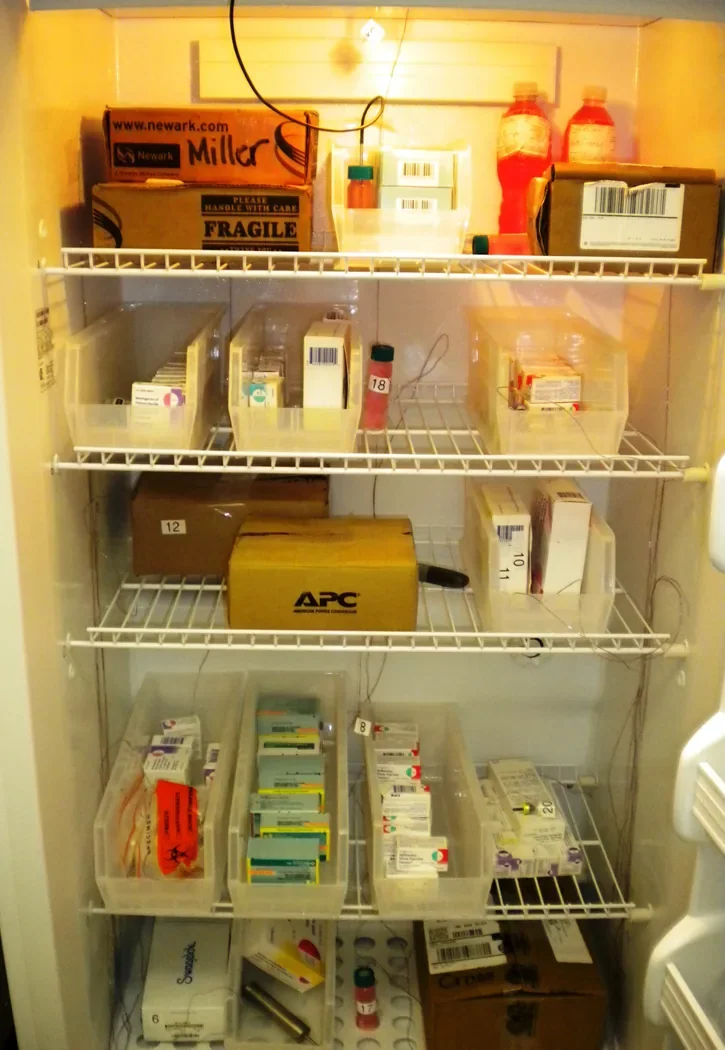
The decision at a glance.
- Start here
- For off-grid vaccines fitting 88 L net capacity, compare Dulas VC88SDD with an appropriately qualified Haier HTC-120 package. For blood, compare B51's 45 L with B131's 106 L against actual inventory.
- Spend more when
- Buy extra blood capacity when peak stock needs it. For pharmacy or reagents, compare P55's 45 L with PHCbi MPR-S150H-PE's 165 L and the required validated storage arrangement.
- Watch the budget
- A larger B131 retains B51's +32°C upper ambient limit. Solar pricing must include site design and installation. UNICEF tender benchmarks have specific currencies, delivery terms and exclusions; they are not hospital landed prices.
- Check the support
- Specify monitoring, a named alarm responder and stock-transfer arrangements. B51's published holdover to +10°C is a test endpoint, not permission to store blood at that temperature.
Ask the supplier
- What usable capacity remains for our products and airflow arrangement?
- Will this cabinet work within our measured room conditions?
- Which solar, monitoring, installation and outage provisions are included?
Name the stock before choosing the cabinet
Vaccine, blood and reagent storage are separate buying jobs. Start with the exact products, permitted storage conditions, peak inventory and door-opening pattern. A large 'medical refrigerator' label does not establish suitability for all three. Usable space must leave room for the validated storage arrangement rather than simply fit every package inside.
The purchase protects stock through a real working day and a real interruption. Include independent monitoring where required, alarm routing, a person able to respond and an alternative storage plan. That makes capacity useful; a low cabinet price is little consolation when a temperature excursion leaves the service quarantining its inventory.
Solar pays when the building supply is the weak link
Dulas VC88SDD's battery-free solar-direct-drive architecture separates cooling from unreliable building electricity. Its 88 L net vaccine capacity is the relevant figure, not the gross cabinet size. The solar design still has to fit the site and season, with secure mounting, clear ventilation and controlled shading. Published autonomy describes tested conditions rather than any installation a buyer might assemble.
Compare capacity with the replenishment schedule. More space may reduce deliveries, but it can also concentrate more stock in one cabinet. Haier HTC-120 is an identifiable alternative through the UNICEF/PQS listing; compare the exact qualified package and local aftercare rather than assuming the lower displayed currency amount is the better installation.
Use the UNICEF prices as a scope comparison
The September 2026 UNICEF table records EUR 4,880–5,060 for VC88SDD and USD 3,937–4,417 for HTC-120. These are institutional FCA containerized sea-shipment terms with EMS level 2 and exclusions, not a small hospital's delivered retail prices. The currencies also differ. They provide an informed starting point only after the package and delivery basis are matched.
Separate cabinet, solar equipment, monitoring, inland transport, installation, commissioning, training and warranty logistics. A higher complete local offer may earn its difference through those services; a vague solar-package premium may not. Use the benchmark to identify what the hospital receives for each part of the price.
B131 buys more blood storage, not hotter-room capability
B51 has 45 L net storage; B131 provides 106 L and a published capacity of 51 bags of 450 mL. That gives a concrete reason to choose the larger model when peak inventory needs it. Compare the actual bag arrangement, not gross cabinet litres. Both retain an ambient range of +10°C to +32°C, so changing from B51 to B131 does not fix a room that exceeds the limit.
Keep holdover language separate from permitted blood-storage conditions. B51's stated 1.5 hours is measured from +4°C to +10°C; it is not permission to hold blood at the endpoint. Specify the backup-power and stock-transfer response accordingly. Likewise, B131's remote monitoring is optional equipment, not an assumed service included with the cabinet.
Pharmacy capacity is worth buying only when it is usable
PHCbi MPR-S150H-PE gives a larger 165 L sliding-door option. P55 offers 45 L storage, a +5°C set point, forced-air cooling and USB export; its opened specification is 220–240 V, 50–60 Hz and +10°C to +32°C ambient. These are useful differences for a small versus larger inventory, not evidence that one is universally cheaper.
Map the installed arrangement for the actual medicines or reagents, including packaging and circulation space. Compare complete monitoring and service costs after deciding the usable capacity. The available product evidence does not establish comparative long-term failure rates, so a more elaborate display alone should not decide the premium.
Compare the options.
Dulas VC88SDD
- Capability
- 88 L net vaccine capacity; solar direct drive
- Best fit
- A suitable off-grid vaccine site
- Cost to watch
- Site-specific solar installation, monitoring and aftercare
Haier HTC-120, qualified package
- Capability
- WHO/PQS-listed vaccine configuration in the UNICEF capacity band
- Best fit
- A comparable vaccine requirement with a stronger total supply offer
- Cost to watch
- Exact tender/retail scope, installation and country service
B Medical B51
- Capability
- 45 L blood storage; +10°C to +32°C ambient
- Best fit
- A modest blood inventory
- Cost to watch
- Alarms, monitoring, backup power and refrigeration service
B Medical B131
- Capability
- 106 L blood storage; 51 × 450 mL bags; same +32°C upper ambient limit
- Best fit
- A blood inventory that outgrows B51
- Cost to watch
- Required capacity, rack arrangement and optional remote monitoring
PHCbi MPR-S150H-PE
- Capability
- 165 L pharmaceutical cabinet with sliding doors
- Best fit
- A larger pharmacy/reagent inventory within validated requirements
- Cost to watch
- Installed mapping, correct electrical version and monitoring
B Medical P55
- Capability
- 45 L pharmacy storage; +5°C set point; 220–240 V
- Best fit
- A smaller compatible pharmacy/reagent inventory
- Cost to watch
- Space actually needed, monitoring and a room within +10°C to +32°C
Model notes, pricing & support 6 options
Dulas VC88SDD
Solar vaccine storage
- Best for
- A clinic with an appropriate solar site and a vaccine load fitting 88 L net capacity.
- Why consider it
- Battery-free solar-direct-drive architecture avoids relying on the building’s electricity supply for the cooling system.
- The trade-off
- Solar-array siting, shading, installation, inventory access and monitoring still require a plan. Net vaccine capacity differs greatly from gross cabinet volume.
- Price & package
- UNICEF September 2026 tender table: EUR 4,880–5,060 for VC88SDD; institutional FCA containerized sea-shipment terms, including EMS level 2, excluding optional extras/surcharges. Not a retail delivered quote.
- Support
- Dulas publishes training, manuals and aftercare channels. Current manufacturer page describes connected monitoring; reconcile that exact package with the UNICEF tender configuration.
Haier HTC-120, exact PQS configuration
Qualified vaccine-package comparison
- Best for
- A vaccine program comparing similar capacity bands and local supplier support.
- Why consider it
- It appears in the same UNICEF procurement table, enabling a more grounded price discussion than comparing domestic refrigerators.
- The trade-off
- The listing is not proof of your price eligibility, installed performance or current local parts availability. Do not compare its USD figure directly with a EUR offer without dated conversion and matching scope.
- Price & package
- UNICEF September 2026 table: USD 3,937–4,417 for HTC-120, 60–under120 L category; same tender delivery caveats.
- Support
- PQS reference E003/116e in the table; confirm exact qualified package, installation and country service in the offer.
B Medical Systems B51
Small blood inventory
- Best for
- A modest blood inventory in a room within the specified ambient range.
- Why consider it
- Dedicated blood-storage design with alarms; published net storage is 45 L.
- The trade-off
- Its stated ambient range ends at +32°C. The published 1.5-hour holdover is measured from +4°C to +10°C, not permission to store blood at +10°C.
- Price & package
- Quote required with monitoring, delivery and power backup.
- Support
- Current OEM documentation exists; local refrigeration service and alarm response remain to be established.
B Medical Systems B131
Larger blood inventory
- Best for
- A blood service whose peak inventory exceeds B51 capacity but still suits an undercounter cabinet.
- Why consider it
- The manufacturer specifies 106 L storage capacity and 51 bags of 450 mL, compared with B51's 45 L. The additional room gives a practical reason to request a second quote.
- The trade-off
- Its ambient limit remains +10°C to +32°C; more capacity does not solve an overheated room. Remote monitoring requires optional equipment.
- Price & package
- Quote required, including the actual rack arrangement, logger, remote-alarm equipment, delivery and commissioning.
- Support
- Manufacturer support and manuals are linked publicly. Local refrigeration service and replacement-part lead times remain unconfirmed.
PHCbi MPR-S150H-PE
Larger pharmacy/reagent storage
- Best for
- A supported mains-powered pharmacy or laboratory with compatible storage requirements.
- Why consider it
- 165 L pharmaceutical platform with sliding doors and alarms offers a different workflow from a vaccine chest.
- The trade-off
- A temperature setting range is not validation for every medicine, reagent or blood product. Confirm the exact contents, mapped performance and outage strategy.
- Price & package
- Quote required; specify PE voltage version, monitoring and optional alarm battery.
- Support
- Current manufacturer product page and documents exist; destination service commitment is unconfirmed.
B Medical Systems P55
Compact pharmacy/reagent storage
- Best for
- A pharmacy or reagent store whose validated peak inventory fits 45 L of storage.
- Why consider it
- P55 offers a smaller cabinet than the 165 L PHCbi candidate, with a +5°C set point, forced-air cooling and USB data export.
- The trade-off
- The opened specification is 220–240 V, 50–60 Hz and +10°C to +32°C ambient. Confirm the contents' temperature requirements and leave usable airflow space.
- Price & package
- Quote required. Include independent monitoring and any optional remote-alarm hardware or software.
- Support
- The manufacturer provides support and manual links; no destination-specific service commitment or comparative failure-rate evidence has been established.
Budget for the complete service.
Protected-storage cost = delivered system + energy/solar installation + monitoring + maintenance + backup arrangements + stock loss and disruption; compare over the same years and usable capacity.
- Net usable capacity and delivery frequency
- Solar site design or backup electrical supply
- Ambient temperature and ventilation
- Logger, alarm connectivity and staff response
- Replacement refrigeration components and stock-transfer arrangements
Further checks & evidence limits
Questions to resolve
- What exact products, temperature ranges and peak volumes must be stored?
- Does the quote match the benchmark’s model, monitoring level and included equipment?
- Who responds to an alarm and where can stock be transferred?
What the evidence does not establish
- UNICEF tender eligibility and hospital-specific delivered prices are not established.
- No comparative real-world failure-rate ranking established.
- Blood and reagent storage suitability requires the responsible clinical team’s specification.
Sources & supporting evidence.
Manufacturer claims and seller offers are identified below. Prices apply to the stated offer and review date; confirm availability, configuration and delivered cost.
- VC88SDD vaccine refrigerator and specificationDulas · manufacturer · checked October 16, 2026
88 L net vaccine capacity; solar direct drive; manufacturer gives ambient and autonomy conditions.
- Solar refrigerator procurement prices, updated September 2026UNICEF Supply Division · institutional procurement · checked October 16, 2026
Tendered FCA containerized prices for sea shipment, EMS level 2; extras/surcharges excluded. Named Dulas and Haier bands used above.
- B51 blood-bank refrigerator specificationsB Medical Systems · manufacturer · checked October 16, 2026
45 L net; ambient +10 to +32°C; specified holdover endpoint is +10°C.
- MPR-S150H-PE pharmaceutical refrigeratorPHCbi · manufacturer · checked October 16, 2026
165 L pharmaceutical model with sliding doors, alarms and optional accessories; exact configuration matters.
- B131 blood-bank refrigerator specificationsB Medical Systems · manufacturer · checked October 16, 2026
106 L storage; 51 bags of 450 mL; +10°C to +32°C ambient; remote monitoring is optional. Primary page opened October 16, 2026.
- P55 pharmacy refrigerator specificationsB Medical Systems · manufacturer · checked October 16, 2026
45 L storage; +5°C set point; 220–240 V, 50–60 Hz; +10°C to +32°C ambient; USB export and optional remote monitoring.
Put the guide to work.
Send MMS your equipment list, destination and budget. We can help you compare a complete package.
Discuss your equipment