
One better machine—or two simpler ones?
Extra capacity and useful backup are different purchases. Decide what limits the service, then test whether a second machine actually removes that limit.
Sources reviewed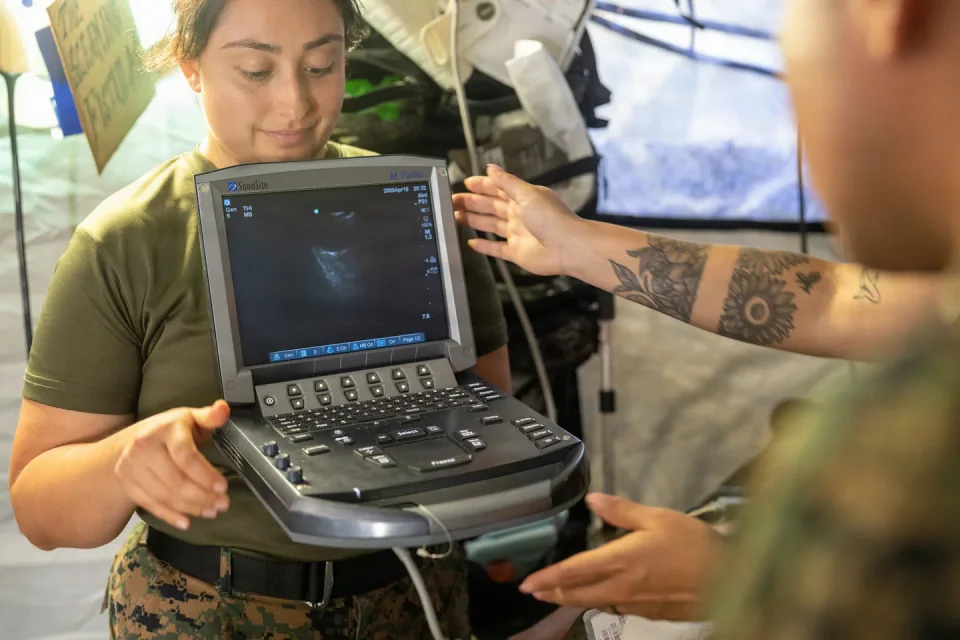
About this photograph
This photograph illustrates the equipment context. It is not evidence of a product, supplier, software configuration or service package recommended in this guide.
The decision at a glance.
- Start here
- Fund the smallest complete change that removes the real bottleneck. That may be another compatible endoscope, an ultrasound probe, more instrument sets or a repair-loaner arrangement before another console.
- Spend more when
- Buy higher capability when the work needs it. A second X8 cannot back up required invasive pressure; another incompatible sterilizer cycle cannot replace the required T-Top load capability.
- Watch the budget
- Two units each need accessories, supplies, maintenance and trained users. Check cleaning, drying, cooling and release before buying a second sterilizer. M11 automation may help staff workload where manual 2540M operation consumes attention.
- Check the support
- Test the backup against shared interruptions. Two oxygen-dependent machines can both stop when their source fails. A handheld ultrasound is useful backup only for examinations and export workflows it can actually cover.
Ask the supplier
- Which additional work becomes possible with this second complete package?
- What shared power, oxygen, software or supply failure stops both units?
- Would a scope, probe, processing improvement or loaner remove more downtime?
Name what the second machine would change
Identify the constraint: a shared instrument, delayed processing, repairs, or work beyond the current system's capability. Describe the planned work that becomes possible after the purchase.
Then separate daily capacity from continuity during failure. A second unit might shorten a queue yet provide little backup if both are always fully occupied. A spare might protect service through a repair while doing little for ordinary throughput. Each earns its cost differently.
Required capability cannot be added by counting boxes
Two simpler machines do not necessarily substitute for one appropriately configured system. The Tuttnauer T-Top example makes the distinction concrete: Class S and Class B configurations have different cycle/load specifications. If the instrument mix requires an appropriate vacuum-processing configuration, buying another lower-priced incompatible cycle does not supply that capability.
Apply the same test to a backup monitor or ultrasound. EDAN's X8 lacks the optional invasive-pressure capability assigned to X10/X12. A second X8 can support the work it is equipped to do, but it is not an equivalent backup for a station requiring that channel. Specify the minimum functions the service must preserve before choosing the backup.
Find the bottleneck before buying another sterilizer
Map a complete instrument-set turnaround: cleaning and inspection, loading, the validated cycle, drying, cooling and release. A second sterilizer helps only to the extent that sterilizer availability or suitable batch capacity is constraining that process. If staff, cleaning facilities or the number of complete instrument sets are the limit, a second chamber may leave the queue unchanged.
A supported 2540M and a current M11 illustrate different operating choices. The manual platform places more operation and documentation work with staff; the M11 provides automatic cycle records and care reminders. Decide whether the local problem is simultaneous processing capacity or staff attention before assuming that two simpler units or one automated unit is inherently better. Each arrangement still needs its own appropriate acceptance and quality system.
Sometimes the useful second item is a scope
An endoscopy service can own two towers and still be unable to run a planned examination if its only suitable scope is being processed or repaired. Inventory the scope types and availability through the actual schedule. An additional accepted compatible scope, or a usable repair-loaner arrangement, may preserve more service than a second processor.
Ultrasound has a similar accessory question. A spare console without the required probe does not restore the missing examination. Before adding a handheld as backup, have the responsible users determine which work it can cover and whether the complete display, power and image-export workflow is available. Price the capability that would remain during a failure rather than assuming every device labeled ultrasound is interchangeable.
Test the backup against a shared failure
List shared dependencies: electricity, oxygen, water treatment, charging, software, consumables and repair providers. Two machines can stop together when either depends on the same unavailable utility or supply. Standardization can still be sensible if those common dependencies are managed.
Standardizing models can simplify accessories, training and maintenance. Using different platforms can sometimes preserve capability through a platform-specific interruption but also creates more supplies and skills to maintain. Choose that tradeoff deliberately. WHO's facility oxygen framework is useful here because source, storage and distribution remain relevant regardless of how many oxygen-dependent devices are purchased.
Budget the second unit as a working package
Include its required accessories, power, supplies, maintenance, verification and trained users. A partially equipped spare can create false confidence. Define where it is kept, how its readiness is checked, who moves it into service and which work it is expected to cover.
Compare one upgraded unit, two complete simpler units and a targeted continuity arrangement over the same workload and period. Use the site's actual delay, repair and supply experience where available. No universal utilization percentage or machine count decides the answer. The useful purchase is the one that removes the identified limit while leaving the team able to sustain the resulting service.
Budget for the complete service.
Cost per supported workload = complete equipment and accessories + supplies, service and readiness provision ÷ work the arrangement can actually sustain.
- Required capability and configuration
- Workflow and accessory bottlenecks
- Second-unit upkeep
- Shared failure points
- Training and continuity arrangements
Before you commit.
- Identify the actual capacity or continuity problem.
- Define the minimum capability needed during failure.
- Map the whole workflow around the machine.
- Count required accessories and usable spare supplies.
- Identify shared utility, software and supply dependencies.
- Fund readiness, maintenance and trained use for the spare.
- Compare an upgrade, a second unit and targeted continuity options.
Further checks & evidence limits
Questions to resolve
- What work becomes possible after purchase?
- What would stop both units?
- Would accessories, support or processing improvements solve more?
What the evidence does not establish
- No universal volume threshold or equipment count is established.
- Backup value requires local workflow and interruption data.
Sources & supporting evidence.
Manufacturer claims and seller offers are identified below. Prices apply to the stated offer and review date; confirm availability, configuration and delivered cost.
- T-Top configuration and load tablesTuttnauer · manufacturer · checked October 16, 2026
21/27 L line with Class S and upgradeable Class B configurations; distinct cycle tables.
- EDAN X8–X12 function-configuration comparison, page 2EDAN USA · manufacturer · checked October 16, 2026
The visual configuration table assigns optional invasive blood pressure to X10/X12, not X8. X8 includes optional CO2, ECG configuration, Wi-Fi and recorder choices.
- Tuttnauer 2540M specifications and support linksTuttnauer · manufacturer · checked October 16, 2026
Manual 23 L platform; US page lists 120 V, 1400 W and service/documentation routes.
- Current M11 medical sterilizerMidmark · manufacturer · checked October 16, 2026
Current model includes cycle recordkeeping and device-care support.
- EVIS EXERA endoscopy product portfolioOlympus · manufacturer · checked October 16, 2026
CV-190/CLV-190 platform and named GI scope features.
- CHISON EBit 60 Doppler examples and transducersCHISON · manufacturer · checked October 16, 2026
Separate EBit 60 model page shows CW, TDI/PW and color-M-mode examples plus P3-E/P6-E transducers; optional inclusions require a configured quote.
- Butterfly iQ3 current generation overviewButterfly Network · manufacturer · checked October 16, 2026
Current handheld generation and biplane/other software features; regional marketing does not establish every country's configuration.
- Facility-based medical oxygen systems technical specificationsWorld Health Organization · institutional procurement · checked October 16, 2026
Facility oxygen-source, storage and distribution specification framework.
Put the guide to work.
Send MMS your equipment list, destination and budget. We can help you compare a complete package.
Discuss your equipment