
The MRI bargain starts with a site survey
Resolve the building, utilities, installation responsibilities and support route before a low scanner price becomes an expensive unfinished project.
Sources reviewed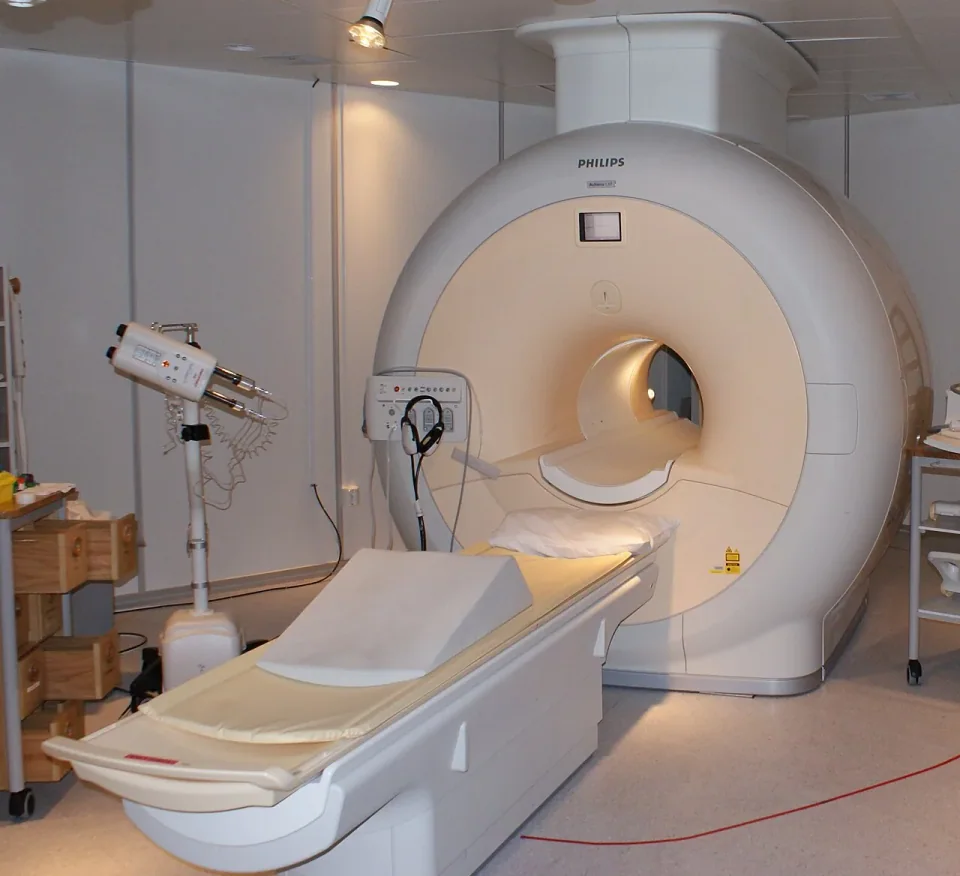
About this photograph
This photograph illustrates the equipment context. It is not evidence of a product, supplier, software configuration or service package recommended in this guide.
The decision at a glance.
- Start here
- Choose a clinically suitable configuration with a specialist-reviewed site, priced installation responsibilities and sustainable operating support.
- Spend more when
- A different design resolves a documented building or operating constraint at an acceptable complete cost. Verify the remaining dependencies separately.
- Watch the budget
- Include design, shielding, utilities, rigging, delivery, coils, software, supporting equipment, commissioning, training and ongoing specialist service.
- Check the support
- Confirm the exact scanner, coils, software and cooling equipment in the service scope, including major exclusions and interruption arrangements.
Ask the supplier
- Which planning revisions apply to this exact scanner and magnet?
- Which site findings must be resolved before delivery?
- Who pays for and verifies every construction, utility and installation interface?
Define the service before reserving the scanner
An MRI purchase commits the hospital to a building, specialist equipment and an operating service. Begin with the examinations the clinical team needs, the coils and software required, the intended workload and the people who will run and support it. Then identify the exact scanner and magnet configuration proposed to deliver that service.
Do not allow an attractive available unit to define the clinical brief by default. A missing coil, unavailable application or uncertain support entitlement can weaken the value of the entire installation. The preliminary decision is whether this configuration can become a complete sustainable service at this location.
Use the site survey as a decision gate
Bring the MRI supplier, project architect, structural and building-services engineers and the hospital's MR safety expertise into the feasibility assessment. Identify which findings could stop the project, which require redesign and which simply need a priced work item. Assign an owner and a resolution date to each open dependency.
GE's planning portal explicitly distinguishes typical drawings from construction drawings and calls for the full configuration-specific planning information. A floor plan downloaded from a similar system is useful for early discussion, but cannot approve this site. Match every document revision to the actual magnet, cabinets, cooling arrangement and proposed installation.
Inspect the route and the spaces beyond the scanner room
Have the project team review delivery access, structural loading, equipment clearances, neighboring spaces and the path for future major-component replacement. GE's January 2026 SIGNA Pioneer typical drawings separately address structural requirements, magnetic interference, vibration, RF shielding and delivery. Those headings show why an empty room of apparently sufficient size is only an initial observation.
The assessment should produce a coordinated scope, not several contractors assuming someone else owns an interface. Record who supplies penetrations, shielding work, utilities, cooling, monitoring and final verification. Resolve changes before equipment shipment, and identify the consequences of a delivery date moving while construction remains incomplete.
A different magnet design may change the project economics
Philips describes BlueSeal as a sealed-helium technology that does not require a quench pipe. Where vent routing or helium logistics is a real constraint, that distinction deserves a priced comparison. It is a specific design characteristic, not permission to apply the same assumptions to every system marketed as low-helium.
Compare clinically suitable configurations on their actual building and operating implications. A higher equipment price may be offset by avoided work, but that conclusion needs project quotations. Confirm remaining power, cooling, shielding, access and service requirements. A feature that simplifies one dependency does not establish that the entire site is ready.
Fund the room's working equipment and people
List the supporting equipment required for the planned service: positioning accessories, patient communication, appropriate monitoring when required, transport and emergency arrangements, and the approved screening workflow. Ask the MR safety team to verify each item's intended location and compatibility. FDA guidance states that MR Conditional equipment must be used within its stated conditions; an unspecified “MRI compatible” description is insufficient purchasing evidence.
Include staff training, supervised handover, quality checks, image transfer and service documentation in the opening budget. Establish who manages the suite and who can authorize a response to an equipment or utility problem. Those responsibilities must remain clear after the installation team leaves.
Test whether the project survives its first interruption
Obtain support proposals covering the exact scanner, coils, software and relevant cooling equipment, with major exclusions made explicit. Ask where specialists and parts are based, what routine support requires and what happens after a significant interruption. Compare funded contingencies and interim service arrangements, not only the annual maintenance fee.
Block Imaging's MRI project overview usefully separates selection, installation and upkeep; its general guidance cannot price this building. Proceed when feasibility, scope, funding and responsibilities align. If a critical utility, safety or support dependency remains unresolved, defer the equipment commitment and complete that work first. A purchase that waits for readiness can be cheaper than a scanner waiting for a usable hospital.
Compare the options.
Reuse an existing suite
- Capability
- Install an accepted replacement within verified infrastructure.
- Best fit
- The proposed system fits a reapproved existing facility.
- Cost to watch
- Survey findings, necessary alterations and changeover downtime.
Build for a conventional superconducting system
- Capability
- Engineer the facility around an exact selected configuration.
- Best fit
- The full site and operating dependencies are funded.
- Cost to watch
- Structure, shielding, utilities, venting where required and delivery.
Consider a sealed-magnet design
- Capability
- Investigate reduced helium/vent-pipe dependencies for suitable systems.
- Best fit
- A documented project constraint is resolved by the offered design.
- Cost to watch
- System premium versus verified site and operating savings.
Defer the purchase
- Capability
- Preserve funds while completing readiness and service planning.
- Best fit
- Essential installation or operating dependencies remain unresolved.
- Cost to watch
- Interim service arrangements and future project work.
Option notes, costs & support 3 options
Reuse an existing MRI suite for a verified replacement
Infrastructure-preserving option
- Best for
- A hospital whose existing room can be reapproved for the proposed exact system.
- Why consider it
- Retaining suitable infrastructure may reduce the work needed, subject to specialist verification.
- The trade-off
- Previous MRI use does not establish compatibility with another magnet or equipment layout.
- Price & package
- Quote the survey, necessary modifications, removal and new installation.
- Support
- Require final configuration-specific drawings and clear contractor responsibilities.
Conventional superconducting installation; GE SIGNA Pioneer planning example
Full infrastructure scope
- Best for
- A project where the clinical team has selected suitable capability and the site can support the documented requirements.
- Why consider it
- GE's January 2026 typical drawing set identifies structural, shielding, HVAC, cooling, cryogenic and electrical planning tasks.
- The trade-off
- The example is not a construction design or a recommendation that every hospital needs this 3T model.
- Price & package
- Equipment, engineered site work and ongoing support require separate priced scopes.
- Support
- Use the exact preinstallation manual and a site-specific specialist design.
Philips BlueSeal 1.5T platform
Siting alternative to investigate
- Best for
- A clinically suitable project where conventional helium logistics or vent-pipe routing create a material constraint.
- Why consider it
- Philips describes a sealed helium circuit and no quench-pipe requirement for this technology.
- The trade-off
- That feature does not remove the remaining room, utility, access or support requirements.
- Price & package
- Compare a configured system plus its actual site works and operating costs.
- Support
- Confirm the particular model, regional support, coils and software package.
Budget for the complete service.
MRI project cost = configured scanner + design and site works + delivery and commissioning + supporting equipment/training + utilities and maintenance + interruption provision.
- Building and shielding work
- Power, cooling and magnet-specific requirements
- Rigging and delivery access
- Coils, software and supporting equipment
- Specialist support and continuity arrangements
Before you commit.
- Approve the clinical brief, coils and software package.
- Identify the exact magnet and applicable planning revisions.
- Complete specialist feasibility and interference assessments.
- Price delivery, structure, shielding and utilities.
- Assign every installation interface and acceptance responsibility.
- Verify supporting equipment and MR conditions of use.
- Fund training, maintenance and interruption arrangements.
Further checks & evidence limits
Questions to resolve
- Which survey findings could prevent this installation?
- What specific site work does the alternative design avoid?
- Who owns each utility, installation and support dependency?
What the evidence does not establish
- Public planning documents do not establish suitability of the hospital's actual site.
- No universal installation price, utility specification or support commitment is claimed.
Sources & supporting evidence.
Manufacturer claims and seller offers are identified below. Prices apply to the stated offer and review date; confirm availability, configuration and delivered cost.
- Site Planning: MRI resources and document requirementsGE HealthCare · manufacturer · checked October 17, 2026
Lists model-specific MRI planning, shielding, venting, magnet handling and cooling resources; typical layouts are not construction drawings.
- SIGNA Pioneer typical planning drawings, Revision CGE HealthCare · manufacturer planning document · checked October 17, 2026
Opened 24-page drawing set names structural, RF, interference, vibration, delivery, cooling and cryogenic tasks; requires the accompanying preinstallation manual and is not for construction.
- BlueSeal helium-free MRI operationsPhilips · manufacturer · checked October 17, 2026
Describes permanently sealed helium and elimination of a quench pipe for this technology; no general clinical, reliability or project-price superiority is inferred.
- MRI: information for professionalsFDA · regulator · checked October 17, 2026
MR Conditional devices require compliance with their conditions; devices with unknown MR safety status should be treated as unsafe.
- What to Expect During Your MRI Scanner ProjectBlock Imaging · seller perspective · checked October 17, 2026
Public overview separates selection, budgeting, installation and upkeep. Gated checklists were not requested or downloaded.
Put the guide to work.
Send MMS your equipment list, destination and budget. We can help you compare a complete package.
Discuss your equipment