
Buying mammography? Fund what happens after the image
Choose a mammography system around interpretation, follow-up and a sustainable breast service, then decide which imaging capabilities deserve extra spending.
Editorially reviewed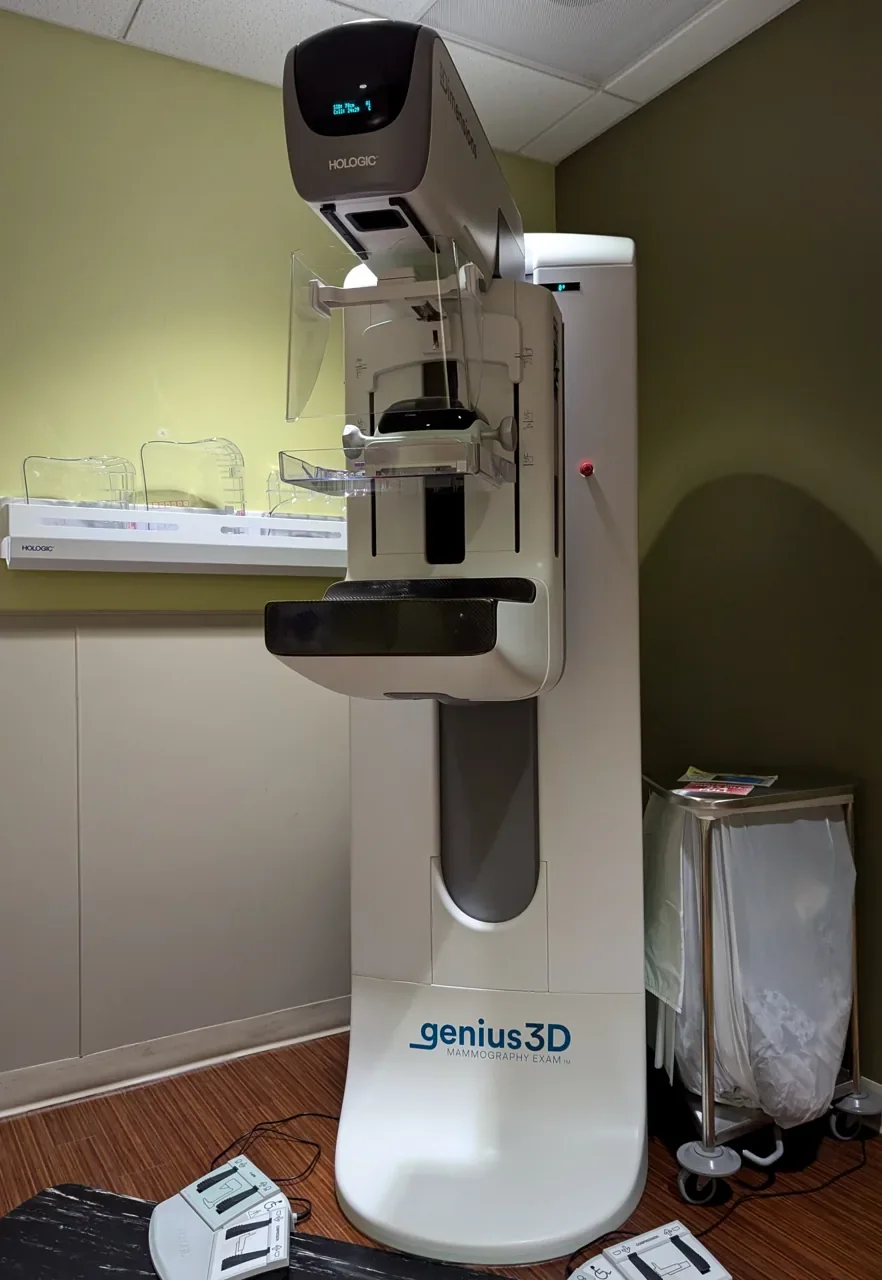
About this photograph
Not evidence of MMS stock, recommended options, current support, performance or endorsement.
The decision at a glance.
- Start here
- Fund interpretation and follow-up alongside acquisition.
- Spend more when
- The service can use a defined additional capability.
- Watch the budget
- Include reading systems, quality work and follow-up.
- Check the support
- Verify the exact offered generation and local repair route.
Ask the supplier
- Who completes interpretation and follow-up?
- Which exact modes, licences and reading components are included?
- Who funds and performs local quality and acceptance work?
Buy a pathway that can finish the work
A mammography purchase should answer what happens after both a routine result and a finding needing further assessment. Identify who reads, communicates results, arranges additional imaging or sampling and connects patients with treatment. A unit that creates appointments faster than the service can complete follow-up may shift the queue instead of improving access.
WHO's Global Breast Cancer Initiative framework connects early detection with timely diagnosis and comprehensive management. That is a useful purchasing boundary: the machine budget should sit within a funded pathway, including dependable referral when a hospital will not provide every step locally.
Define the clinical role before choosing 2D or 3D
Screening and diagnostic services can have different workflow needs. Have the breast imaging team define the examinations, patient population and accepted acquisition methods. Then compare exact digital mammography and tomosynthesis configurations against that brief. This is not a universal recommendation that every service should buy the same technology.
Hologic's 3Dimensions is a current tomosynthesis example. Its product page also names additional software capabilities, which is a reminder to distinguish a product-family feature from an installed licence. Require the offered generation, software, enabled modes and accessories in writing. A second-hand system name alone cannot establish what is included or upgradeable.
The reading station belongs in the purchase
Follow an examination from registration through acquisition, interpretation, prior-image comparison, report delivery and long-term access. Specify the appropriate reading displays, workstation software, storage and network integration with the responsible clinical and IT teams. Test the actual image types the proposed system will produce.
A gantry-only comparison hides these costs. It can also miss a practical limitation: the reading team may need training and time for a changed workflow. Demonstrate a representative worklist and comparison with existing examinations before treating the new system as ready for routine use.
Treat quality work as an operating expense
Budget installation acceptance, ongoing quality control, staff competence and the applicable facility approvals. Assign the work to named people and include test equipment and training. It is harder to repair an unfunded quality programme after delivery than to specify it in the original project.
For US facilities subject to MQSA, FDA describes accreditation and certification requirements covering equipment, personnel, clinical images and practices, including an annual physicist survey. This is a US example, not a substitute for the destination's requirements. Obtain local advice before importing or relocating equipment.
Keep biopsy and extra applications visible
An upright biopsy attachment, a dedicated biopsy system and an external referral arrangement are separate ways to support a diagnostic pathway. They differ in room occupancy, patient positioning, equipment dependence and recurring supplies. Do not assume a mammography package includes sampling equipment or that every attachment fits every generation.
Likewise, add contrast-enhanced or other advanced applications only against a specific approved service plan. Include the associated training, supplies, supporting equipment and workflow. A capability that remains unused should not inflate the expected number of completed examinations.
Choose sustainable coverage over a bare bargain
Compare keeping the accepted current unit, replacing it with a supported configuration, and purchasing dependable external access. Include major-component exposure, software, reading infrastructure, quality work and the follow-up pathway over the same period. Distinguish a seller's warranty from an achievable local repair response.
Replacement is justified when it addresses an accepted capability, capacity or support problem. If the main delay is reporting or referral, funding that part of the service may deliver more value than changing a functioning acquisition system. The deciding question is how the purchase improves completed care within the budget.
Compare the options.
Retain
- Capability
- Current accepted scope.
- Best fit
- Current equipment is not the bottleneck.
- Cost to watch
- Support and quality work.
Upgrade or replace
- Capability
- Approved additional capability.
- Best fit
- The added work can be completed.
- Cost to watch
- Acquisition plus reading and integration.
External access
- Capability
- Partner service.
- Best fit
- Local fixed costs are not justified.
- Cost to watch
- Travel and follow-up.
Option notes, costs & support 3 options
Keep accepted digital mammography
Protect a functioning service
- Best for
- Demand is met and support is sustainable.
- Why consider it
- Preserves an established imaging and reading workflow.
- The trade-off
- Does not solve a demonstrated capability gap.
- Price & package
- Maintenance, quality work and replacement exposure.
- Support
- Verify detector, tube and software support.
Specified tomosynthesis package
Add accepted capability
- Best for
- The clinical service can use and fund it.
- Why consider it
- Makes acquisition, reading and options part of one brief.
- The trade-off
- Licence, reading and storage assumptions can hide costs.
- Price & package
- Complete installed and interpreted workflow.
- Support
- Confirm exact generation and destination terms.
Contracted imaging and follow-up
Buy access
- Best for
- A local service cannot yet be sustained.
- Why consider it
- Avoids an incomplete equipment-led launch.
- The trade-off
- Travel and completion of follow-up need oversight.
- Price & package
- Full pathway cost and access commitments.
- Support
- Name responsibilities for results and escalation.
Budget for the complete service.
Service cost = acquisition and reading infrastructure + staff + quality work + support + funded follow-up.
- Clinical scope
- Reading capacity
- Enabled software
- Major-component support
- Follow-up completion
Before you commit.
- Approve the clinical service scope.
- Demonstrate the complete image workflow.
- Budget quality work and local approvals.
- Identify biopsy or referral arrangements.
- Compare complete ongoing costs.
Further checks & evidence limits
Questions to resolve
- Who completes interpretation and follow-up?
- Which exact modes, licences and reading components are included?
- Who funds and performs local quality and acceptance work?
What the evidence does not establish
- No screening-age, clinical superiority or detection-rate recommendation.
- No serial-specific upgrade eligibility, current prices or destination certification assessment.
Sources & supporting evidence.
Manufacturer claims and seller offers are identified below. Prices apply to the stated offer and review date; confirm availability, configuration and delivered cost.
- Global Breast Cancer Initiative implementation frameworkWorld Health Organization · public-health · checked October 18, 2026
2023 publication overview links early detection, timely diagnosis and comprehensive management. Only overview read; no full-framework or outcome claim.
- Facility Accreditation and CertificationUS Food and Drug Administration · regulator · checked October 18, 2026
US MQSA page covers facility accreditation/certification, personnel, equipment, quality work and annual physicist survey. Local rules outside US differ.
- 3Dimensions Mammography SystemHologic · manufacturer · checked October 18, 2026
Current US written product page identifies tomosynthesis system and separately named software capabilities; comparative detection and comfort claims not adopted.
Put the guide to work.
Send MMS your equipment list, destination and budget. We can help you compare a complete package.
Discuss your equipment