
Buying fetal monitors: make every channel in the quote usable
Compare the required fetal and maternal functions, then complete the transducers, mobility and recording package. The family name does not tell you what the offered monitor can do.
Editorially reviewed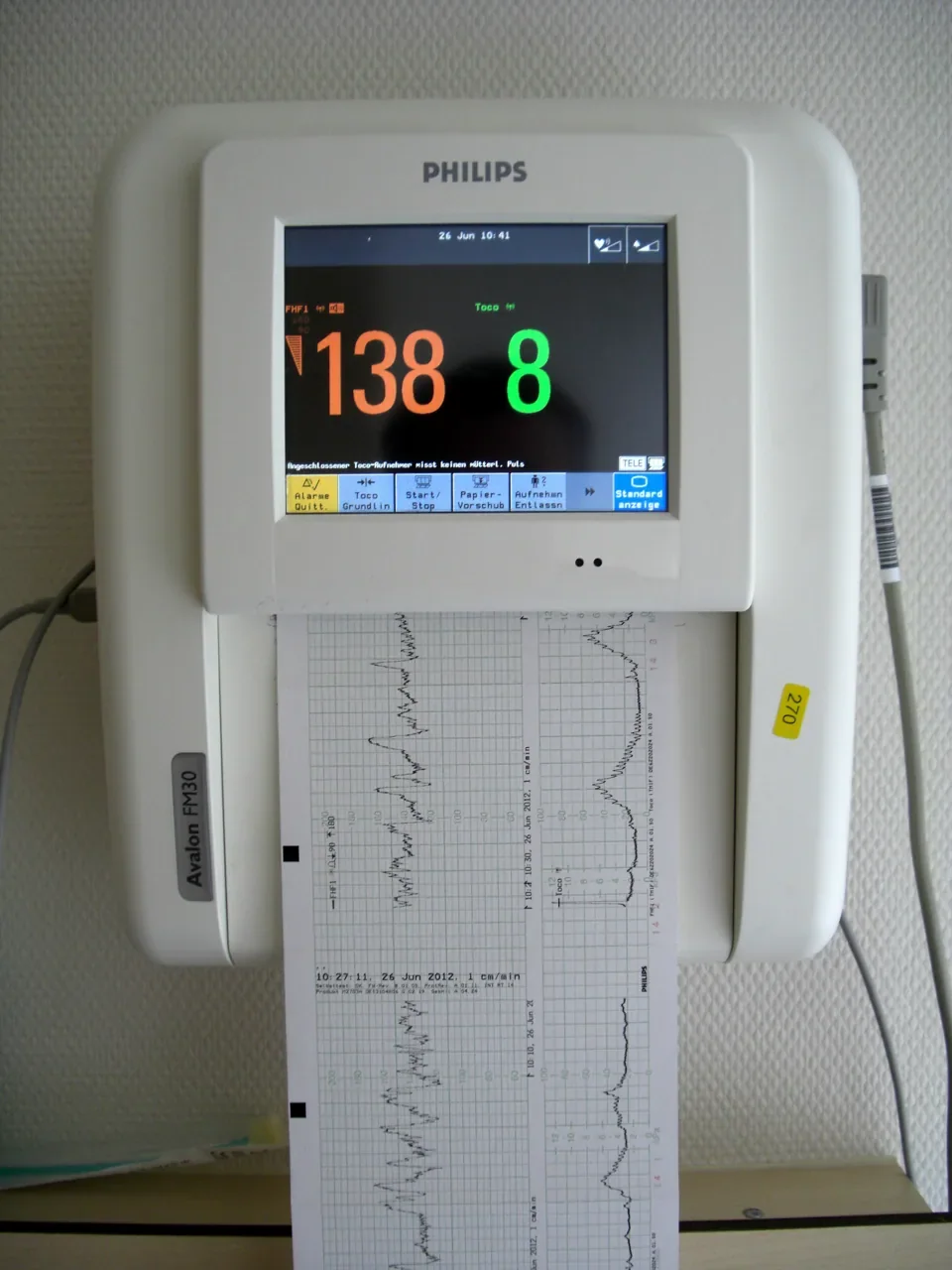
About this photograph
Not evidence of MMS stock, recommended options, current support, performance or endorsement.
The decision at a glance.
- Start here
- Specify the clinically required fetal channels, maternal parameters, recording route and mobility before comparing exact configured packages.
- Spend more when
- Required functions, usable mobility or support continuity justify the full accessory and recurring-supply cost.
- Watch the budget
- Compare the full usable configuration and recurring supplies over one common period.
- Check the support
- An essential channel cannot be demonstrated, compatible accessories are missing, or applicable correction status is unresolved.
Ask the supplier
- Which enabled functions and working transducers are included in this exact unit?
- What is captured and recoverable in each recording route?
- What correction, acceptance and ongoing support evidence follows this serial number?
Start with the maternity service, then the model
A fetal monitor is a package of enabled functions, transducers, supplies and records. The maternity team should define whether the station needs external or internal monitoring, the required number of fetal channels and maternal measurements. Procurement can then compare packages against that requirement. A larger screen or a broad “maternal/fetal” label cannot fill a missing measurement channel.
Keep clinical selection with the responsible maternity service. This comparison helps specify equipment; it does not choose a monitoring method for an individual pregnancy or supply interpretation and intervention rules. A machine’s feature list also does not establish that the team has the staffing, training and escalation arrangements to use it.
The suffix and options can change the purchase
GE HealthCare distinguishes the Corometrics 256cx as a dedicated fetal monitor and the 259cx as a maternal/fetal system. Its 250cx material describes twin monitoring and maternal options including different pulse-oximetry technologies. Quote the exact submodel, installed parameters and matching sensors. Do not transfer the capabilities of a 259cx listing to every monitor advertised simply as “250 series”.
Philips distinguishes external fetal monitoring on the Avalon FM20 from the additional internal capability on FM30 and FM50. Its family comparison lists twin capability as standard and triplet capability as optional. Optional noninvasive maternal measurements still require the installed function and suitable accessories. Select the configuration for the required work rather than assuming the higher model number is automatically better value.
Count the accessories that make simultaneous monitoring possible
Build the delivered list around the intended use: compatible ultrasound and uterine-activity transducers, belts, maternal cuffs and sensors where required, cables, paper and the correct mounting arrangement. A console may support multiple channels while the offered kit contains only enough working transducers for one. That difference belongs in the price comparison.
Document the replacement route and turnaround for the transducers most likely to stop the planned service when unavailable. A spare can protect capacity, but it is not evidence that a brand fails less often. Inspect actual cable, connector and housing condition through the qualified acceptance process; a freshly printed trace is only one part of that process.
Mobility adds a second equipment and supply decision
Philips describes its Avalon CL arrangement with a base station and optional wide-range pod. Its beltless solution adds a reusable fetal/maternal pod and a single-use adhesive patch. These are distinct configurations with different equipment and recurring-supply needs. A wireless or beltless headline does not establish the full clinical eligibility, radio coverage or water-use permissions of the offered system.
Map the patient’s permitted movement, charging and spare-pod arrangements, cleaning, compatible monitor connection and fallback route. If records travel through the hospital network, include IT ownership and downtime behavior. For illustration only, a $12 difference in consumables for 900 eligible monitoring episodes annually totals $32,400 over three years. That is a budget sensitivity, not a patch price or evidence that mobility lacks value.
Buy the record the service needs to recover
Distinguish what appears on the bedside screen from what is printed, buffered, sent to a central system and retained in the patient record. GE describes up to eight hours of maternal vital-sign history; that is not a promise of complete long-term archiving. Philips describes connectivity with IntelliSpace Perinatal, which brings its own configuration and network dependencies.
Include a documented acceptance demonstration of the required fetal and maternal data, identity, timestamps, interruption recovery and export. Agree what is retained during an outage or software change before relying on it. Avoid assuming that a “recovery” function includes every waveform, annotation and maternal parameter.
Check the offered unit, not just the product family
FDA’s June 2026 recall records Z-2522-2026 and Z-2523-2026 identify specified Avalon FM20/FM30 units with a speaker-connector assembly problem that can cause loss of audio. The records were open when checked on 18 October 2026. Match the unit identity and obtain the applicable correction documentation through the responsible service process; the records do not establish a defect in every Avalon monitor.
Make the same identity-based correction and support check for any competing or retained equipment. Then compare complete accepted stations over one period, including transducers, recurring supplies, record-system costs and continuity. A lower console price wins only if it still buys the functions and usable service the maternity team requires.
Compare the options.
Corometrics 256cx
- Capability
- Dedicated fetal configuration
- Best fit
- Required work does not depend on the maternal package of a different submodel
- Cost to watch
- Exact fetal transducers, supplies and records
Corometrics 259cx
- Capability
- Maternal/fetal configuration
- Best fit
- The service needs the combined parameter package
- Cost to watch
- Enabled maternal parameters and matching sensors
Avalon FM20
- Capability
- External fetal monitoring; maternal options
- Best fit
- External monitoring fits the defined service
- Cost to watch
- Installed options, required transducers and correction scope
Avalon FM30 or FM50
- Capability
- Adds internal fetal capability
- Best fit
- Clinical requirements justify the additional capability
- Cost to watch
- Required channels/options, accessories and recording arrangement
Budget for the complete service.
Compare installed and accepted stations plus supplies, transducers, software/network, service and continuity over the same years and eligible workload. Keep capital and per-episode supply costs distinct.
- Actual channels and sensors supplied
- Mobility equipment and disposable patches
- Record-system integration and recovery
- Transducer replacement and correction status
Further checks & evidence limits
Questions to resolve
- Which enabled functions and working transducers are included in this exact unit?
- What is captured and recoverable in each recording route?
- What correction, acceptance and ongoing support evidence follows this serial number?
What the evidence does not establish
- Exact unit, software, accessory compatibility and destination-specific clinical acceptance remain to be established.
- The targeted correction check is not an exhaustive all-model safety clearance; no comparative failure-rate or clinical-outcome ranking is made.
- Current exact Avalon recovery behavior was not independently established; the linked 2021 IFU could not be opened. No complete-record or water-use promise is made.
Sources & supporting evidence.
Manufacturer claims and seller offers are identified below. Prices apply to the stated offer and review date; confirm availability, configuration and delivered cost.
- Corometrics 250cx model and parameter informationGE HealthCare · manufacturer · checked October 18, 2026
June 2026 product material distinguishes 256cx/259cx, twin monitoring, maternal options and eight-hour vital-sign history.
- Avalon fetal-monitor family comparisonPhilips · manufacturer · checked October 18, 2026
FM20 versus FM30/FM50 capabilities, standard twin/optional triplet configuration, CL/beltless component and records ecosystem.
- Avalon specified-unit correction Z-2522-2026US FDA · regulator · checked October 18, 2026
May 26 initiation, June 22 posting; exact serial list and speaker-connector issue, open status on check.
- Avalon specified-unit correction Z-2523-2026US FDA · regulator · checked October 18, 2026
FM30 exact part/serial scope and speaker-connector issue; no family-wide inference.
Put the guide to work.
Send MMS your equipment list, destination and budget. We can help you compare a complete package.
Discuss your equipment