
Breast biopsy: share the mammography unit or buy a prone table?
Compare a compatible upright attachment, a dedicated prone system and referral by patient fit, room time and the complete sampling pathway.
Editorially reviewed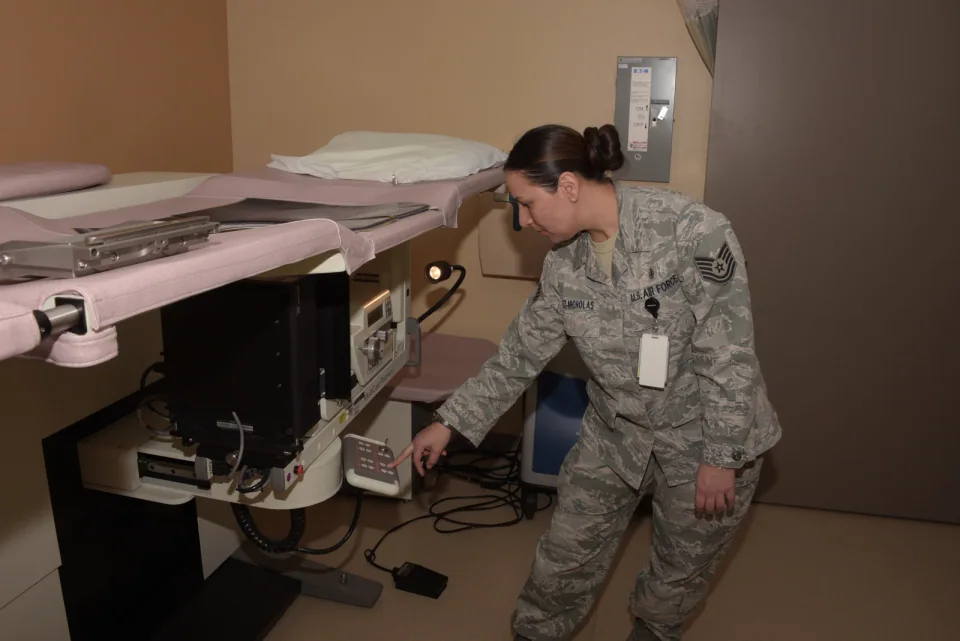
About this photograph
Not evidence of MMS stock, current support, performance or endorsement.
The decision at a glance.
- Start here
- Compare accepted procedures and real blocked room time.
- Spend more when
- Dedicated capacity or positioning removes a documented limitation.
- Watch the budget
- Include sampling, pathology and lost usable appointments.
- Check the support
- Verify host compatibility and the response to downtime.
Ask the supplier
- Is every host, licence and accessory compatible in this exact offer?
- How much useful room time would sharing displace?
- Which sampling supplies and pathology arrangements complete the service?
The real choice is shared or separate capacity
An upright attachment can bring biopsy guidance into a mammography room already in use. A dedicated prone system separates that work from the mammography schedule. Neither arrangement is automatically better: the clinical team must first establish which procedures and patient-positioning needs the offered configuration can meet.
For a modest accepted workload, sharing equipment may avoid a second imaging chain and room. For a busier service, the displaced mammography appointments, setup and turnover can make dedicated capacity worthwhile. Count the actual blocked time rather than comparing only the acquisition price.
Use compatible examples, not family-name assumptions
Hologic describes its Affirm guidance system as an add-on for compatible Hologic 3D-capable mammography systems, with 2D and 3D guidance. Its Affirm prone product is a dedicated prone 2D/3D system. These are examples of the two architectures, not a finding that any used Hologic unit accepts any Affirm attachment.
Record the host system, software version, guidance device, licences and accessories in one configuration schedule. Have the supplier document compatibility and the clinical team review the intended positioning. Optional access hardware should appear in the offer when the accepted procedure plan depends on it.
Price the appointments that sharing displaces
Use a representative monthly schedule. Suppose, hypothetically, 12 biopsy visits each require a 90-minute block in a shared room, including preparation and turnover. That occupies 18 room-hours. It does not mean every hour would otherwise produce a completed mammogram: staff availability, patient demand and the shape of the schedule determine what is displaced.
Compare that realistic loss of usable capacity with the fixed cost of a dedicated service. Include time to configure and restore a shared room. A dedicated machine earns its cost when it resolves a meaningful bottleneck or accepted positioning need, not simply because it leaves the mammography unit free.
Guidance is not the whole biopsy package
List the sampling system, approved disposable devices, associated consoles or vacuum equipment, specimen handling and any required specimen imaging separately. Hologic's prone product page identifies compatible sampling products; their presence in a catalogue does not prove they are included in an equipment sale.
Carry the workflow through specimen identification, transport, pathology reporting and patient follow-up. Price the approved supply basket and expected wastage for the actual volume. A guidance system can sit unused if a necessary single-use item or pathology route is unavailable.
Review the room with the patient and team in mind
A dedicated table needs a current installation assessment covering access, room layout, services and radiation protection. Review how the team positions and assists patients, reaches controls and moves supporting equipment. An old planning drawing for a different table is not a current minimum-room specification.
A shared room also needs a practical trial. Check storage for the attachment and accessories, setup, transfer and the return to ordinary imaging. Agree acceptance, training and quality responsibilities for the complete offered arrangement. Clinical suitability and safe working practices require the responsible team's assessment, not a purchasing-page inference.
Account for the consequences of one failure
Sharing a host system concentrates dependence: a failure can interrupt both mammography and biopsy. Dedicated equipment separates some of that exposure while creating another system to maintain. Neither arrangement supplies a backup pathology service or an available clinical team.
Keep referral in the comparison, especially for low or uncertain volume or procedures outside the accepted local scope. Choose the arrangement that can deliver the required work consistently, with a funded response when equipment or supplies are unavailable. The best purchase may be an attachment, a separate room or dependable access elsewhere.
Compare the options.
Upright attachment
- Capability
- Shared host and room.
- Best fit
- Compatible host and manageable workload.
- Cost to watch
- Displaced appointments.
Prone system
- Capability
- Dedicated imaging capacity.
- Best fit
- Accepted need justifies fixed costs.
- Cost to watch
- Second room and support.
Referral
- Capability
- External procedure access.
- Best fit
- Local volume or scope is insufficient.
- Cost to watch
- Travel and continuity.
Option notes, costs & support 3 options
Compatible upright attachment
Share the existing room
- Best for
- Accepted workload fits the mammography schedule.
- Why consider it
- Uses a host imaging system already funded.
- The trade-off
- Displaces room time and shares host failure exposure.
- Price & package
- Attachment, licences, accessories and sampling pathway.
- Support
- Confirm exact host compatibility.
Dedicated prone system
Separate capacity
- Best for
- Accepted positioning or workload warrants its own room.
- Why consider it
- Separates scheduling from routine mammography.
- The trade-off
- Adds site, quality and maintenance commitments.
- Price & package
- Installed system plus sampling and pathology.
- Support
- Verify complete generation and regional support.
Referral partnership
Avoid an incomplete local service
- Best for
- Low volume or unserved procedures.
- Why consider it
- Connects patients with an established capability.
- The trade-off
- Timely appointments and results transfer need oversight.
- Price & package
- Transport, access and follow-up.
- Support
- Define the full referral pathway.
Budget for the complete service.
Biopsy service cost = guidance system + site and shared-room opportunity cost + sampling supplies + staff + pathology + support.
- Accepted procedure scope
- Room occupancy
- Patient positioning
- Supply continuity
- Shared failure exposure
Before you commit.
- Approve procedure and positioning scope.
- Document exact compatibility.
- Model blocked room hours.
- Include sampling and pathology.
- Plan for host-system interruption.
Further checks & evidence limits
Questions to resolve
- Is every host, licence and accessory compatible in this exact offer?
- How much useful room time would sharing displace?
- Which sampling supplies and pathology arrangements complete the service?
What the evidence does not establish
- No patient-specific positioning or procedural recommendation.
- No current room dimensions, installed prices or serial-specific compatibility verified.
Sources & supporting evidence.
Manufacturer claims and seller offers are identified below. Prices apply to the stated offer and review date; confirm availability, configuration and delivered cost.
- Affirm Breast Biopsy Guidance SystemHologic · manufacturer · checked October 18, 2026
Written product description: add-on to compatible Hologic 3D-capable mammography with 2D/3D guidance; optional lateral arm. Exact offered-generation compatibility remains to verify.
- Affirm Prone Breast Biopsy SystemHologic · manufacturer · checked October 18, 2026
UK written product page describes dedicated prone 2D/3D system and separate compatible sampling products. No comparative comfort, speed or outcome claims adopted.
Put the guide to work.
Send MMS your equipment list, destination and budget. We can help you compare a complete package.
Discuss your equipment