
Adding TEE? The probe is only the first new cost
A TEE purchase adds processing, inspection, trained staff and continuity obligations. Separate 2D, 3D and analysis requirements before choosing the package.
Editorially reviewed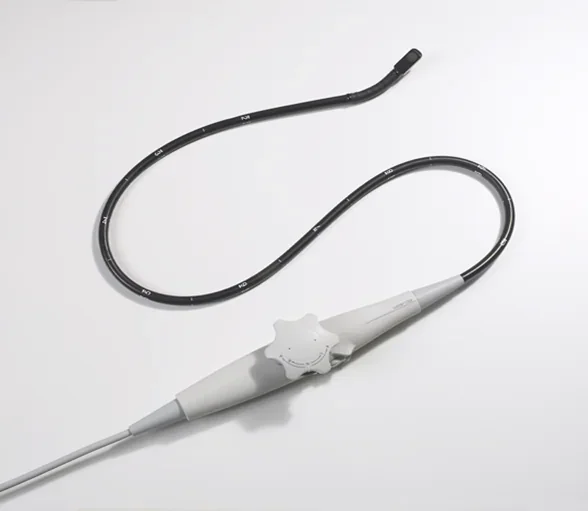
About this photograph
Not evidence of MMS stock, recommended options, current support, performance or endorsement.
The decision at a glance.
- Start here
- Define the TEE work, imaging configuration and complete processing/continuity route with the responsible teams.
- Spend more when
- A required imaging capability or dependable probe availability justifies its complete continuing cost.
- Watch the budget
- TEE service cost = compatible scanner/probe/options + processing setup + supplies, staff, inspection and service + interruption cover over the same period.
- Check the support
- Probe condition, approved processing, required rights or repair cover remains unresolved.
Ask the supplier
- Which exact TEE probe and 2D/3D functions work on this release?
- What approved care, testing, storage and processing setup is required and included?
- What are the probe repair, replacement and temporary-cover arrangements?
Decide what TEE work the hospital is adding
An established adult TTE service should treat TEE as a separate investment decision. Ask the responsible clinical team to define the intended work, patient population, imaging requirements and staffing. This article does not select indications or teach the procedure; it examines the equipment and support commitments that can change whether the service is feasible.
Compare a complete local addition with an existing referral or shared-service arrangement. A low number of examinations does not by itself rule out purchase, and a projected revenue figure does not establish value. The hospital needs a funded way to provide the required work when it is needed, including when its specialist probe is unavailable.
The exact probe and imaging configuration matter
Philips’ July 2016 CX50 xMATRIX table separates S7-3t for pediatric/adult 2D TEE from X7-2t for adult 2D/3D TEE. This historical distinction shows why “TEE capable” is insufficient. It does not authorize interchangeability across every release or establish current support for either offered probe.
Specify the required imaging modes and analysis separately. A seller may demonstrate a compatible probe on a fully enabled system while offering a different software package. Verify the offered release, probe identifier and continuing rights together. Do not assume a general xMATRIX description buys every analysis tool shown in the literature.
Choose the processing route before buying the probe
Philips’ written care resources provide probe-specific compatibility information and a TEE care overview. They distinguish parts of the transducer and direct users to the appropriate instructions. The purchasing implication is to fund an approved, model-specific process with the receiving infection-prevention and technical teams; a general disinfectant purchase does not settle compatibility.
Include supplies, any required processing equipment, transport between use and processing, protected storage, inspection and staff time. Compare how the proposed route supports the actual schedule. One probe returning slowly through an otherwise adequate process can constrain availability; a second probe only helps if the facility can process, store and maintain both.
Price a failure through the return to service
A TEE probe can be the single component that stops the new service even when the console remains operational. Obtain condition and qualified test evidence for the offered probe, then establish diagnosis, repair or exchange, shipping and the acceptance evidence supplied on return. Keep the probe’s warranty scope separate from the console’s.
A compatible loaner must support the required work on the installed release and reach the hospital in time. A general promise that loaners exist is not a continuity plan. Where a confirmed loaner is impractical, compare a supported spare or an agreed referral arrangement with the consequences of waiting. Do not turn a warranty length into a prediction of probe life.
Compare complete annual commitments, not gross revenue
For illustration, a US$12,000 equipment addition plus US$3,000 setup and US$4,000 annual support and processing costs totals US$23,000 over two years. At an assumed 100 examinations each year, that is US$115 per examination before omitted staffing, facility and other costs. These are hypothetical figures, not a TEE price estimate or a forecast of utilization.
Use the example to expose assumptions, not to justify the purchase. Change the volume, processing arrangement and repair cover to match the proposed service. The sensible package is the one that supplies the required capability and a sustainable care and continuity route; paying for 3D is worthwhile only when it serves the clinical brief.
Compare the options.
Supported 2D TEE package
- Capability
- The historical S7-3t example demonstrates a distinct configuration.
- Best fit
- A clinical brief satisfied by its documented 2D configuration.
- Cost to watch
- Patient suitability, processing and current release compatibility require confirmation.
Supported 3D TEE package
- Capability
- The historical X7-2t example makes the probe/mode distinction concrete.
- Best fit
- A service with a justified requirement for 3D and its analysis.
- Cost to watch
- Include necessary software, care and repair cover rather than the console alone.
Continue referral or shared provision
- Capability
- Avoids an incomplete equipment investment while the actual service plan is developed.
- Best fit
- A hospital whose local supporting capacity is not ready.
- Cost to watch
- Access, continuity and full service costs still need comparison.
Option notes, costs & support 3 options
For every option
- Price & package
- Compare the complete configured package; no current matched price established.
- Support
- Confirm exact release, probe condition and destination repair eligibility.
Supported 2D TEE package
Defined service addition
- Best for
- A clinical brief satisfied by its documented 2D configuration.
- Why consider it
- The historical S7-3t example demonstrates a distinct configuration.
- The trade-off
- Patient suitability, processing and current release compatibility require confirmation.
Supported 3D TEE package
Capability-driven upgrade
- Best for
- A service with a justified requirement for 3D and its analysis.
- Why consider it
- The historical X7-2t example makes the probe/mode distinction concrete.
- The trade-off
- Include necessary software, care and repair cover rather than the console alone.
Continue referral or shared provision
Complete-service alternative
- Best for
- A hospital whose local supporting capacity is not ready.
- Why consider it
- Avoids an incomplete equipment investment while the actual service plan is developed.
- The trade-off
- Access, continuity and full service costs still need comparison.
Budget for the complete service.
TEE service cost = compatible scanner/probe/options + processing setup + supplies, staff, inspection and service + interruption cover over the same period.
- TEE configuration
- Probe processing capacity
- Repair and continuity
- Utilization assumptions
Further checks & evidence limits
Questions to resolve
- Which exact TEE probe and 2D/3D functions work on this release?
- What approved care, testing, storage and processing setup is required and included?
- What are the probe repair, replacement and temporary-cover arrangements?
What the evidence does not establish
- Historical CX50 examples are not current all-unit compatibility or support statements.
- No reprocessing procedure, clinical indication or patient-size limit is prescribed.
- Qualified clinical and infection-prevention review of the local service is still required.
Sources & supporting evidence.
Manufacturer claims and seller offers are identified below. Prices apply to the stated offer and review date; confirm availability, configuration and delivered cost.
- CX50 xMATRIX cardiology brochure, July 2016Philips · manufacturer · checked October 18, 2026
Historical configuration evidence, pp. 3, 6–7, 12–14 and footer p.16 read; complete transducer table p.14 visually checked. This is not a current entitlement or support statement.
- Ultrasound care and cleaning, including TEE guidancePhilips · manufacturer · checked October 18, 2026
Public written inspection, compatible-product and TEE care overview read. Video and all linked model IFUs were not reviewed; no processing instructions reproduced.
Put the guide to work.
Send MMS your equipment list, destination and budget. We can help you compare a complete package.
Discuss your equipment