
Surgical tourniquets: the cuff system can change the best buy
Compare the required controls, cuff connections and replenishment costs together. Zimmer’s named packages show why “with hoses” is a different offer from “with cuffs and hoses.”
Editorially reviewed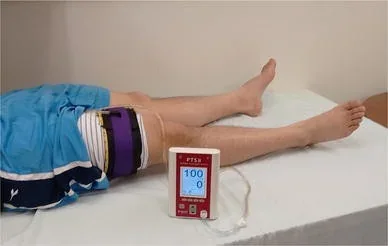
About this photograph
Not evidence of MMS stock, recommended options, current support, performance or endorsement.
The decision at a glance.
- Start here
- Specify the clinical cuff/control requirement and compare exact complete console, hose and cuff packages.
- Spend more when
- A required function or sustainable accessory/service route improves the accepted service.
- Watch the budget
- Tourniquet ownership cost = complete console/cuff/hose package + replenishment and approved care + testing, battery, maintenance and continuity over a common period.
- Check the support
- Port labels, catalogue bundles or battery claims substitute for the actual offered configuration and tests.
Ask the supplier
- What exact model, cuff capacity and approved cuff/port configuration does this offer supply?
- Which sizes, hoses, sleeves and package quantities are included and replenishable?
- What documented unit tests, battery assessment and ongoing service cover the complete system?
Ports and cuff capacity answer different questions
Ask the surgical team to specify the intended work, independently controlled cuff requirement and patient-size range before selecting a console. Then identify the cuff and hose system that supplies that capability. A product described as single-port should not automatically be treated as a single-cuff system.
Zimmer’s March 2022 brochure makes the distinction concrete: A.T.S. 5000 is dual-port and A.T.S. 2200 single-port, but both are listed as dual-cuff systems. Its current product page names A.T.S. 5000 and the single-port A.T.S. 3200. Do not silently substitute the newer model name into an older comparison table; match the offered model and its current instructions.
Price the cuff inventory that the chosen system requires
For the A.T.S. 5000, Zimmer describes separate ports for inflation/deflation and pressure monitoring. Its EZ LOP feature also depends on identified compatible cuffs. These are reasons to reconcile the proposed cuff stock and functions against the exact system, rather than assume all cuffs with a familiar connector supply the same workflow.
The 2022 ordering table distinguishes 60500010100, the A.T.S. 5000TS with hoses, from 60500010200, with cuffs and hoses. That small package-code difference changes the starting inventory. For a used offer, count the actual supplied parts and condition; an old catalogue code does not establish that its original contents remain in the box.
Build the initial stock around the approved sizes and types the service needs. Compare replenishment quantities, sleeves, hoses and necessary spares. A supplied assortment may have little value if it misses a routinely needed size or consists of components that the hospital cannot continue sourcing.
Reusable and disposable cuffs shift different costs
The manufacturer catalogue includes reusable and disposable cuff families. Compare only combinations approved for the intended system and clinical use. A reusable purchase brings its specified cleaning, inspection, storage and replacement obligations; a disposable route brings continuing orders and sufficient stock for the planned activity.
A box price should therefore become a usable-case supply cost before it enters the comparison. Include the actual required items and wastage assumptions, with those assumptions visible. Do not assign a universal number of reuses or assume that sterilizing an accessory makes it approved for another use.
Pay for an accepted workflow and a serviceable system
An added measurement or workflow feature is worth considering when the clinical team needs it and can use the complete approved configuration. It is not a promise of superior patient outcomes. Zimmer’s current page explicitly limits the clinical evidence behind its pain-related marketing; a feature list should not become a claim that one model prevents complications better than another.
For an installed or used system, include qualified inspection, testing, hoses, battery condition and the repair route in the decision. A brochure runtime is not a battery test on the offered unit. Establish the applicable test conditions and backup arrangements through the technical team, without relying on conflicting reseller runtime figures.
Retain an accepted system when it meets the defined work and has a credible cuff and repair supply. Replace it when a required function, unavailable accessory family or unsupported condition makes further investment poor value. The deciding comparison is a complete working service over the same period, not the touchscreen size or model number.
Compare the options.
A.T.S. 5000 with the required cuff package
- Capability
- The manufacturer identifies separate inflation/measurement paths and cuff-dependent features.
- Best fit
- A team requiring its supported dual-port and measurement workflow.
- Cost to watch
- Include compatible cuffs and required accessories rather than the console alone.
A.T.S. 3200 or an accepted single-port alternative
- Capability
- Keeps the cuff ecosystem and required controls in the selection.
- Best fit
- A service whose agreed work is met by the exact offered configuration.
- Cost to watch
- Confirm model-specific capacity; do not reuse the older 2200 table as a 3200 specification.
Retain the accepted installed system
- Capability
- Can avoid replacing useful stock and staff familiarity.
- Best fit
- Adequate capability with sustainable cuffs and qualified service.
- Cost to watch
- Unsupported parts or a required missing function can reverse the decision.
Option notes, costs & support 3 options
For every option
- Price & package
- Compare the complete configured package; no current matched price established.
- Support
- Establish exact equipment, accessory and destination support; public documentation does not guarantee unit eligibility.
A.T.S. 5000 with the required cuff package
Defined-feature comparison
- Best for
- A team requiring its supported dual-port and measurement workflow.
- Why consider it
- The manufacturer identifies separate inflation/measurement paths and cuff-dependent features.
- The trade-off
- Include compatible cuffs and required accessories rather than the console alone.
A.T.S. 3200 or an accepted single-port alternative
Task-matched comparison
- Best for
- A service whose agreed work is met by the exact offered configuration.
- Why consider it
- Keeps the cuff ecosystem and required controls in the selection.
- The trade-off
- Confirm model-specific capacity; do not reuse the older 2200 table as a 3200 specification.
Retain the accepted installed system
Existing-investment comparison
- Best for
- Adequate capability with sustainable cuffs and qualified service.
- Why consider it
- Can avoid replacing useful stock and staff familiarity.
- The trade-off
- Unsupported parts or a required missing function can reverse the decision.
Budget for the complete service.
Tourniquet ownership cost = complete console/cuff/hose package + replenishment and approved care + testing, battery, maintenance and continuity over a common period.
- Port configuration versus cuff capacity
- Exact package codes
- Reusable/disposable replenishment
- Qualified tests and battery condition
Further checks & evidence limits
Questions to resolve
- What exact model, cuff capacity and approved cuff/port configuration does this offer supply?
- Which sizes, hoses, sleeves and package quantities are included and replenishable?
- What documented unit tests, battery assessment and ongoing service cover the complete system?
What the evidence does not establish
- No pressure/time protocol or clinical superiority recommendation supplied; surgical and technical acceptance remain required.
- The 2022 brochure is historical configuration evidence, not current stock or support eligibility.
- The source ATS4000 six-versus-ten-hour conflict is not resolved as a unit specification; neither number is copied. No comparative failure rates established.
Sources & supporting evidence.
Manufacturer claims and seller offers are identified below. Prices apply to the stated offer and review date; confirm availability, configuration and delivered cost.
- A.T.S. 5000 and 3200 manufacturer overviewZimmer Biomet · manufacturer · checked October 18, 2026
Relevant complete product/features body read: 5000 dual-port, 3200 single-port, 5000 separate inflation/measurement paths and compatible-cuff-dependent EZ LOP. Manufacturer footnote states ATS5000 was not used in the cited pain study and has not been clinically evaluated to reduce postoperative pain/wound complications. No pressure protocol or outcome superiority adopted.
- Tourniquet family brochure, March 2022Zimmer Biomet · manufacturer · checked October 18, 2026
Relevant text pp.3–9 and footer p.12 read; comparison and ordering tables pp.5 and 8 visually inspected. ATS5000/2200 both dual-cuff despite dual/single ports; 60500010100 with hoses versus 60500010200 with cuffs/hoses. Historical catalogue is not current availability or unit battery evidence.
Put the guide to work.
Send MMS your equipment list, destination and budget. We can help you compare a complete package.
Discuss your equipment