
Surgical power tools: buy enough complete sets for the list
A newer drill cannot shorten an unavailable handpiece’s processing cycle. Compare the exact tools, batteries, attachments and turnaround capacity before changing platforms.
Editorially reviewed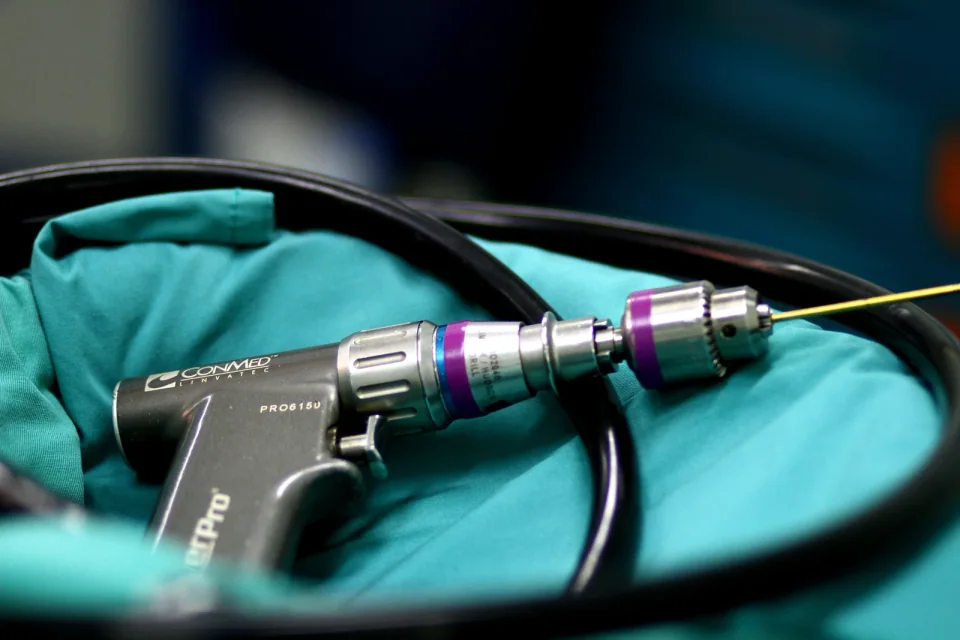
About this photograph
Not evidence of MMS stock, recommended options, current support, performance or endorsement.
The decision at a glance.
- Start here
- Map the procedure list to complete prepared sets and identify the actual capability or turnaround constraint.
- Spend more when
- An extra accepted set or demonstrated platform feature changes usable theatre capacity.
- Watch the budget
- Power-tool service cost = required complete sets + batteries/chargers/trays + procedure accessories + approved processing, training, repair and backup over the same period.
- Check the support
- The offer omits essential attachments, approved processing or a credible complete repair/backup route.
Ask the supplier
- Which exact handpieces, attachments, cutting accessories, batteries and chargers make each required complete set?
- What approved processing and charging route applies to each part, and how many prepared sets does our list require?
- Which current accessories transfer, and what repairs or temporary complete sets are covered?
Specify the work each handpiece must cover
List the surgical tasks and the exact accepted handpieces, attachments and cutting accessories needed for each. A family name such as “System 8” does not identify a complete kit. Stryker’s System 8 range includes distinct sagittal, reciprocating and sternum saws and rotary drills, with additional dedicated options.
A bargain set containing several handpieces can still omit the one the service uses most. Conversely, buying every available tool spends money on unused capability. Have the surgical team define the required working set and evaluate handling and function before procurement compares package totals.
Buy turnaround capacity where the list actually stops
Consider two planned cases requiring the same handpiece. If the first set cannot complete its approved cleaning, inspection, packaging and sterilization route before the second case, a newer motor does not resolve the scheduling gap. An additional complete accepted set may do so. Extra batteries help only if the handpiece and other required parts are also ready.
Include the processing lead in that comparison. Establish the actual validated route, tray and load requirements, drying/cooling needs and staff capacity for each component. Do not combine a handpiece instruction from one generation with a battery instruction from another, or shorten a cycle to make an optimistic equipment-count calculation work.
Record the spare set needed during repair as well as ordinary turnover. A single backup drill is insufficient if the unavailable item is a required attachment or saw. Compare complete usable sets and the planned case sequence, not the total number of instruments in storage.
Make the battery upgrade a workflow comparison
System 9 gives a concrete reason to examine a newer platform: Stryker describes wireless charging through the case before or after sterilization, with space for up to six batteries. It also describes a changed handpiece-to-battery interface. Evaluate that documented workflow with the exact approved accessories and instructions.
Those features do not prove that existing batteries, chargers, cases or handpieces transfer to the new platform. Obtain the compatibility record and price every required conversion item. Compare the complete change with continuing an accepted System 7 or System 8 installation whose required parts and qualified support remain available.
For used batteries, a statement that they charge is not an assessment of useful performance in the intended workload. Include the applicable condition test, replacement costs and the approved charging/processing arrangement. Avoid turning a manufacturer runtime or generation-to-generation marketing claim into a life prediction for the offered pack.
Keep the cutting-accessory and repair bill visible
Compare the continuing blades, burrs and other accessories used by the defined procedure mix, with their exact interfaces and permitted use. Count single-use supplies as recurring costs and reusable items with their approved inspection, processing and replacement requirements. Similar appearance does not establish an approved substitute.
Define service separately for handpieces, attachments, batteries and chargers. Establish which failures the agreement covers and whether temporary equipment supplies the whole required set. If online equipment-management tools are part of the proposal, decide whether their data can be used by the local technical team and include any connectivity or contract dependency.
Choose the smaller investment when another accepted set, repaired handpiece or replacement battery resolves the real problem. Choose a platform change when its required capability or demonstrated workflow benefit survives the cost of new accessories, processing and training. The public sources do not establish a universal reliability winner.
Compare the options.
Complete or duplicate the accepted installed set
- Capability
- Targets the item that prevents the next case from being ready.
- Best fit
- An adequate platform constrained by turnaround or a missing component.
- Cost to watch
- Requires sustainable accessories and qualified service.
Task-matched System 8 package
- Capability
- Manufacturer distinguishes several tools within the family.
- Best fit
- A procedure mix met by the appropriate named handpieces and accessories.
- Cost to watch
- The family name does not specify kit contents or transferable battery/processing arrangements.
Complete System 9 conversion
- Capability
- Manufacturer describes through-case wireless charging and a new battery interface.
- Best fit
- A service where the accepted charging/handling workflow improves a defined constraint.
- Cost to watch
- Price the full approved conversion and evaluate locally; no reliability premium assumed.
Option notes, costs & support 3 options
For every option
- Price & package
- Compare the complete configured package; no current matched price established.
- Support
- Establish exact equipment, accessory and destination support; public documentation does not guarantee unit eligibility.
Complete or duplicate the accepted installed set
Capacity-first comparison
- Best for
- An adequate platform constrained by turnaround or a missing component.
- Why consider it
- Targets the item that prevents the next case from being ready.
- The trade-off
- Requires sustainable accessories and qualified service.
Task-matched System 8 package
Named family comparison
- Best for
- A procedure mix met by the appropriate named handpieces and accessories.
- Why consider it
- Manufacturer distinguishes several tools within the family.
- The trade-off
- The family name does not specify kit contents or transferable battery/processing arrangements.
Complete System 9 conversion
Workflow-upgrade comparison
- Best for
- A service where the accepted charging/handling workflow improves a defined constraint.
- Why consider it
- Manufacturer describes through-case wireless charging and a new battery interface.
- The trade-off
- Price the full approved conversion and evaluate locally; no reliability premium assumed.
Budget for the complete service.
Power-tool service cost = required complete sets + batteries/chargers/trays + procedure accessories + approved processing, training, repair and backup over the same period.
- Procedure-specific handpieces
- Complete-set turnaround
- Battery and charger conversion
- Approved processing
- Cutting accessories and repair
Further checks & evidence limits
Questions to resolve
- Which exact handpieces, attachments, cutting accessories, batteries and chargers make each required complete set?
- What approved processing and charging route applies to each part, and how many prepared sets does our list require?
- Which current accessories transfer, and what repairs or temporary complete sets are covered?
What the evidence does not establish
- Exact cross-generation compatibility, processing cycles and current unit support were not established by product pages.
- No durability or measured failure-rate ranking established; seller System7 twice-runtime/29%-lighter claims not reused.
- No current matched prices or local case-turnaround measurements supplied.
Sources & supporting evidence.
Manufacturer claims and seller offers are identified below. Prices apply to the stated offer and review date; confirm availability, configuration and delivered cost.
- System 8 power tools: manufacturer overviewStryker · manufacturer · checked October 18, 2026
Full substantive product/family description read: sagittal/reciprocating/sternum saw and rotary drill, plus dedicated options. Marketing reliability and performance assertions not adopted; page is not the processing IFU.
- System 9 power tools: manufacturer overviewStryker · manufacturer · checked October 18, 2026
Full substantive charger, battery interface, handpiece, family and service/data-module body read. Describes wireless charging through case before/after sterilization, up to six batteries, changed interface and online SEM. No cross-generation compatibility, longevity or clinical superiority inferred.
Put the guide to work.
Send MMS your equipment list, destination and budget. We can help you compare a complete package.
Discuss your equipment