
Surgical instruments: repair the piece, replace the set, or buy a spare?
A low repair quote can still leave a complete set unavailable. Compare qualified repair, targeted replacement and circulating spares by accepted function and turnaround.
Editorially reviewed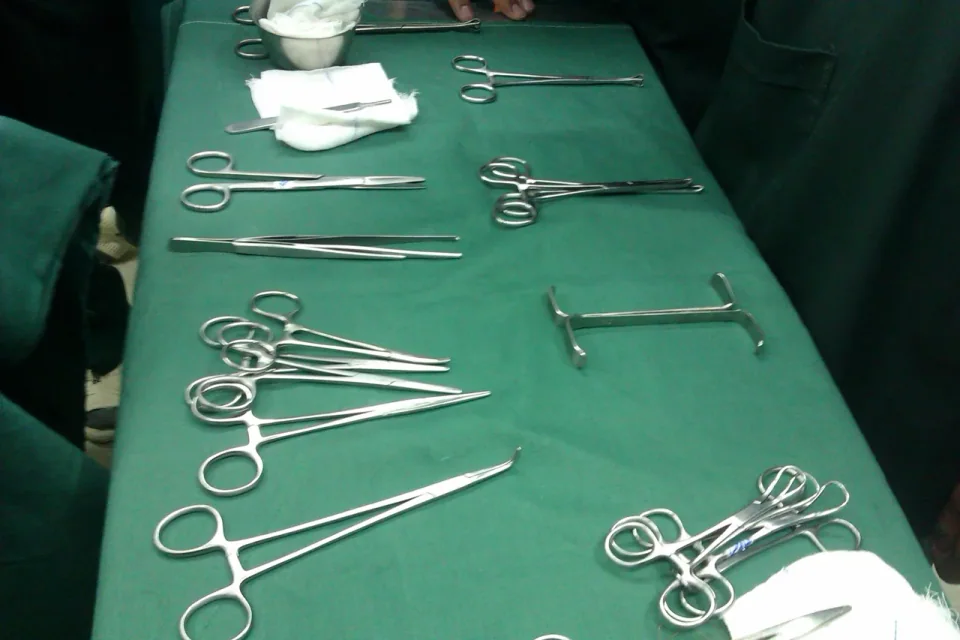
About this photograph
Not evidence of MMS stock, recommended options, current support, performance or endorsement.
The decision at a glance.
- Start here
- Identify the defective item, remove it from service as required, and obtain a qualified disposition tied to its manufacturer instructions.
- Spend more when
- A replacement or additional circulating set removes a documented availability constraint that repair alone cannot solve.
- Watch the budget
- Compare the full usable configuration and recurring supplies over one common period.
- Check the support
- A repair proposal lacks a defined scope and acceptance evidence, or its value depends on continuing to use an instrument that has failed inspection.
Ask the supplier
- What precise defect and manufacturer requirements determine whether this item can be repaired?
- What final checks and identity records accompany the returned instrument?
- Does the shortage require repair, one replacement, a whole set or more circulating stock?
Separate the defect from the stock shortage
A damaged instrument and too few circulating sets are different problems. Repair can restore a suitable instrument; a spare can cover time in processing or repair. Buying a spare does not clear the damaged item for use, and repairing one item does not necessarily create enough sets for a growing operating list.
Start with the exact instrument and defect, its place in the set and the procedures that depend on it. Aesculap’s manual-instrument IFU calls for damaged or inoperative products to be removed from service and for broken or non-functioning instruments to be repaired or replaced. That is the starting boundary. The responsible qualified team decides repairability and acceptance for the actual item; a procurement guide cannot turn a photograph into that judgment.
A repair quote should describe the accepted result
Compare the diagnosed defect, work to be done, replacement components, identification and final checks. “Refurbished” is too vague to tell whether a cutting edge, joint, alignment or insulation issue was addressed. Preserve the instrument identity and record whether this is a recurring defect rather than treating every return as a first repair.
Aesculap describes off-site, mobile and in-hospital service arrangements, with final inspection in its repair process. Sklar states that only its own repair personnel are authorized to repair Sklar instruments. These are concrete service-scope differences to resolve for the relevant brand. They are not proof that one provider produces lower failure rates or that the same service is available in every country.
Agree what documentation returns with the item and who performs receiving inspection, any required reprocessing and release. A repair invoice is not the complete acceptance record. Confirm how an unsuccessful repair, a discovered non-repairable item and return freight are charged.
Replace the missing piece before replacing a sound set
When one item is beyond economic or permitted repair, compare an appropriate individual replacement with buying the whole set. Match the required pattern, dimensions and function through qualified clinical review. A similar name or a larger piece count does not establish equivalence.
Whole-set replacement earns consideration when the assessment finds widespread deterioration, unsuitable design or an unsupported configuration. It is harder to justify when the rest of the set is accepted and the missing item can be replaced. Keep set completeness visible: a tray containing 39 of 40 instruments may represent almost none of the usable capacity needed for a particular list.
Put turnaround and freight beside the repair price
Consider a hypothetical $90 repair with $60 round-trip freight and $30 of documented receiving/processing expense: $180 before any charge for temporary cover. Compare a $250 delivered replacement with the same $30 acceptance expense: $280. Repair saves $100 only if the accepted result and availability are adequate.
If repair requires $120 of actual temporary-cover expense, its total becomes $300 and the replacement becomes $20 cheaper on these assumptions. Do not invent a cost for every delayed case or assume the replacement arrives sooner. Use quoted lead times and real incremental costs. Repeated repair spending matters, but past expense alone does not prove the next repair is poor value.
A spare set is a third proposal, not an automatic add-on to either calculation. Compare its cost with repeated transport, rental or scheduling constraints across a common period. If the shortage comes from unavailable cleaning staff or processing capacity, another set may only move the queue.
Use the repair history to decide the next purchase
Link each repair to the item and set, defect, turnaround, accepted work and subsequent recurrence. That history can distinguish a repeated repair problem from handling damage, a consumable part or simply insufficient stock. An annual total for “instrument repairs” cannot show which purchasing choice will help.
Retain accepted instruments where qualified repair and support remain practical. Replace individually when the item’s case fails; replace whole sets when the assessment supports it; add spares when circulating capacity is the actual need. This keeps serviceable assets working without treating polished appearance, a warranty slogan or an assumed lifetime as evidence of performance.
Compare the options.
Qualified targeted repair
- Capability
- Restores an accepted repairable item
- Best fit
- Repair outcome is adequate and total cost is favorable
- Cost to watch
- Scope, freight, turnaround, acceptance and recurrence
Individual replacement
- Capability
- Completes an otherwise useful set
- Best fit
- One item lacks a sound repair case
- Cost to watch
- Correct equivalent pattern, delivered lead time and acceptance
Whole-set replacement
- Capability
- Replaces a broadly unsuitable or deteriorated set
- Best fit
- Assessment finds more than an isolated defect
- Cost to watch
- Complete clinical requirements and processing capacity
Additional circulating stock
- Capability
- Covers a documented availability gap
- Best fit
- The existing service is sound but not enough sets are ready
- Cost to watch
- Set cost, processing/repair overlap and storage
Budget for the complete service.
Compare repair, replacement and spare-stock costs over the same period, including delivery, acceptance, processing and actual temporary-cover expense. Count complete procedure-ready sets and unavailable days separately; do not substitute item count for usable capacity.
- Qualified defect disposition
- Shipping and turnaround
- Recurring defects and accepted repair scope
- Missing-item impact and circulating stock
Further checks & evidence limits
Questions to resolve
- What precise defect and manufacturer requirements determine whether this item can be repaired?
- What final checks and identity records accompany the returned instrument?
- Does the shortage require repair, one replacement, a whole set or more circulating stock?
What the evidence does not establish
- No instrument-specific repairability or acceptance determination performed.
- No current comparative repair-vendor failure rates, universal useful life or local price claim established.
- OEM general IFU does not replace device-specific exceptions, current instructions or qualified clinical/processing review.
Sources & supporting evidence.
Manufacturer claims and seller offers are identified below. Prices apply to the stated offer and review date; confirm availability, configuration and delivered cost.
- Aesculap manual surgical instruments IFU-172 v7Aesculap / B. Braun · manufacturer · checked October 18, 2026
Effective September 8, 2023: manual-instrument scope, inspection and removal of damaged/inoperative instruments; not a universal powered-device repair manual.
- Aesculap asset repair and maintenance programsAesculap / B. Braun · manufacturer · checked October 18, 2026
Describes service delivery formats, repair steps and final inspection; US service marketing does not establish local availability or outcomes.
- Sklar surgical instrument repair serviceSklar · manufacturer · checked October 18, 2026
States Sklar-only authorized repair for its own instruments; quote/return and service scope identified. Vendor quality claims not independently verified.
Put the guide to work.
Send MMS your equipment list, destination and budget. We can help you compare a complete package.
Discuss your equipment