
A refurbishment label tells you what to ask next; it does not answer the questions. What work was done on this unit? Which parts and software are included? Who can repair it where it will be used? Our editorial position is that a documented, supportable refurbished package deserves a fair comparison with new equipment. The strength of the evidence should decide how far that comparison goes.
The decision in brief
Request the exact unit’s work records, configuration and condition evidence.
Price independent assessment when it can resolve missing evidence.
Pause if essential compatibility, parts, license or acceptance questions remain open.
Ask what happened to this unit
Request a description of the work completed, by whom, when and against what procedure. Ask for unit-specific photographs and available service records. A cleaned enclosure, a successful power-on and a replaced battery describe different levels of work. The supplier should explain its terminology instead of expecting the buyer to infer a uniform meaning from used, inspected or refurbished. If records are incomplete, document the uncertainty and decide what independent assessment is needed.
Look for a coherent configuration
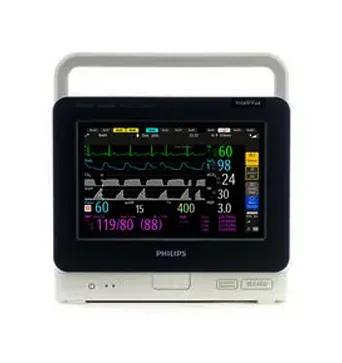
An older unit may have accumulated replacement components or software changes. List the current hardware, accessories and licensed functions and ask qualified reviewers to confirm that they form a supported configuration. For a monitor, this means the measurement modules and sensors, not only the display. Philips’ modular monitoring documentation provides a concrete example of how measurement capability sits in components that must be identified. A model name is too broad a description for the purchase order.
Check support in the place it will be used
A device that is serviceable in one country may be difficult to support in another. Ask who will provide local technical work, where parts come from and which software or documentation the service provider can legitimately access. Find out whether the manufacturer supports that generation and obtain the applicable instructions. Review relevant manufacturer notices and regulator recall information for the model and affected serial range. A database search is a useful input, not a certificate that an individual unit has no unresolved issue.
Agree how condition will be accepted
Before payment and shipment, define the evidence that will support acceptance, the qualified party performing the checks and what happens if the equipment differs from the agreed package. Include freight damage and missing accessories in that discussion. Acceptance at dispatch and acceptance after transport serve different purposes. For equipment that requires installation, identify which checks depend on the final site and when the service or warranty period begins.
Proceed, investigate or pause
Proceed with a refurbished candidate when it meets the clinical specification, its condition is documented, support is workable and the complete cost compares well. Investigate further when records are incomplete but a qualified independent assessment can answer the missing questions; price that assessment before deciding. Pause when essential compatibility, software transfer, parts access or acceptance rights remain unresolved. A new unit may earn its higher purchase price through a clearer support pathway, but verify its actual terms with the same care. Neither condition label replaces the evidence.
Your decision checklist
- Ask for unit-specific condition and work records
- Identify the complete supported configuration
- Confirm local parts and service access
- Agree acceptance criteria before shipment
Sources & reading notes
Purchasing guidance for discussion with your clinical and technical teams. Manufacturer references describe example models, not equipment currently offered for sale.
- Philips · modular patient monitoringSource checked 2026-10-10
- FDA · medical device recall databaseSource checked 2026-10-10