
Pediatric echo: an adult cardiac package may leave a gap
Compare the exact probes and analysis for the children and neonatal work the service will cover. A pediatric preset is not a complete package.
Editorially reviewed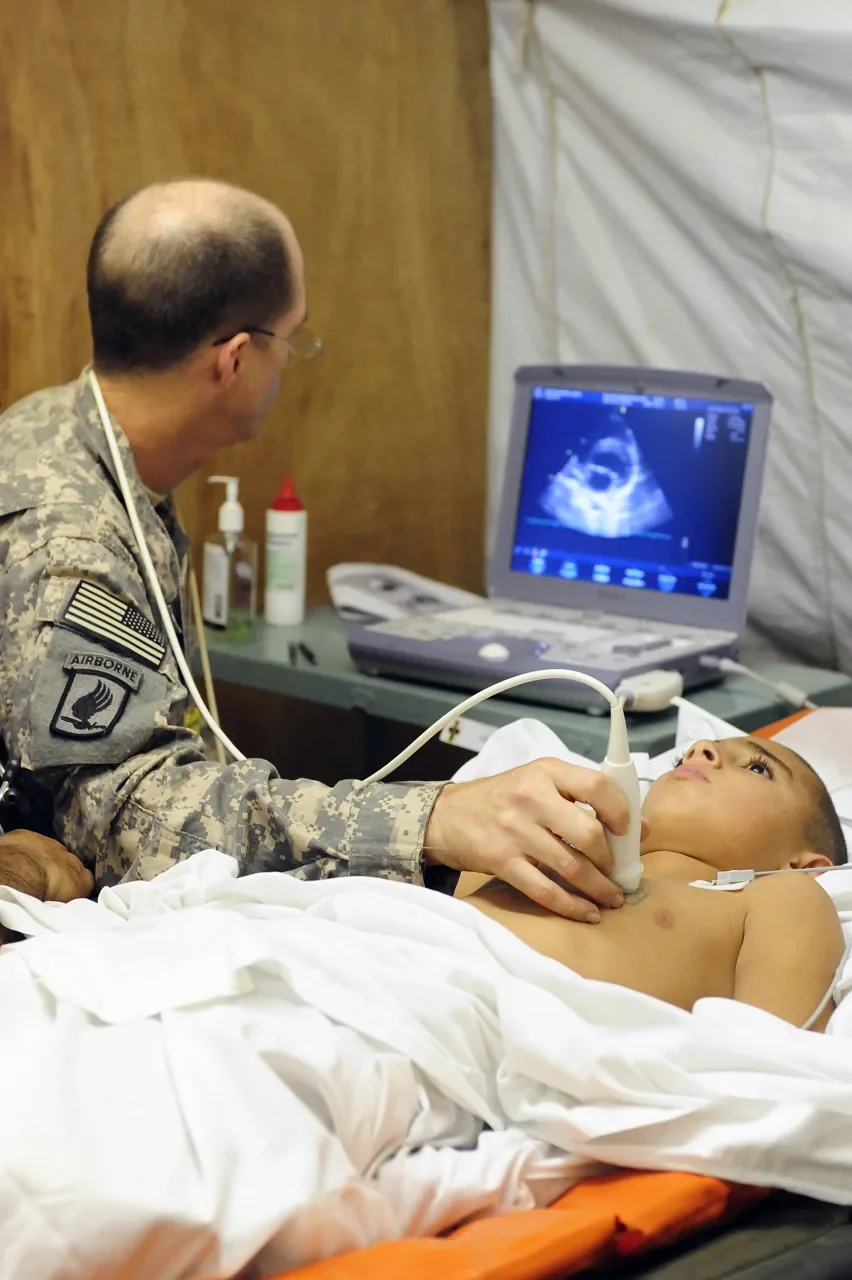
About this photograph
Not evidence of MMS stock, recommended options, current support, performance or endorsement.
The decision at a glance.
- Start here
- Define the patient range and required examinations, then compare the complete supported probe/analysis package.
- Spend more when
- A dedicated or different system resolves a demonstrated clinical-coverage or availability gap.
- Watch the budget
- Pediatric echo cost = required probe and platform + analysis/reporting + accessories and acceptance + service and continuity over the chosen period.
- Check the support
- The offer substitutes a pediatric label for exact probe, release, analysis and support evidence.
Ask the supplier
- Which exact probes cover the team’s agreed pediatric and neonatal work?
- Can the offered release demonstrate the required measurements and reporting?
- Will the complete package be available when the pediatric service needs it?
Define the patient range before comparing machines
A service caring for older children may have a different equipment brief from one covering neonatal or complex congenital work. Have the pediatric echo lead define the population, examinations, measurements and reviewing workflow. Do not carry an adult purchasing specification across unchanged or assume that every cardiac system listed by a reseller provides the same pediatric capability.
ASE’s 2024 pediatric TTE overview addresses traditional and adjunct imaging modalities as well as organizational and quality matters. It reinforces the need for a service-specific brief. The clinical team should determine which functions are necessary; procurement should establish that those functions are supplied, usable and supportable.
A documented probe distinction is more useful than a preset name
In Philips’ July 2016 CX50 xMATRIX table, S8-3 is identified for pediatric 2D echo and S12-4 for neonatal 2D echo, separately from the adult S5-1. GE’s historical Vivid iq page identifies 6S-RS and 12S-RS in its pediatric section. These are exact configuration leads, not proof that any used unit with the same console name includes them.
Keep suffixes, console release and licensed analysis together in the comparison. Similar probe names do not establish interchangeability. Obtain current compatibility documentation for the proposed package, then have qualified users evaluate it for the intended patient range. An adult demonstration cannot settle that acceptance decision.
Compare a shared platform with a complete dedicated service
Adding the right supported probe to an existing adult platform can preserve training, reporting and service arrangements. That can be an economical first comparison when the platform is otherwise suitable. Include any required analysis, ECG accessories and software rights; price the actual addition rather than assuming the probe alone completes it.
A dedicated system earns its place when sharing prevents timely access or the installed platform cannot supply an accepted pediatric package. Examine the schedule: who needs the scanner, in which location, and what happens when adult and pediatric demands coincide? A second console solves a scheduling problem only if the necessary probes and qualified staff are also available.
Make the demonstration reach the reviewing clinician
Use the responsible team’s approved evaluation arrangements to assess the defined work on the exact configuration. Follow acquisition into measurements, saved studies and the report received by the interpreting clinician. Record any task that depends on an absent option or separate workstation. The buyer needs the result of the evaluation, not an instruction to reproduce clinical examinations from a sales guide.
Assess how the equipment will reach and fit the actual care area, with the needed accessories stored and protected. Include cleaning and charging arrangements, the availability of an appropriate cart and the staff handover between users. A compact specification is useful only if it makes the intended service easier to deliver.
Budget for the pediatric probe that stops the service
Separate the probe’s condition and repair route from the console’s. A provider able to repair the scanner may have no compatible temporary pediatric probe. Establish the actual substitute or alternative service before counting a loaner promise as cover. If one probe is indispensable, its replacement cost and access can matter more than a modest console discount.
Keep the installed platform when a complete supported addition passes the defined evaluation and access is adequate. Choose a dedicated or different system when it closes a demonstrated population, function or scheduling gap. Neither brochure provides a measured reliability ranking or current price comparison, so those claims should not decide the shortlist.
Compare the options.
Add a supported pediatric package to the installed system
- Capability
- Preserves existing workflow when the required addition is accepted.
- Best fit
- A suitable platform with sufficient shared availability.
- Cost to watch
- Include analysis and probe support, not a preset alone.
CX50 xMATRIX with the required pediatric/neonatal probe
- Capability
- OEM documentation distinguishes S8-3 and S12-4 applications.
- Best fit
- Assessment of a specific used configuration.
- Cost to watch
- The 2016 table does not establish current serial support.
Vivid iq with the verified pediatric package
- Capability
- Historical OEM documentation names 6S-RS and 12S-RS.
- Best fit
- A service evaluating the exact release and its pediatric probes.
- Cost to watch
- Current compatibility and local acceptance remain separate checks.
Option notes, costs & support 3 options
For every option
- Price & package
- Compare the complete configured package; no current matched price established.
- Support
- Confirm exact release, probe condition and destination repair eligibility.
Add a supported pediatric package to the installed system
First comparison
- Best for
- A suitable platform with sufficient shared availability.
- Why consider it
- Preserves existing workflow when the required addition is accepted.
- The trade-off
- Include analysis and probe support, not a preset alone.
CX50 xMATRIX with the required pediatric/neonatal probe
Historical portable example
- Best for
- Assessment of a specific used configuration.
- Why consider it
- OEM documentation distinguishes S8-3 and S12-4 applications.
- The trade-off
- The 2016 table does not establish current serial support.
Vivid iq with the verified pediatric package
Alternative platform example
- Best for
- A service evaluating the exact release and its pediatric probes.
- Why consider it
- Historical OEM documentation names 6S-RS and 12S-RS.
- The trade-off
- Current compatibility and local acceptance remain separate checks.
Budget for the complete service.
Pediatric echo cost = required probe and platform + analysis/reporting + accessories and acceptance + service and continuity over the chosen period.
- Patient and examination range
- Pediatric versus neonatal probes
- Shared versus dedicated access
- Probe continuity
Further checks & evidence limits
Questions to resolve
- Which exact probes cover the team’s agreed pediatric and neonatal work?
- Can the offered release demonstrate the required measurements and reporting?
- Will the complete package be available when the pediatric service needs it?
What the evidence does not establish
- No universal probe selection by age or body weight is provided.
- Historical OEM examples require current release and service confirmation; no reliability or price ranking established.
- The local clinical brief and examination-specific acceptance require qualified pediatric echo review.
Sources & supporting evidence.
Manufacturer claims and seller offers are identified below. Prices apply to the stated offer and review date; confirm availability, configuration and delivered cost.
- Comprehensive pediatric TTE: guideline overviewAmerican Society of Echocardiography · professional-society guidance · checked October 18, 2026
Official overview read: pediatric traditional and adjunct modalities plus organizational/quality topics. This is not a full read of the linked clinical guideline or approval of a purchasing brief.
- CX50 xMATRIX cardiology brochure, July 2016Philips · manufacturer · checked October 18, 2026
Historical configuration evidence, pp. 3, 6–7, 12–14 and footer p.16 read; complete transducer table p.14 visually checked. This is not a current entitlement or support statement.
- Vivid iq pediatric probe descriptionGE HealthCare · manufacturer · checked October 18, 2026
Pediatric section names 6S-RS and 12S-RS; footer copyright 2017. Historical configuration lead, not current release compatibility or a reliability claim. Unrelated placeholder copy ignored.
Put the guide to work.
Send MMS your equipment list, destination and budget. We can help you compare a complete package.
Discuss your equipment