
Pain RF generators: the electrode system can outweigh the console price
Compare the complete approved generator, electrode, cannula and cable package. Reusable supplies, single-use devices and specialist functions create different continuing costs.
Editorially reviewed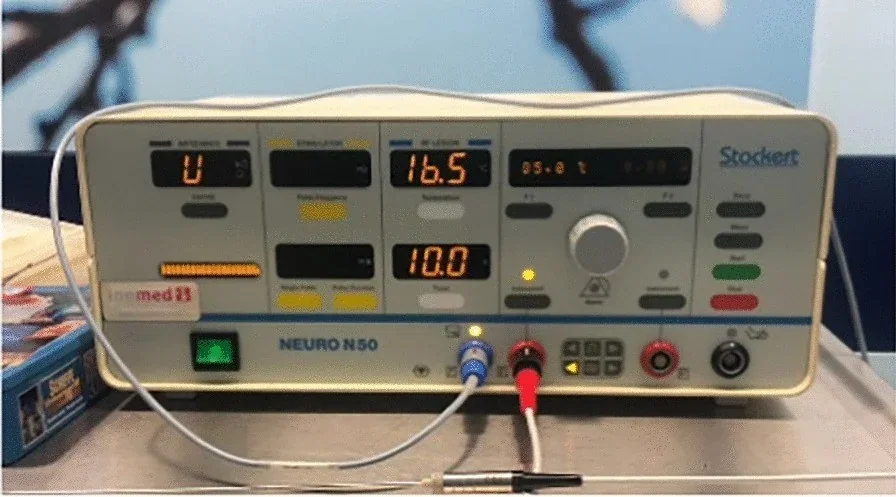
About this photograph
Related RF generator photographed for a neurosurgical study, not evidence of a pain-treatment indication, compatibility, clinical protocol or the named pain packages. Not MMS stock or an endorsement.
The decision at a glance.
- Start here
- Define the clinically approved RF task and compare the complete case basket alongside the generator.
- Spend more when
- Required functions or lower fully accounted continuing costs justify the complete system change.
- Watch the budget
- Pain-RF ownership cost = complete generator/instrument setup + planned cases × actual case supplies + processing, imaging, staff, service and continuity over the same period.
- Check the support
- Compatibility, permitted reuse or recurring accessory supply rests only on a seller description.
Ask the supplier
- Which exact generator, software, electrodes, cannulas, cables and required pads meet our approved procedure brief?
- What is single-use, what is reusable, and what are the complete recurring and processing costs?
- Which accessories and support remain available for the offered model, and what is included for acceptance and training?
The clinical brief decides which RF functions matter
A pain-service generator should be specified for the clinician’s intended procedure, approved instruments and supported functions. A general electrosurgical generator or a broad “RF” label is not enough to establish that package. The responsible clinical team must decide the appropriate treatment; the purchasing comparison then determines what is needed to provide it.
Abbott’s IonicRF page describes four independently controlled channels and several RF modes. It also states that the generator’s intended use relies on approved compatible electrodes and cannulas. More channels are valuable only when the agreed workflow uses them; they are not evidence that a package gives better pain outcomes.
Separate the ordinary case basket from specialist additions
Price the exact electrodes, cannulas, cables, required return electrode and other supplies for the intended case. State what is reusable, what is single-use and what processing is required. Keep specialist additions separate so that an infrequently used accessory does not distort the comparison of routine work.
Simplicity III illustrates the dependency. Abbott describes this single-use electrode as requiring a compatible Abbott RF generator and an Abbott adapter cable. An offer naming the generator and electrode but omitting that connection is incomplete. Do not infer compatibility with an older NeuroTherm model or a third-party cable from brand resemblance.
Reusable and single-use routes move costs between purchases and processing. Compare the approved reusable item’s acquisition, inspection, care and replacement with the continuing single-use basket. Do not invent a number of safe reuses or spread the price of a single-use device across several procedures.
Compare the same work over the same period
Take an explicitly hypothetical one-year example: System A costs US$6,000 to acquire and requires US$180 of comparable supplies per case. System B costs US$10,000 and requires US$120 per case. At 100 cases, the respective totals are US$24,000 and US$22,000. The higher purchase price leaves a US$2,000 lower acquisition-plus-supply total.
These are invented comparison inputs, not offers for any named model. The example excludes staffing, imaging, processing, service, financing and downtime. Add any differences in those costs before choosing. Its point is to make a recurring supply difference visible; it does not establish that either system is clinically equivalent or cheaper in your setting.
A used console needs a continuing accessory and support route
When considering a used NT2000iX or an installed system, obtain the exact model, software, enabled functions and approved accessory list. Compare it with a complete newer offer, rather than carrying old reseller specifications into a current promise. The apparent saving is uncertain if essential electrodes or service cannot be supplied.
Include the clinical and technical teams in acceptance of the delivered combination. Confirm any required imaging, patient monitoring and coexistence arrangements from the applicable instructions, and assign competent training and support. No universal electrode placement, stimulation or lesion settings belong in a purchasing guide.
A supported repair or compatible replacement instrument may preserve useful existing capacity. A new platform becomes more attractive when it supplies a required function or a sustainable accessory route that the old service lacks. Judge that improvement against the full conversion, continuing case costs and temporary cover—not touchscreen size or a promise that one RF mode is painless.
Compare the options.
Retain or complete the supported installed system
- Capability
- May avoid unnecessary conversion and training costs.
- Best fit
- An accepted setup with continuing approved supplies.
- Cost to watch
- Accessory availability and qualified repair must be established.
Used NT2000iX with an exact supported package
- Capability
- Can be evaluated as a complete acquisition rather than a cheap bare console.
- Best fit
- A service whose brief is met by a verified offered configuration.
- Cost to watch
- Historical reseller data do not establish present support or compatibility.
IonicRF with the required approved case basket
- Capability
- Manufacturer identifies independent channels and single-use/reusable instrument options.
- Best fit
- A clinical brief met by its documented functions and approved instruments.
- Cost to watch
- Specialist accessories, adapters and continuing supplies remain separate cost lines.
Option notes, costs & support 3 options
For every option
- Price & package
- Compare the complete configured package; no current matched price established.
- Support
- Establish exact equipment, accessory and destination support; public documentation does not guarantee unit eligibility.
Retain or complete the supported installed system
Existing-service comparison
- Best for
- An accepted setup with continuing approved supplies.
- Why consider it
- May avoid unnecessary conversion and training costs.
- The trade-off
- Accessory availability and qualified repair must be established.
Used NT2000iX with an exact supported package
Condition-dependent comparison
- Best for
- A service whose brief is met by a verified offered configuration.
- Why consider it
- Can be evaluated as a complete acquisition rather than a cheap bare console.
- The trade-off
- Historical reseller data do not establish present support or compatibility.
IonicRF with the required approved case basket
Current documented configuration lead
- Best for
- A clinical brief met by its documented functions and approved instruments.
- Why consider it
- Manufacturer identifies independent channels and single-use/reusable instrument options.
- The trade-off
- Specialist accessories, adapters and continuing supplies remain separate cost lines.
Budget for the complete service.
Pain-RF ownership cost = complete generator/instrument setup + planned cases × actual case supplies + processing, imaging, staff, service and continuity over the same period.
- Required RF functions
- Approved electrode/cannula/cable chain
- Single-use versus reusable cost
- Routine versus specialist basket
- Supported used versus new package
Further checks & evidence limits
Questions to resolve
- Which exact generator, software, electrodes, cannulas, cables and required pads meet our approved procedure brief?
- What is single-use, what is reusable, and what are the complete recurring and processing costs?
- Which accessories and support remain available for the offered model, and what is included for acceptance and training?
What the evidence does not establish
- No current matched model prices, clinical efficacy comparison or measured reliability ranking established.
- The hypothetical100-case arithmetic excludes stated additional costs and is not a product quote.
- NT2000iX14/15-inch screen conflict remains unresolved and omitted; full current compatibility and local intended use require exact documentation.
- Abbott page is US-specific; current unit notices and approved clinical setup require qualified verification.
Sources & supporting evidence.
Manufacturer claims and seller offers are identified below. Prices apply to the stated offer and review date; confirm availability, configuration and delivered cost.
- IonicRF generator: features, ordering and safety informationAbbott · manufacturer · checked October 18, 2026
Product/features/ordering, intended use and relevant safety and SimplicityIII description/warnings read. Four independent channels; single-use/reusable electrodes; approved compatible electrodes/cannulae; SimplicityIII needs compatible Abbott generator and adapter cable and is single use. No efficacy ranking or operating settings adopted. US-specific page cites 2022 clinician manual; displayed safety materials include2026 codes.
Put the guide to work.
Send MMS your equipment list, destination and budget. We can help you compare a complete package.
Discuss your equipment