
Nerve monitoring: price the case supplies and correction history
Four versus eight channels is only one choice. Compare the exact electrodes, patient interface, software and trained service, with correction evidence for the equipment and every affected accessory.
Editorially reviewed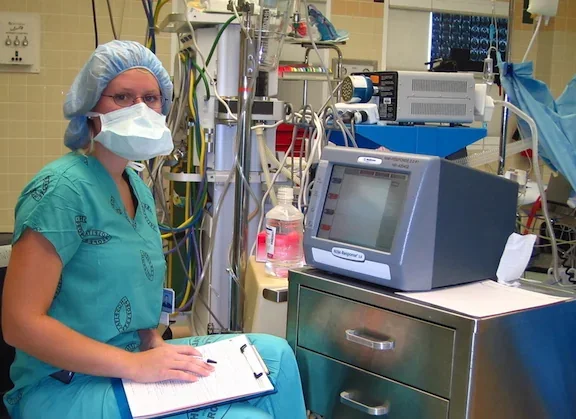
About this photograph
Not evidence of MMS stock, recommended options, current support, performance or endorsement.
The decision at a glance.
- Start here
- Define the intraoperative clinical workflow and complete case basket before comparing consoles.
- Spend more when
- Required channels, accepted interfaces or a sustainable supported supply route close a real service gap.
- Watch the budget
- Nerve-monitoring service cost = complete console/interfaces/software + case-specific supplies + staffing, training, processing, service and continuity over the same period.
- Check the support
- A console or accessory lacks adequate identity, correction evidence or an approved continuing supply route.
Ask the supplier
- Which exact channels, patient interfaces and case supplies meet the agreed procedure brief?
- What software version and applicable correction-completion evidence accompany each device and accessory?
- What training, qualified support and compatible temporary cover are included?
Buy for the procedure and the people interpreting it
A listing headed “EMG” is not enough to specify an intraoperative nerve-monitoring service. The surgical and monitoring leads must define the intended work, required channels, patient interfaces and responsibility for interpreting the information. A console cannot substitute for that expertise or for the agreed clinical workflow.
Medtronic’s December 2022 regional description distinguishes NIM-Response 3.0, monitoring up to four nerve-muscle channels, from NIM-Neuro 3.0, up to eight. It also identifies APS electrode-dependent continuous monitoring. More channels or a named feature is useful only when the planned procedure and complete approved setup require it.
Make one complete case basket before comparing prices
List the console, patient interface, exact electrodes or tubes, stimulation probes, cables and enabled software needed for the defined case. Separate reusable components from continuing case supplies and identify their approved handling. The service needs a sustainable supply route for its actual patient range, not merely a sample accessory included with the machine.
Compare the same planned case mix and period. A lower-priced console can cost more overall if it brings higher recurring supplies or an unsupported interface. Conversely, a higher-specification platform adds little value if the team cannot obtain the required electrodes. Keep any staffing, training, processing and backup costs visible alongside the device package.
Check software and disposable notices separately
NIM Vital is a separate product from NIM 3.0, and its correction history illustrates why “software updated” needs a version and date. FDA’s 2024 false-negative-response notice described a correction to version 1.5.4. A later recall record, posted April 18, 2025, identifies increased stimulus artifact in Vital systems with version 1.6.4 or earlier and describes a manufacturer update to 1.7.5.
That later record was still shown as open when checked on October 18, 2026. Obtain applicable manufacturer correction evidence for the exact offered system; do not treat an earlier upgrade as blanket clearance or apply a Vital notice indiscriminately to a NIM 3.0 console.
Accessories need their own review. FDA’s July 2024 letter, updated that November, directs users not to use NIM Standard and Contact EMG endotracheal tubes and describes removal of all affected tubes from inventory because of blockage concerns. A package of recalled tubes has no usable value merely because it is unopened. Check exact identifiers and any proposed alternative through the responsible clinical and technical team.
Accept the whole monitoring workflow
Evaluate the offered configuration with the qualified clinical and technical team under an approved acceptance plan. Establish the required interaction with the actual theatre equipment from current instructions, including any specified accessories. Do not assume that a broad electrosurgery compatibility statement permits every generator, instrument or setup.
Agree what happens if the patient interface, cable or console fails, who provides competent support, and what temporary arrangement the service can use. A loan console is useful only if it can work with the accepted accessories and trained team. Keep an existing system when those requirements are met; replace it when required capability, correction status or continuing supply cannot be established.
Compare the options.
NIM-Response 3.0 complete package
- Capability
- Manufacturer description identifies up to four nerve-muscle channels.
- Best fit
- A clinical brief met by the documented channel capacity and approved accessories.
- Cost to watch
- Current support, corrections and continuing supplies still need exact verification.
NIM-Neuro 3.0 or another appropriately specified system
- Capability
- The named Neuro3.0 example supports up to eight channels.
- Best fit
- A procedure brief requiring more channels or other documented functions.
- Cost to watch
- Additional capacity is not proof of better outcomes or a complete package.
Retain an accepted supported service
- Capability
- Can preserve staff competence and useful interfaces.
- Best fit
- Adequate capability, correction evidence and a sustainable accessory supply.
- Cost to watch
- A supply or unresolved correction gap can outweigh a low acquisition cost.
Option notes, costs & support 3 options
For every option
- Price & package
- Compare the complete configured package; no current matched price established.
- Support
- Establish exact equipment, accessory and destination support; public documentation does not guarantee unit eligibility.
NIM-Response 3.0 complete package
Four-channel configuration lead
- Best for
- A clinical brief met by the documented channel capacity and approved accessories.
- Why consider it
- Manufacturer description identifies up to four nerve-muscle channels.
- The trade-off
- Current support, corrections and continuing supplies still need exact verification.
NIM-Neuro 3.0 or another appropriately specified system
Additional-capability comparison
- Best for
- A procedure brief requiring more channels or other documented functions.
- Why consider it
- The named Neuro3.0 example supports up to eight channels.
- The trade-off
- Additional capacity is not proof of better outcomes or a complete package.
Retain an accepted supported service
Continuity comparison
- Best for
- Adequate capability, correction evidence and a sustainable accessory supply.
- Why consider it
- Can preserve staff competence and useful interfaces.
- The trade-off
- A supply or unresolved correction gap can outweigh a low acquisition cost.
Budget for the complete service.
Nerve-monitoring service cost = complete console/interfaces/software + case-specific supplies + staffing, training, processing, service and continuity over the same period.
- Procedure-specific channels
- Complete case basket
- Software and accessory corrections
- Qualified interpretation and support
Further checks & evidence limits
Questions to resolve
- Which exact channels, patient interfaces and case supplies meet the agreed procedure brief?
- What software version and applicable correction-completion evidence accompany each device and accessory?
- What training, qualified support and compatible temporary cover are included?
What the evidence does not establish
- No diagnostic-EMG substitution, procedural settings or independent outcome/reliability ranking supplied.
- Not an exhaustive all-market recall clearance; exact current manufacturer/authority notices and unit completion remain transaction gates.
- Regional NIM3.0 page dated2022 does not establish current sales or service eligibility.
Sources & supporting evidence.
Manufacturer claims and seller offers are identified below. Prices apply to the stated offer and review date; confirm availability, configuration and delivered cost.
- NIM 3.0 systems: regional manufacturer descriptionMedtronic · manufacturer · checked October 18, 2026
Full relevant product/choice/features/support body and regional disclaimer read. Last updated December 2022. Response3.0 up to four channels versus Neuro3.0 up to eight; APS electrode/accessory dependency. No current unit eligibility, independent clinical benefit or diagnostic-EMG equivalence established.
- NIM Vital correction Z-1623-2025US FDA · regulatory safety notice · checked October 18, 2026
Complete substantive recall record read. Initiated March10/posted April18,2025: affected Vital software v1.6.4 or earlier; increased stimulus artifact; manufacturer correction uses v1.7.5. Record viewed says open/classified, last updated May21,2026. Not NIM3.0, not a guarantee that v1.7.5 resolves all future notices.
- NIM Vital false-negative-response correctionUS FDA · regulatory safety notice · checked October 18, 2026
Complete affected-product, action and reason sections read: June2024 correction and version1.5.4. Used only to distinguish this earlier action from the separate 2025 correction; injury counts not used as rates.
- Do not use NIM Standard and Contact EMG endotracheal tubesUS FDA · regulatory safety notice · checked October 18, 2026
Full substantive letter, recommendations and timeline read in official indexed body. July9,2024 notice updated November22,2024 directs removal of all NIM Standard and Contact EMG tubes due to tube blockage; does not establish that all NIM-branded accessories or alternatives are recalled.
Put the guide to work.
Send MMS your equipment list, destination and budget. We can help you compare a complete package.
Discuss your equipment