
Fusion ultrasound: the tracking hardware can decide the deal
A fusion option on the console is only part of the purchase. Compare the software, tracker, probe, image import and support needed for the intended work.
Editorially reviewed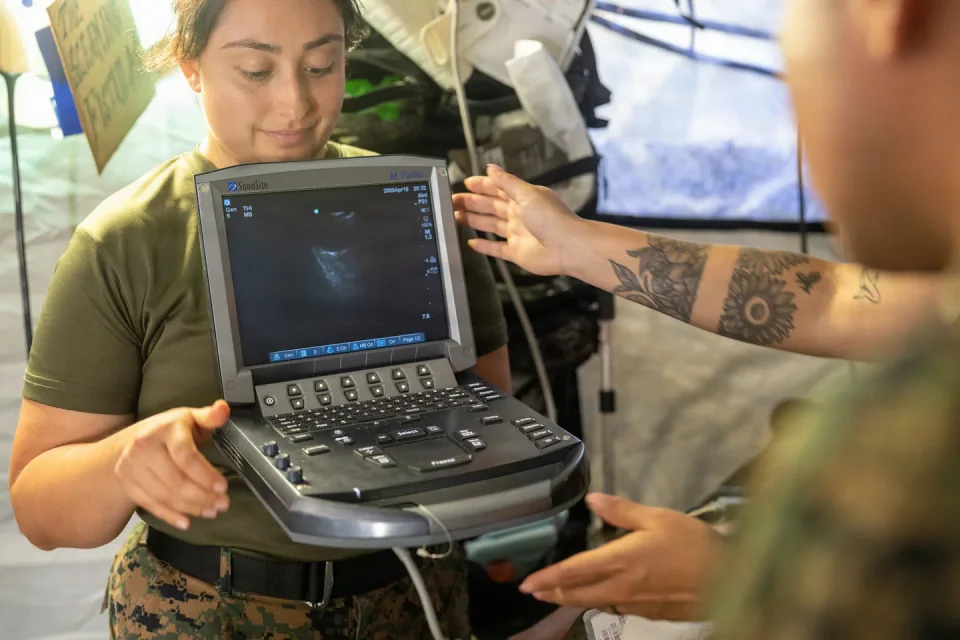
About this photograph
This archive photograph illustrates the equipment setting; it does not show or verify the exact device, configuration or service compared in this article.
The decision at a glance.
- Start here
- Define the required fusion task, then reconcile software, probe, tracking hardware and image import against that brief.
- Spend more when
- A complete supported configuration supplies a required capability that the installed service cannot provide.
- Watch the budget
- Fusion ownership cost = configured scanner or upgrade + tracking/probe hardware + software and integration + training, repair and continuity over the same period.
- Check the support
- The offer cannot establish essential tracker components, rights, accepted integration or specialist repair support.
Ask the supplier
- Which tracker, sensors, brackets, probes and enabled software are included?
- Does the package include the separately required needle-tracking capability?
- Can it demonstrate the agreed import, registration and recovery workflow on our configuration?
First decide what the added system must do
Fusion ultrasound is a distinct purchase when the service needs to bring prior CT or MR information into an ultrasound-guided workflow. Start with the clinical team’s defined task and intended use. The equipment budget should follow that requirement, including staff preparation and access to the source images; an impressive demonstration alone does not establish local value.
Keep an accepted conventional ultrasound package in the comparison if it meets the actual brief. Where the additional capability is required only occasionally, compare access through another established service with owning the equipment. That is a service-planning decision, not a claim that different techniques are clinically interchangeable.
The S3000 example exposes two separate purchases
Siemens describes eSieFusion on the ACUSON S3000 as combining CT or MR information with real-time ultrasound. It separately names eSieGuide for needle tracking. A seller’s “fusion” label therefore should not be read as confirmation that the quoted system includes the tracking capability the team expects.
The historical eSieFusion training card identifies a transmitter, tracker electronics and a transducer sensor with its bracket. These are tangible items to reconcile against a used-equipment offer, alongside the compatible probe and enabled software. The card is historical configuration evidence, not proof that an offered unit remains supported or that its accessories suit today’s intended use.
Importing an image is not the same as completing fusion
The training material describes CT/MR import from disc or PACS, followed by registration and alignment. This makes an important buying distinction: a scanner that can store or send a study has not thereby demonstrated the complete fusion workflow. The required source series must reach the system and work with its actual software configuration.
Have qualified users and technical staff evaluate that chain under an approved acceptance plan. Include the site’s image source, permitted patient-data handling and the limitations described in the current model instructions. A supplier demonstration using prepared images on a different release should not settle acceptance of the delivered package.
Compare the missing pieces before replacing the console
Suppose an existing supported scanner can be upgraded for the defined task. Compare the authorized software addition, exact tracking hardware, compatible probe and integration work with a complete replacement package. Keeping a console can preserve useful training and accessories, but only if the upgrade closes the whole requirement.
Conversely, a low-priced used scanner with fusion software but missing sensors or tracker electronics is not a discounted complete system. Establish whether the missing parts can actually be supplied, configured and serviced. An uncertain completion cost belongs beside the purchase price; it should not disappear into an assumed future accessory order.
Budget for keeping the chain working
Ask which party can restore the software and tracking configuration after a failure or computer replacement, and which rights transfer with the equipment. Define coverage for the tracker and sensors as well as the console and transducers. A general ultrasound repair promise does not establish that the whole specialist package can return to service.
The sources do not establish a current matched price, a universal clinical advantage or a reliability ranking. The useful comparison is narrower: a complete accepted upgrade, a complete replacement, or another justified service arrangement. Spend more when it buys a required working capability and credible continuity; defer the purchase when the essential hardware or support route cannot be established.
Compare the options.
Upgrade the accepted installed platform
- Capability
- May retain useful probes, reporting and staff familiarity.
- Best fit
- A supported platform with a documented route to the required fusion capability.
- Cost to watch
- Price the entire approved hardware/software addition, not the licence alone.
Complete S3000 or another accepted fusion package
- Capability
- The S3000 example distinguishes image fusion from separately named needle tracking.
- Best fit
- A service requiring a complete configured fusion workflow.
- Cost to watch
- Historical documentation does not prove present support or delivered options.
Keep the accepted service or arrange access elsewhere
- Capability
- Avoids funding an incomplete capability or rarely used unsupported system.
- Best fit
- A brief that can be met without owning this specialist package.
- Cost to watch
- Clinical suitability and access must be decided locally.
Option notes, costs & support 3 options
For every option
- Price & package
- Compare the complete configured package; no current matched price established.
- Support
- Confirm exact release, probe condition and destination repair eligibility.
Upgrade the accepted installed platform
First comparison
- Best for
- A supported platform with a documented route to the required fusion capability.
- Why consider it
- May retain useful probes, reporting and staff familiarity.
- The trade-off
- Price the entire approved hardware/software addition, not the licence alone.
Complete S3000 or another accepted fusion package
Replacement comparison
- Best for
- A service requiring a complete configured fusion workflow.
- Why consider it
- The S3000 example distinguishes image fusion from separately named needle tracking.
- The trade-off
- Historical documentation does not prove present support or delivered options.
Keep the accepted service or arrange access elsewhere
Service alternative
- Best for
- A brief that can be met without owning this specialist package.
- Why consider it
- Avoids funding an incomplete capability or rarely used unsupported system.
- The trade-off
- Clinical suitability and access must be decided locally.
Budget for the complete service.
Fusion ownership cost = configured scanner or upgrade + tracking/probe hardware + software and integration + training, repair and continuity over the same period.
- Fusion versus needle tracking
- Complete tracking hardware
- CT/MR import and registration
- Upgrade versus replacement
- Specialist recovery and support
Further checks & evidence limits
Questions to resolve
- Which tracker, sensors, brackets, probes and enabled software are included?
- Does the package include the separately required needle-tracking capability?
- Can it demonstrate the agreed import, registration and recovery workflow on our configuration?
What the evidence does not establish
- Historical S3000 materials do not establish current serial-specific support, licensing or destination authorization.
- Current exact intended use, compatible hardware and acceptance constraints require qualified review before purchase; no operating instructions supplied.
- No current matched prices, head-to-head clinical outcomes or reliability evidence established.
Sources & supporting evidence.
Manufacturer claims and seller offers are identified below. Prices apply to the stated offer and review date; confirm availability, configuration and delivered cost.
- ACUSON S3000 eSieFusion quick referenceSiemens Healthineers · manufacturer · checked October 18, 2026
Complete public written quick card and limitations read. Footer copyright 2017; page header 2020. Identifies transmitter, tracker electronics, probe sensor/bracket, CT/MR import and registration. Training is not regularly updated and is not a substitute for the current IFU; no operating procedure reproduced.
- ACUSON S3000 product descriptionSiemens Healthineers · manufacturer · checked October 18, 2026
Relevant complete public product text read: eSieFusion CT/MR with ultrasound and separately named eSieGuide needle tracking. Regional marketing page does not establish current support, offered entitlement or independent clinical benefit.
Put the guide to work.
Send MMS your equipment list, destination and budget. We can help you compare a complete package.
Discuss your equipment