
Will an extremity MRI really free your main scanner?
Count the accepted examinations that can move, then compare a second scanner with longer hours and referral.
Editorially reviewed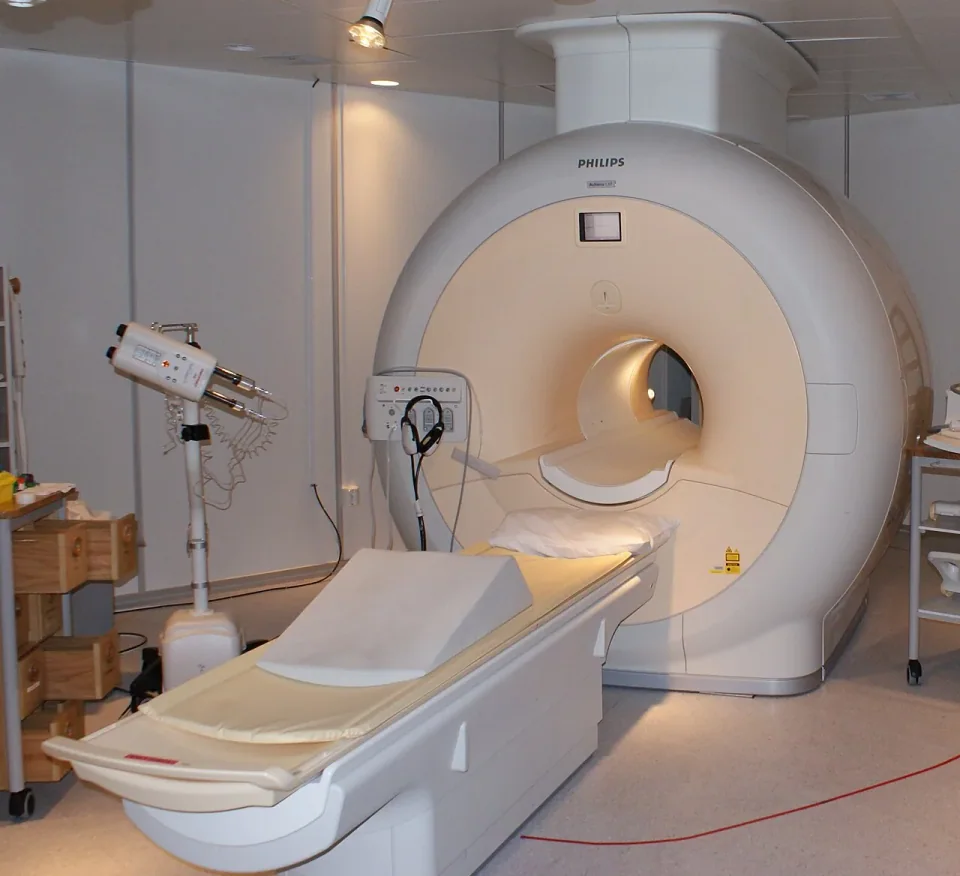
About this photograph
Comparison option only: a whole-body scanner, not an O-scan, S-scan, Optima MR430s or other dedicated extremity system.
The decision at a glance.
- Start here
- Build an accepted examination-transfer list before seeking a second scanner.
- Spend more when
- The transferred workload releases capacity the main service can use.
- Watch the budget
- Count duplicate fixed costs and complete appointment time.
- Check the support
- Verify exact model, coils, market and support.
Ask the supplier
- Which recent examinations would actually transfer?
- Who will staff both workflows and use the freed slots?
- Which exact model, coils and regional support are offered?
Count work that can move, not all MRI demand
A dedicated extremity scanner can be attractive when suitable examinations occupy time on a busy main scanner. The economic case depends on how much of that work can actually transfer and what the main scanner will do with the released time. Total MRI demand alone is an inadequate starting point.
Have the radiologists define an accepted list for the exact system, coils and software. Map recent appointments to that list, including patients who cannot use the proposed positioning or who need examinations beyond its scope. Keep those appointments in the main-scanner plan rather than counting them as savings.
Use the exact product scope
Esaote's O-scan page describes an extremity system and names knee, hand-wrist and ankle-foot coils. That is a useful configuration example, not evidence that every examination of those regions is suitable or that a whole-body scanner's other work can transfer. Clinical acceptance must address the actual questions the service needs to answer.
Check the generation and market as well as the name. The US O-scan page currently says that this system is no longer available in CE countries. Do not give an older used offer the availability, approval or software assumptions of another regional product or a newer O-scan variant.
Turn the appointment list into a capacity test
Suppose, purely as an illustration, a weekly list contains 20 examinations considered for transfer. The clinical and positioning assessment accepts 12 for the proposed system. If those 12 currently occupy 30-minute main-scanner appointments, the gross released time is six hours per week. It is not ten hours, and it is not automatically six hours of additional completed work.
Check whether the remaining schedule can use those slots, whether a qualified team can staff both services and whether repeats or onward examinations reduce the gain. Use complete appointments rather than scan-sequence duration. The manufacturer’s throughput headline is not a substitute for this local calculation.
Compare a second scanner with two simpler routes
Longer hours on the existing scanner may use infrastructure and coils already funded, provided staffing and service capacity make that practical. Referral or contracted access can address a smaller or uncertain workload without duplicating all fixed costs, though travel, waiting and continuity must be considered.
A dedicated scanner earns its place when accepted transferable work is consistent and the service can use the released main-scanner capacity. It is a poor fit when the bottleneck is reporting, staffing or patient preparation shared by both machines. Adding equipment to that bottleneck can add cost without adding completed studies.
A small scanner still needs an operating home
Treat compact dimensions and low stated power as inputs to a proper site review, not permission to place a scanner in any available room. Confirm the exact installation requirements, access, environment, approved supporting equipment and image workflow. Include training, quality work and maintenance in the opening budget.
MR safety conditions still matter. Have the responsible team review patient screening, accessories and their conditions of use. FDA guidance makes clear that an MR Conditional device must meet all its stated conditions. An open or extremity design does not remove that obligation.
Buy released capacity you can use
Compare the full additional annual cost with the value of the accepted transferred work and usable main-scanner slots. Include staff, coils, software, service, quality work, premises and interruptions. Avoid equating gross billed activity with funds available to run the machine.
Keep the existing arrangement when a schedule change or dependable referral route meets the need at lower sustainable cost. Add extremity MRI when the clinical transfer list, patient fit and staffed capacity case hold together. The decision is whether a second supported workflow improves the service, not whether a smaller magnet looks affordable.
Compare the options.
Second scanner
- Capability
- Accepted work transfers.
- Best fit
- Freed capacity can be used.
- Cost to watch
- Duplicate fixed costs.
Longer hours
- Capability
- More use of existing capability.
- Best fit
- Schedule is the main limit.
- Cost to watch
- Staffing and operating time.
Referral
- Capability
- External accepted examinations.
- Best fit
- Volume does not justify duplication.
- Cost to watch
- Travel and contracted access.
Option notes, costs & support 3 options
Dedicated extremity MRI, exact regional configuration
Capacity-release route
- Best for
- A stable accepted group of transferable examinations.
- Why consider it
- Separates appropriate work from the main scanner.
- The trade-off
- Cannot inherit whole-body scope; local acceptance determines benefit.
- Price & package
- Additional site, staff, coils, software and service.
- Support
- Verify exact generation and destination availability.
Extend the existing MRI schedule
Use existing infrastructure
- Best for
- A feasible staffed schedule expansion.
- Why consider it
- Preserves the present clinical and support environment.
- The trade-off
- Does not help when staffing or equipment availability is already limiting.
- Price & package
- Added operating hours and support exposure.
- Support
- Check the actual operating and staffing plan.
Contracted access or referral
Lower fixed commitment
- Best for
- Smaller or uncertain demand.
- Why consider it
- Avoids a second equipment commitment.
- The trade-off
- Travel, waiting and reporting continuity can limit value.
- Price & package
- Complete pathway cost.
- Support
- Define timely access and information transfer.
Budget for the complete service.
Incremental cost per transferred examination = additional premises, equipment, staff and support cost / accepted transferred examinations.
- Transferable case mix
- Usable main-scanner slots
- Coils and patient fit
- Staffing
- Second-service fixed costs
Before you commit.
- Approve the transfer examination list.
- Check patient fit and coils.
- Model complete appointments.
- Compare longer hours and referral.
- Fund the second site and service.
Further checks & evidence limits
Questions to resolve
- Which recent examinations would actually transfer?
- Who will staff both workflows and use the freed slots?
- Which exact model, coils and regional support are offered?
What the evidence does not establish
- No clinical-equivalence or measured throughput claim.
- No actual hospital capacity, installed cost or serial-specific support assessment.
- O-scan example does not imply current availability in every country.
Sources & supporting evidence.
Manufacturer claims and seller offers are identified below. Prices apply to the stated offer and review date; confirm availability, configuration and delivered cost.
- Esaote O-scan US product informationEsaote · manufacturer · checked October 18, 2026
Written extremity-system scope, named knee/hand-wrist/ankle-foot coils and regional footnote read. Page says this O-scan is no longer available in CE countries; performance and throughput marketing not validated.
- MRI: information for professionalsFDA · regulator · checked October 17, 2026
MR Conditional devices require compliance with their conditions; devices with unknown MR safety status should be treated as unsafe.
Put the guide to work.
Send MMS your equipment list, destination and budget. We can help you compare a complete package.
Discuss your equipment