
Compression devices: price the sleeves before buying the pumps
A low pump price can hide a continuing garment bill or an unusable size mix. Compare the approved controller, tubing and patient garments as one service.
Editorially reviewed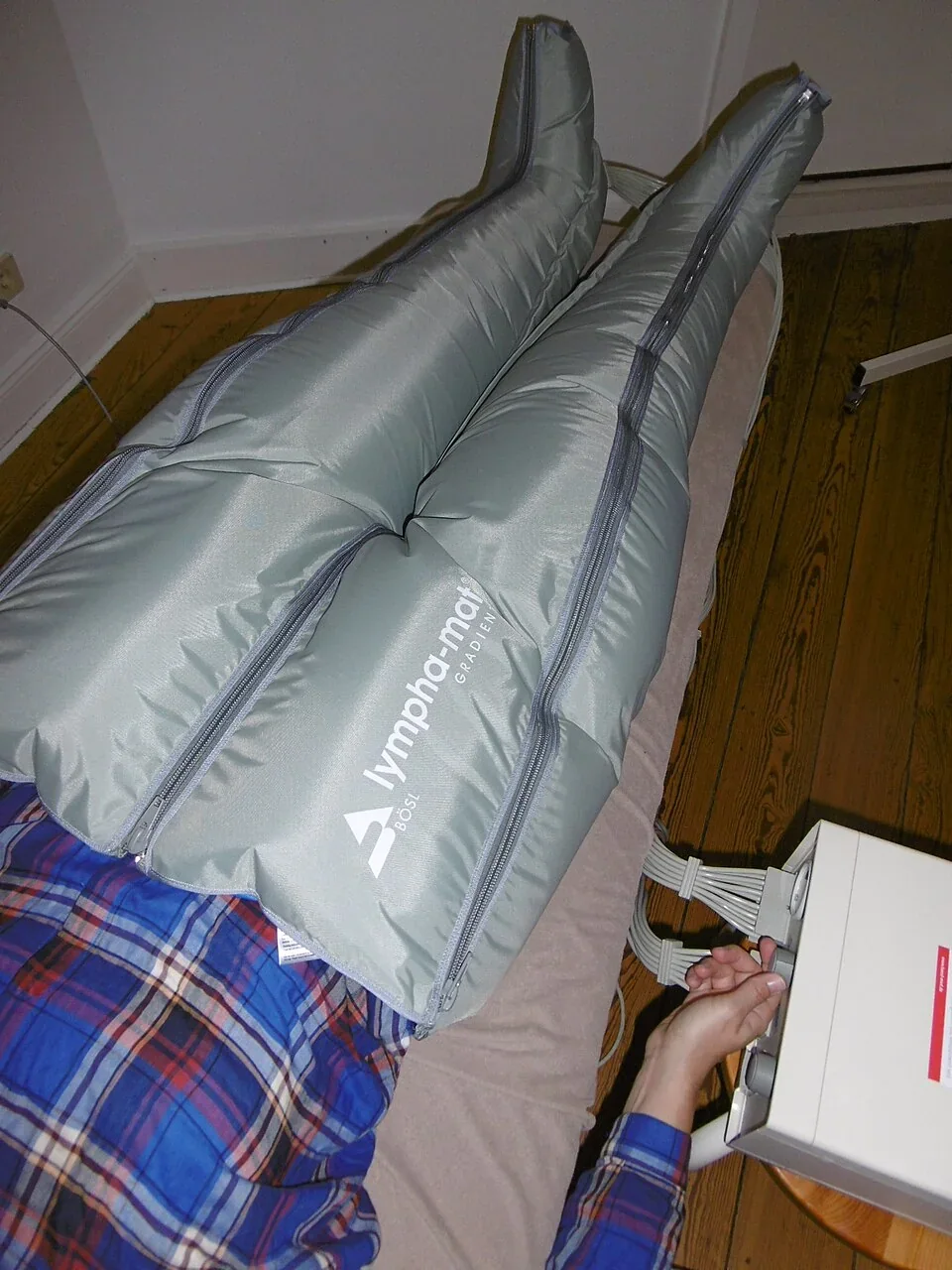
About this photograph
Related compression equipment, not an exact hospital VTE-prevention package or evidence of equivalent indications. Not MMS stock or an endorsement.
The decision at a glance.
- Start here
- Match the clinical brief to exact approved pump, tubing and garment combinations, then cost the required size mix.
- Spend more when
- A demonstrated feature or dependable complete reserve resolves a real capacity problem.
- Watch the budget
- Compression-service cost = complete controllers and hoses + actual garment demand by type/size + permitted cleaning, maintenance and replacement cover over the same period.
- Check the support
- Compatibility, pack quantity, permitted garment use or continuing replenishment cannot be established.
Ask the supplier
- Which exact controller, tubing, garment types and sizes form the approved package?
- What does each garment code and pack quantity mean, and what use/reprocessing limits apply?
- What complete replacement system and continuing garment stock are included in purchase or rental support?
Compare a usable bed-space package
Start with the clinical team’s approved application and patient population. The buyer’s task is to supply that service reliably, not to choose who should receive compression or prescribe how long it should run. Leg sleeves, foot cuffs and other garment types are not interchangeable purchasing substitutes merely because they connect to a pump.
The FDA’s April 2023 SmartFlow record names a controller, several garment families and a tubing assembly. That is a useful reminder to itemize the system. It does not prove that any sleeve advertised as “Kendall” fits every controller. Record the exact controller, garment and hose identifiers against the applicable compatibility instructions.
For an existing SCD 700 or Express installation, first establish the approved replacement garments, usable pump condition and qualified support. A newer controller is not automatically the cheaper route if it changes the stock, training or accessories needed across the ward.
A garment code changes the comparison
For example, the August 2026 device record for Kendall 83012B describes a medium, thigh-length garment for SmartFlow and a device count of 25. It also says the package may contain original or reprocessed devices. Do not turn that quantity into 25 patient pairs or treat every listing with a similar number as the same package.
Compare the actual quantity supplied, garment type, size range, permitted use and delivered cost. Have staff establish the size mix from the intended patients and the manufacturer’s sizing instructions. A low average sleeve price offers little value if the missing size prevents use and emergency replenishment costs more.
Keep single-patient use distinct from permission to clean an item locally for another patient. The 83012B narrative still specifies single-patient use for its reprocessed product. A recognized reprocessing route does not establish that the receiving facility can repeat that process. Obtain the exact label and instructions for the delivered stock.
Pay for a feature that changes the ward’s work
Cardinal Health’s November 2024 SmartFlow announcement describes patient-sensing technology that alerts when it does not detect a patient or correct sleeve use. That gives the team a concrete feature to evaluate: can the alert be recognized and acted on within the intended workflow?
A demonstration should establish the actual offered configuration and staff response, not merely show that an alarm sounds. Compare handling, bed mounting, transport needs and the applicable battery condition where battery operation is required. Do not convert a manufacturer feature description into a claim that the new fleet prevents more events or never fails.
If the existing accepted pumps already meet the service requirement, adequate garment stock, repairs and a small usable reserve may deliver more practical capacity than replacing every controller. If a documented feature solves a persistent operational problem, include its training and conversion costs in the upgrade comparison.
Count supply interruptions as lost capacity
Build the budget around complete available systems and the expected garment demand over one stated period. Include controller acquisition or rental, hoses, garments, cleaning permitted by the instructions, maintenance and replacement cover. Separate stock held for immediate use from deliveries that depend on an uncertain lead time.
A rental can bridge a defined shortage, but specify who supplies the correct garments and replacement tubing, what condition testing accompanies each pump and how quickly a failed unit is exchanged. An exchange promise is not useful if the replacement arrives without a required accessory.
Buy the package whose clinical fit, continuing supplies and support can be sustained. Reject comparisons based on controller count alone, unsupported claims of near-zero failure or a universal hours-per-day rule. Those statements do not answer the purchasing question.
Compare the options.
Maintain the accepted SCD 700 or Express fleet
- Capability
- Targets missing garments, repair and reserve capacity before replacing all pumps.
- Best fit
- A service whose clinical requirement is already met.
- Cost to watch
- Current exact compatibility and support must be established.
SmartFlow with an approved garment package
- Capability
- Manufacturer describes a specific patient-sensing function to assess.
- Best fit
- A ward where the evaluated sensing/alert workflow resolves a defined problem.
- Cost to watch
- Do not infer better clinical outcomes or assume old stock transfers.
Short-term rental of complete usable systems
- Capability
- Can supply capacity without an immediate full fleet purchase.
- Best fit
- A temporary shortage with a clear expected end.
- Cost to watch
- Include garments, hoses, condition checks and complete replacement cover.
Option notes, costs & support 3 options
For every option
- Price & package
- Compare the complete configured package; no current matched price established.
- Support
- Establish exact equipment, accessory and destination support; public documentation does not guarantee unit eligibility.
Maintain the accepted SCD 700 or Express fleet
Existing-service comparison
- Best for
- A service whose clinical requirement is already met.
- Why consider it
- Targets missing garments, repair and reserve capacity before replacing all pumps.
- The trade-off
- Current exact compatibility and support must be established.
SmartFlow with an approved garment package
Documented feature comparison
- Best for
- A ward where the evaluated sensing/alert workflow resolves a defined problem.
- Why consider it
- Manufacturer describes a specific patient-sensing function to assess.
- The trade-off
- Do not infer better clinical outcomes or assume old stock transfers.
Short-term rental of complete usable systems
Defined-gap comparison
- Best for
- A temporary shortage with a clear expected end.
- Why consider it
- Can supply capacity without an immediate full fleet purchase.
- The trade-off
- Include garments, hoses, condition checks and complete replacement cover.
Budget for the complete service.
Compression-service cost = complete controllers and hoses + actual garment demand by type/size + permitted cleaning, maintenance and replacement cover over the same period.
- Approved controller/garment chain
- Size mix and pack quantities
- Single-patient use
- Feature versus fleet conversion
- Purchase versus defined-gap rental
Further checks & evidence limits
Questions to resolve
- Which exact controller, tubing, garment types and sizes form the approved package?
- What does each garment code and pack quantity mean, and what use/reprocessing limits apply?
- What complete replacement system and continuing garment stock are included in purchase or rental support?
What the evidence does not establish
- No comparative clinical efficacy, prescribed wear duration or measured reliability ranking established.
- Exact current SCD700/Express garment compatibility and serial-specific support are not established; they are conditional installed-system comparisons.
- The GUDID narrative and single-use field use different wording; article relies on explicit single-patient description and requires the actual label/IFU, not a cross-patient reuse inference.
- No matched current prices or local patient-size demand established.
Sources & supporting evidence.
Manufacturer claims and seller offers are identified below. Prices apply to the stated offer and review date; confirm availability, configuration and delivered cost.
- K230028: Kendall SCD SmartFlow system component namesUS Food and Drug Administration · regulatory record · checked October 18, 2026
Complete database entry read: names controller, several sleeve/foot-cuff families and tubing assembly; substantially-equivalent decision dated April 3,2023. This entry is not an exact SKU compatibility matrix or comparative outcomes finding.
- Kendall SCD SmartFlow US launch announcementCardinal Health · manufacturer · checked October 18, 2026
Full announcement read. Manufacturer describes patient-sensing alerts; clinical superiority, reliability language and cited hemodynamic-study outcomes not adopted. Announcement is not a current price, destination availability or unit-support promise.
- AccessGUDID: Kendall 83012B device-label recordCardinal Health label data via National Library of Medicine · manufacturer-submitted device record · checked October 18, 2026
Complete record read from saved public HTML. Model83012B, device count25; description identifies medium thigh-length, SmartFlow use, possible OEM/reprocessed contents and single-patient use. Boolean Single-Use field saysNo while narrative says single-patient use: these are not treated as permission for cross-patient local reuse. Label and current instructions control the offered product.
Put the guide to work.
Send MMS your equipment list, destination and budget. We can help you compare a complete package.
Discuss your equipment